A stainless steel chimney cap is a smart choice. It protects the top of your chimney for many years. It keeps out rain, snow, leaves, and animals, while still letting smoke and gases escape safely. Stainless steel is stronger than cheaper metals. It handles outdoor weather well and resists rust for a long time. This matters a lot for homes in New York City, where chimney caps face strong winds, cold winters, high humidity, and big temperature changes.
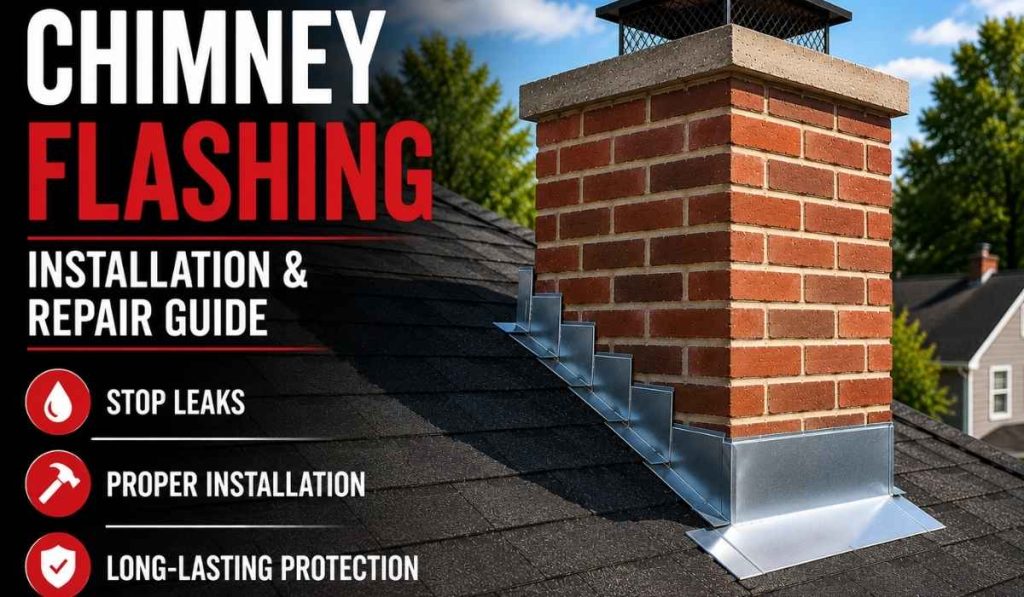
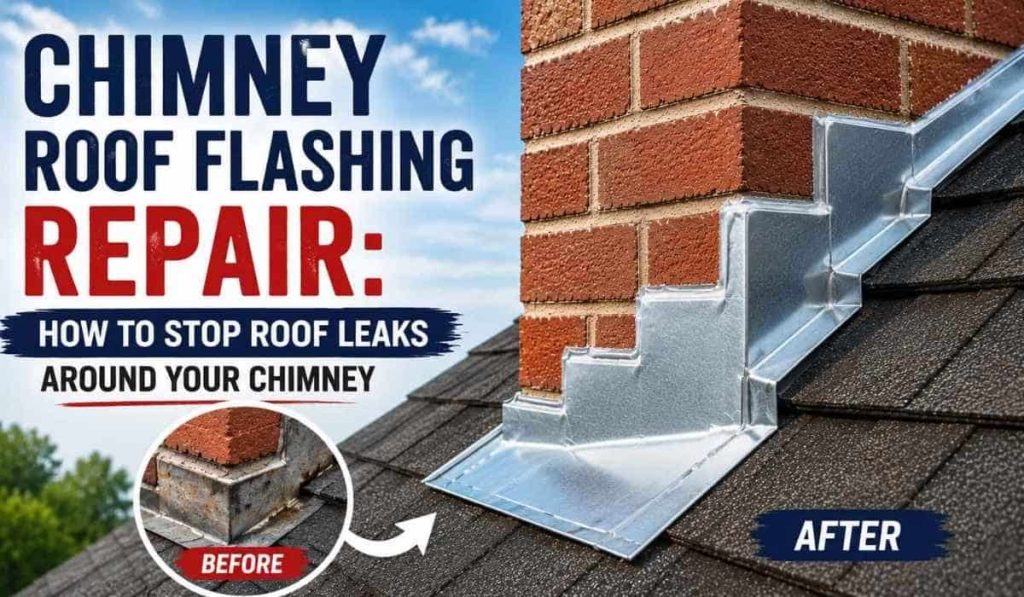
Chimney damage doesn’t always stay in one place. It can spread to nearby shingles and flashing, and sometimes homeowners need roof repair services to fix these leaks. This guide covers four things: how long a stainless steel chimney cap lasts, what maintenance it needs, what affects its cost, and how it compares to galvanized steel and copper.
What Is a Stainless Steel Chimney Cap?
A stainless steel chimney cap is a metal cover fitted over a chimney flue or over several flues at once. Most designs have a solid top that blocks rain and snow, along with mesh sides that allow smoke, heat, and gases to leave the chimney safely.
Some caps attach directly to a clay flue tile, while others are mounted to the chimney crown. A stainless steel fireplace chimney cap may be made in a standard size or custom-built for an unusual chimney shape.
The cap should protect the opening without sealing it. Proper ventilation must always remain available for the fireplace or heating appliance below.
Why Stainless Steel Is a Durable Choice
Stainless steel is popular because it offers a good balance of strength, weather resistance, and low maintenance. It normally costs more than galvanised steel, but it also tends to hold up better over time.
Better Resistance to Rust
Ordinary steel can rust when moisture reaches the exposed metal. Galvanised steel has a zinc coating that slows this process, but once the coating is scratched or worn, corrosion may begin.
Stainless steel resists rust because corrosion protection is part of the metal itself. It is not completely rust-proof, but it normally performs better in wet conditions than basic steel products.
Strong Performance in Wind and Rain
A chimney cap sits in one of the most exposed areas of the house. Thin or poorly fitted caps may bend, loosen, or lift during strong winds.
A well-made stainless steel cap is less likely to deform under normal weather conditions. The mounting method still matters, though. Even a strong cap can move if it is the wrong size or attached to weak masonry.
Reliable in Snow and Changing Temperatures
Snow, ice, and repeated freeze-thaw cycles can place stress on metal and fasteners. Stainless steel handles temperature changes well and does not depend on a painted surface to remain protected.
That makes it a sensible option for homes that experience cold winters, heavy rain, and changing seasonal conditions.
Longer Service Life Than Galvanised Steel
A galvanised cap may perform well for a period of time, but its protective coating can wear down. Stainless steel usually lasts longer because its resistance to corrosion does not rely on a thin outer layer.
This does not mean every stainless cap will last equally well. Metal thickness, steel grade, weld quality, mesh strength, and installation all affect performance.
How Long Does a Stainless Steel Chimney Cap Last?
There is no single lifespan that applies to every stainless steel chimney cap. A good cap can remain in service for many years, but the actual lifespan depends on the quality of the product, the environment, and how well it is maintained.
Several factors make the biggest difference.
Stainless Steel Grade and Thickness
Not all stainless steel is the same. Some products use stronger grades or thicker metal, while others are made to meet a lower price point.
304 stainless steel is commonly used for residential exterior products. It offers good corrosion resistance in most normal conditions. 316 stainless steel contains additional protection against salt and harsh coastal exposure, making it a better choice for certain waterfront or salt-heavy environments.
The grade matters, but it is not the only thing to consider. Thin metal, weak welds, poor mesh, or low-quality fasteners can still shorten the life of an otherwise good material.
Installation Quality
A cap that is level, secure, and correctly sized is likely to last longer than one that moves in the wind or places stress on the flue. Poor installation can lead to loose fittings, bent brackets, cracked flue tiles, or repeated movement. These problems may damage both the cap and the chimney beneath it.
Weather Exposure
Rain, snow, high winds, ice, and freeze-thaw cycles all affect chimney components. Properties near the coast may also face salt exposure, which can be harder on metal over time.
For a salt air chimney cap, a higher-quality grade and stronger hardware may be worth considering.
Chimney Fires
A chimney fire can expose the cap to extreme heat. Mesh may warp, welds can weaken, and the top cover may lose its shape. Any cap exposed to a suspected chimney fire should be inspected before the fireplace is used again.
Maintenance Frequency
A cap that is checked and cleaned regularly is more likely to stay secure. Small issues such as loose screws, blocked mesh, or early staining are easier to deal with before they become larger problems.
Can Stainless Steel Chimney Caps Rust?
Stainless steel is corrosion-resistant, but it is not completely immune to staining or rust.
Brown or orange marks do not always mean the main body of the cap is rusting through. The stain may come from ordinary steel screws, nearby metal particles, roof materials, or soot deposits. However, repeated staining should not be ignored.
Lower-grade steel may corrode sooner in harsh conditions. Salt, acidic chimney deposits, wet debris, and trapped moisture can also speed up wear.
Other common problems often appear at the same time:
- Blocked mesh from soot, leaves, or nesting material
- Loose screws, clamps, or brackets
- Bent top covers after strong winds
- Damaged or separated welds
- Rusted fasteners
- Mesh that has torn or pulled away
- Water continuing to enter the flue
Deep pitting, holes, weak mesh, or broken joints usually suggest more than simple surface staining. At that point, replacement may be safer than a small repair.
Stainless Steel Chimney Cap Maintenance
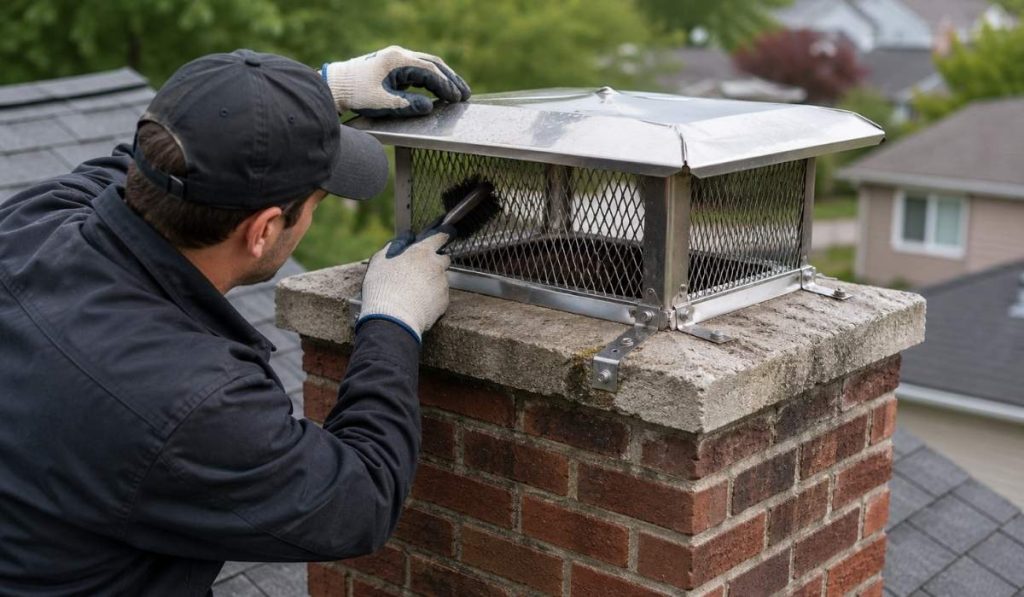
Stainless steel chimney cap maintenance is usually straightforward. The cap does not normally need painting, but it still needs to stay clean, open, and securely attached.
An annual inspection is a good starting point. The cap should also be checked after major storms, strong winds, a suspected chimney fire, or any sign of water entering the fireplace.
Routine maintenance should include:
- Remove leaves, nests, soot, and other debris.
- Check the mesh screen for blockages, holes, or damage.
- Look for bent metal, cracks, or loose joints.
- Tighten any loose screws, clamps, or brackets.
- Check for rust, stains, or signs of corrosion.
- Make sure the chimney cap is level and properly positioned.
- Inspect the chimney crown, flashing, and surrounding masonry for damage.
- Make sure the flue has enough space for proper airflow and ventilation.
A blocked chimney cap can cause serious airflow problems. Soot, ice, or nesting material around the mesh may prevent smoke from leaving freely and push it back toward the room.
Repair or Replacement?
Small issues may be repairable. Loose fasteners can sometimes be tightened, light staining may be cleaned, and a slightly shifted cap may be secured again.
Replacement is usually the better option when the mesh is badly damaged, the metal has deep corrosion, welds have failed, or the cap no longer stays secure. A stainless steel chimney cap replacement should also be considered when the existing cap is the wrong size or repeatedly allows water into the flue.
Stainless Steel Chimney Cap Cost
The cost of a stainless steel chimney cap depends on more than the price of the cap itself. Size, design, access, installation, and the condition of the chimney all affect the final amount.
Standard Single-Flue Cap
A standard single-flue cap is usually the simplest option. It covers one opening and is often available in common sizes. The price may still vary depending on metal thickness, steel grade, mesh quality, and mounting design.
Multi-Flue Cap
A multi-flue cap covers two or more flues under one larger top. These caps are bigger, use more material, and often need a more involved mounting system. Because of that, the total stainless steel chimney cap cost is usually higher than for a basic single-flue model.
Custom Stainless Steel Cap
A custom cap is made for a chimney that does not suit standard sizes. It may be needed for a wide crown, several flues, unusual dimensions, or a chimney with limited mounting space.
Custom fabrication usually increases both material and labour costs, but it may provide a better fit and stronger protection.
Installation Labour
Labour depends on how the cap is installed and how easy the chimney is to reach. A simple cap on a low, accessible roof may be straightforward. A tall chimney, steep roof, narrow work area, or damaged crown can make the job slower and more difficult.
Old Cap Removal
If an existing cap is rusted, bent, or stuck in place, it may need to be cut away or carefully removed before the new one can be fitted. This can add labour time, especially when old fasteners are corroded.
Masonry or Crown Repair
A new cap should not be attached to cracked tiles, weak mortar, or a damaged crown without dealing with those issues first. Loose bricks, failed joints, or broken mounting areas can increase the overall chimney cap price because repair work may be needed before installation.
Permit and Access Considerations
A straightforward replacement may not involve major approval, but building access, scaffolding, roof restrictions, or local property rules can still affect the job. For larger buildings or difficult locations in New York City, access planning may become a major part of the total cost.
What Affects the Total Cost?
The main price factors include:
- Cap size, including width, length, and height
- Number of flues and whether it is a single- or multi-flue design
- Stainless steel grade and metal thickness
- Mesh strength and design
- Standard or custom fabrication
- Chimney height, roof slope, and access requirements
- Old cap removal and mounting hardware
- Condition of the chimney crown, bricks, and mortar
- Product warranty
- Local labor and installation requirements
The cheapest cap is not always the lowest-cost choice in the long run. A weak product or poor fit may need earlier replacement, while a better-made cap can provide more reliable service with less maintenance.
Stainless Steel vs Other Materials: Cost and Value
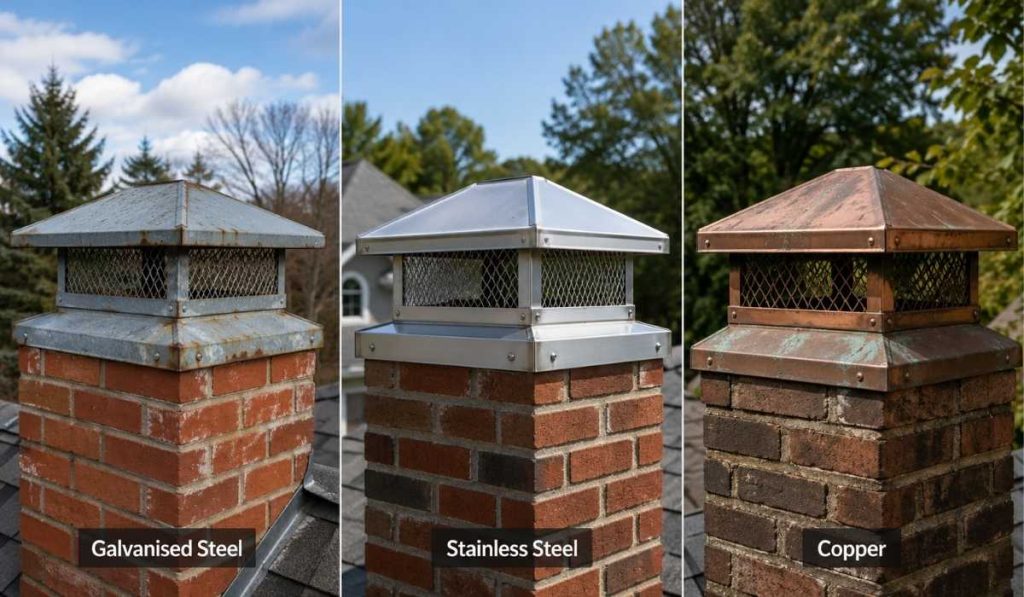
Stainless Steel vs Galvanised Steel
Galvanised steel usually has a lower upfront price. For homeowners working with a tight budget, it may seem like the easier choice. The main difference is long-term durability. Galvanised steel depends on its zinc coating. Once that surface becomes scratched or worn, rust can spread into the metal underneath.
Stainless steel normally costs more at the beginning, but it often lasts longer and needs less attention. For homeowners comparing replacement frequency rather than purchase price alone, stainless steel may provide better value.
Stainless Steel vs Copper
Copper is often chosen for appearance. It has a distinctive finish and gradually develops a natural patina.
Copper caps usually cost more than stainless steel, especially for larger or custom designs. They can last a long time, but the higher price is often tied to appearance as much as performance. Stainless steel has a simpler silver finish and is usually chosen for practical reasons. It offers strong durability without the premium cost of copper.
For many homeowners, the best chimney cap material comes down to priorities. Copper suits decorative or historic projects, while stainless steel is often the more balanced choice for cost, strength, and maintenance.
Is a Stainless Steel Chimney Cap Worth the Cost?
For homeowners who want a durable chimney cap with low maintenance, stainless steel is often worth considering.
It offers strong rust resistance, performs well in rain and snow, and usually lasts longer than basic galvanised steel. It also works with many flue shapes and chimney layouts.
The value depends on the whole installation, not just the metal. A good cap still needs the correct size, strong mesh, reliable fasteners, and a secure mounting surface.
A stainless steel chimney cap may not be the cheapest option at the time of purchase, but its longer service life and lower maintenance needs can make it a better long-term choice. The final result depends on material quality, fit, installation, and the condition of the chimney beneath it.
Frequently Asked Questions
How much does a stainless steel chimney cap cost?
The price depends on the size, number of flues, steel quality, custom fabrication, roof access, labour, and any repairs needed around the chimney top.
How long does a stainless steel chimney cap last?
A well-made cap can last for many years. Its lifespan depends on steel grade, weather exposure, installation quality, salt conditions, chimney fires, and regular maintenance.
Can a stainless steel chimney cap rust?
Yes. Surface staining or corrosion can still occur, especially with lower-grade steel, ordinary steel fasteners, trapped moisture, soot deposits, or salt exposure.
Is 316 stainless steel better than 304 for a chimney cap?
316 stainless steel offers stronger resistance to salt and coastal conditions. 304 stainless steel is commonly used for normal residential environments and may be suitable for many homes.
Is stainless steel better than galvanised steel?
Stainless steel usually offers better corrosion resistance and a longer service life. Galvanised steel normally costs less upfront but may need replacement sooner.
How often should a stainless steel chimney cap be inspected?
It should usually be checked once a year and after severe storms, strong winds, a suspected chimney fire, or signs of water entry.
Does a stainless steel chimney cap need cleaning?
Yes. Leaves, soot, creosote, nesting material, and ice can collect around the mesh and restrict airflow.
When should a stainless steel chimney cap be replaced?
Replacement may be needed when the cap has deep corrosion, broken mesh, failed welds, severe bending, loose mounting, repeated leaks, or storm damage.
Final Thoughts
A stainless steel chimney cap gives homeowners a practical mix of strength, weather resistance, and low maintenance. It can protect the flue for years, but only when the size, material, and installation are right.
Regular checks still matter. Loose fasteners, blocked mesh, storm damage, and early corrosion are easier to handle before they turn into larger problems. Homeowners who notice leaks, movement, broken mesh, or staining around the chimney top should have the area inspected before the damage spreads.
For help checking the condition of your chimney cap or choosing the right replacement, contact us to discuss the next step.
Need Help with Your Next Project? Call Royal Empire Builder Today!
Fast responses. Expert advice. Trusted service across NYC and beyond.