Homeowners have relied on this roofing material for years. It’s known for its durability, flexibility, and long-term value. Many new roofing options have entered the market. Even so, EPDM Roofing still holds a strong spot among low-slope roofing systems. Its long track record makes it a trusted choice for new builds and roof replacements alike.
The material became popular in the late 1960s. Since then, it has built a reputation for reliability. Many buildings today still have EPDM roof systems from decades ago. With proper care, these roofs still work well.
TPO now leads the market among single-ply roofing materials. But EPDM Roofing remains one of the top choices for:
- Commercial buildings
- Warehouses
- Retail facilities
- Schools
- Healthcare buildings
- Residential flat roofs
One reason for its lasting popularity: it performs well in almost any weather. From freezing winters to hot summers, the material stays flexible and resists damage. Property owners often pick an EPDM roof for one simple reason — it balances cost and performance. Installation is affordable. Maintenance is simple. Repairs are usually easier than with many other roofing systems.
Are you researching a roof replacement? Planning a commercial project? Just want to learn more about flat roofs? This guide breaks down the benefits, drawbacks, installation methods, lifespan, common problems, and other key facts about EPDM roofing.
Advantages and Limitations of EPDM Roofing
Before we get into the technical details, let’s cover the basics. Like any building material, EPDM Roofing has clear strengths — and a few limitations worth knowing before installation.
Benefits of EPDM Roofing
Exceptional Service Life
Longevity is the top reason property owners choose EPDM Roofing.
When installed and maintained correctly, an EPDM roof can last for decades. Many roofing pros consider it one of the longest-lasting single-ply materials on the market. A typical EPDM roofing membrane lasts 25 to 35 years. Under ideal conditions, some systems last 40 years or more.
Lifespan depends on a few factors:
- Membrane thickness
- Installation quality
- Drainage performance
- Weather exposure
- Maintenance habits
Thicker membranes generally last longer and hold up better.
Other lifespan benefits include:
- Handles temperature swings well
- Stays flexible in cold weather
- Resists cracking and brittleness
- Performs well through freeze-thaw cycles
- Holds up over the long term
- Benefits from routine inspections
- Catches small problems before they grow
- Helps you get the most out of your roof
Affordable Material Costs
Cost is another big advantage.
Compared to most flat roofing systems, EPDM Roofing is one of the most budget-friendly options. Aside from some TPO systems, few low-slope materials can match its price. Ballasted systems cost the least. Fully adhered and mechanically attached systems cost more, but they’re still competitively priced.
Your final price depends on:
- Insulation needs
- Local building codes
- Labor rates
- Roof accessibility
- Overall roof design
Even with these variables, commercial EPDM roofing stays cost-effective for most property owners.
Lower Installation Expenses
Installation is another reason EPDM Roofing stays popular — it’s simple.
Most roofing contractors already know EPDM well, especially in northern regions where it’s been used for decades. Large membrane sheets cover big sections of roof at once. Fewer seams mean less labor. Less labor often means a lower total cost.
Easier Repairs
Maintenance and repairs are simple with EPDM Roofing.
TPO and PVC systems usually need heat-welding equipment. EPDM roof repair typically just needs primers, adhesives, and repair patches. Small damage is often fixed fast, without heavy labor or expensive tools.
Repair materials are easy to find and inexpensive. That keeps ongoing maintenance costs lower than many competing systems — a real plus for owners focused on long-term costs.
An Environmentally Responsible Choice
Sustainability matters more than ever in construction decisions.
EPDM Roofing performs well here too. Many EPDM roofing membrane products can be recycled after removal, instead of ending up in a landfill. Installation scraps can often be recycled as well. That means less waste and a smaller environmental footprint.
Reflective Roofing Options Available
Most people picture EPDM Roofing as black. But white options exist too.
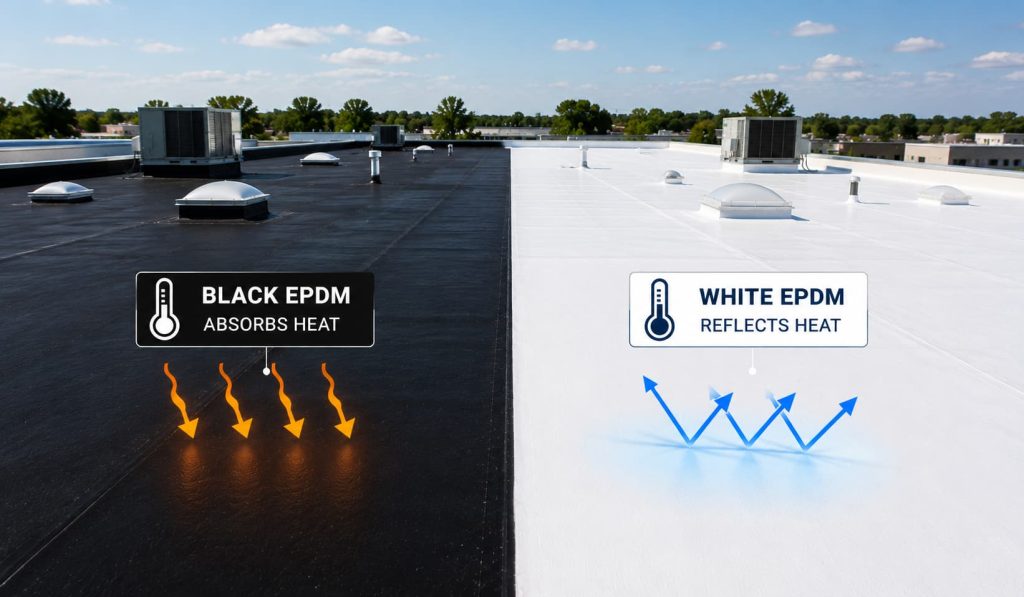
White EPDM roofing membrane reflects sunlight and helps reduce heat gain. It’s a popular pick when energy efficiency or cool-roof requirements matter. White membranes cost more than black ones, but they can pay off in energy savings depending on your climate.
Useful Heat Absorption in Cooler Regions
Reflective roofing helps in warm climates. But black EPDM roof systems have their own advantage in cold ones.
The dark surface absorbs heat from the sun all day. That can lower heating costs in the colder months. For buildings in northern climates — where heating costs more than cooling — this can be a real benefit.
Potential Drawbacks of EPDM Roofing
EPDM Roofing has plenty of strengths. But it’s just as important to know its limits. Understanding the disadvantages of EPDM roofing helps you set realistic expectations and plan proper maintenance.
Puncture Vulnerability
Puncture resistance is one of the most common concerns.
Standard, non-reinforced membranes can be damaged by dropped tools, sharp debris, careless foot traffic, or other impacts. This matters most on roofs with frequent maintenance activity.
The good news: reinforced EPDM products resist punctures and tears much better. Walkway pads also help protect high-traffic areas. Regular inspections are still a must, especially after storms or maintenance work.
Sensitivity to Oils and Grease
The roof membrane EPDM can be damaged by petroleum-based products and grease.
This shows up most often near HVAC equipment, where lubricants can leak onto the roof. Restaurants face a similar risk from grease in kitchen exhaust systems. Over time, contact with these substances can wear down the membrane. Protective barriers and proper containment help prevent this damage.
Standing Water Concerns
Drainage plays a huge role in how long any flat roof lasts.
PVC and TPO systems use heat-welded seams. EPDM Roofing instead uses adhesives and seam tapes. Modern seam technology is reliable, but standing water over time can weaken adhesive performance. Poor drainage can speed up aging and raise the risk of seam problems. That’s why proper slope and drainage design are so important during EPDM roof installation.
Key drainage reminders:
- Don’t ignore ponding water
- It often signals a drainage problem
- It can shorten your roof’s lifespan
- Inspect drains regularly
- Keep gutters and scuppers clear
- This protects the insulation and membrane
- It also reduces structural stress
- Fix low spots early
- This prevents costly repairs later
Slippery Surface During Wet Conditions
Safety matters too.
EPDM roof surfaces get very slippery when wet. Maintenance crews should be careful accessing the roof after rain, snow, or other wet weather. Many building owners set safety rules that limit roof access until the surface dries.
Appearance Considerations
Functionally, EPDM Roofing performs great. Aesthetically, opinions differ.
Some property owners feel black rubber roofing lacks the visual appeal of other materials. This rarely matters for commercial buildings, since flat roofs are usually hidden from street view.
Homeowners with a visible flat roof section may want something more decorative. In that case, alternative coverings, paver systems, or architectural touches are worth considering.decorative appearance. In those situations, alternative roof coverings, paver systems, or architectural enhancements may be worth considering.
Understanding How an EPDM Roof Works
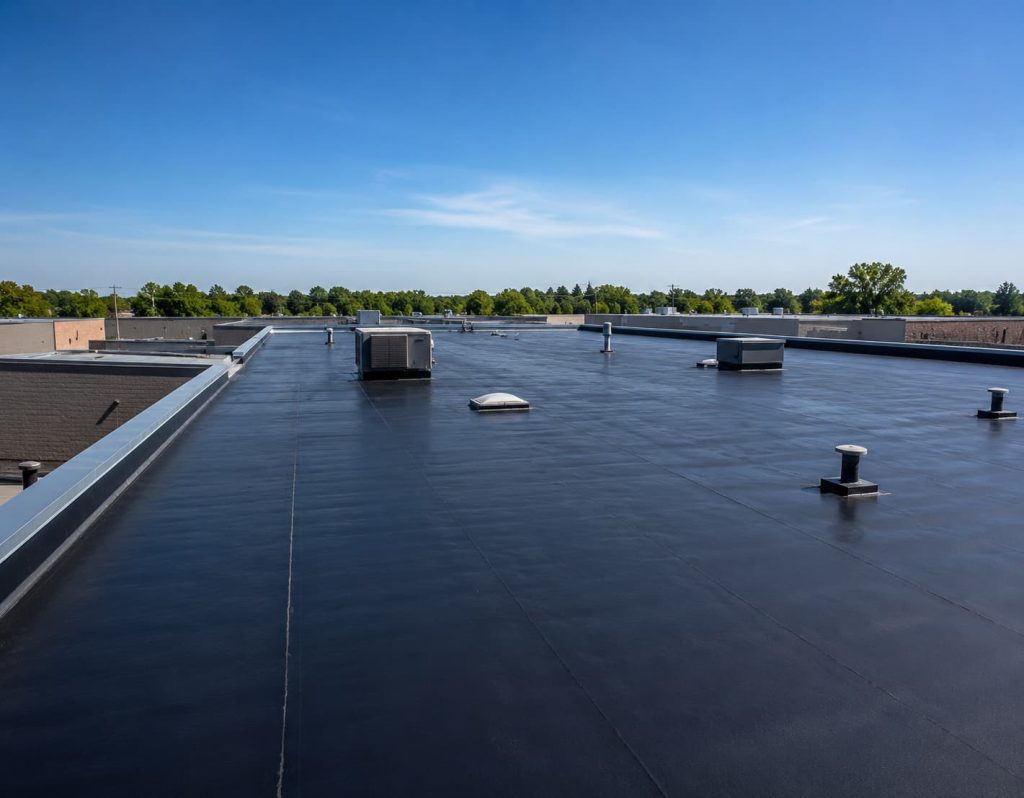
EPDM Roofing is a single-ply roofing system made from synthetic rubber.
EPDM stands for Ethylene Propylene Diene Monomer — the technical name for the material used in the membrane. The system uses large sheets installed across the roof and joined together to form a waterproof barrier. These sheets come in a few thicknesses, most commonly 45-mil, 60-mil, and 90-mil.
Most EPDM roof systems are black, though white reflective versions are available too. Flexibility is one of its defining traits. Unlike rigid roofing products, EPDM Roofing expands and contracts as temperatures change through the year. This flexibility reduces stress on the system and supports long-term durability.
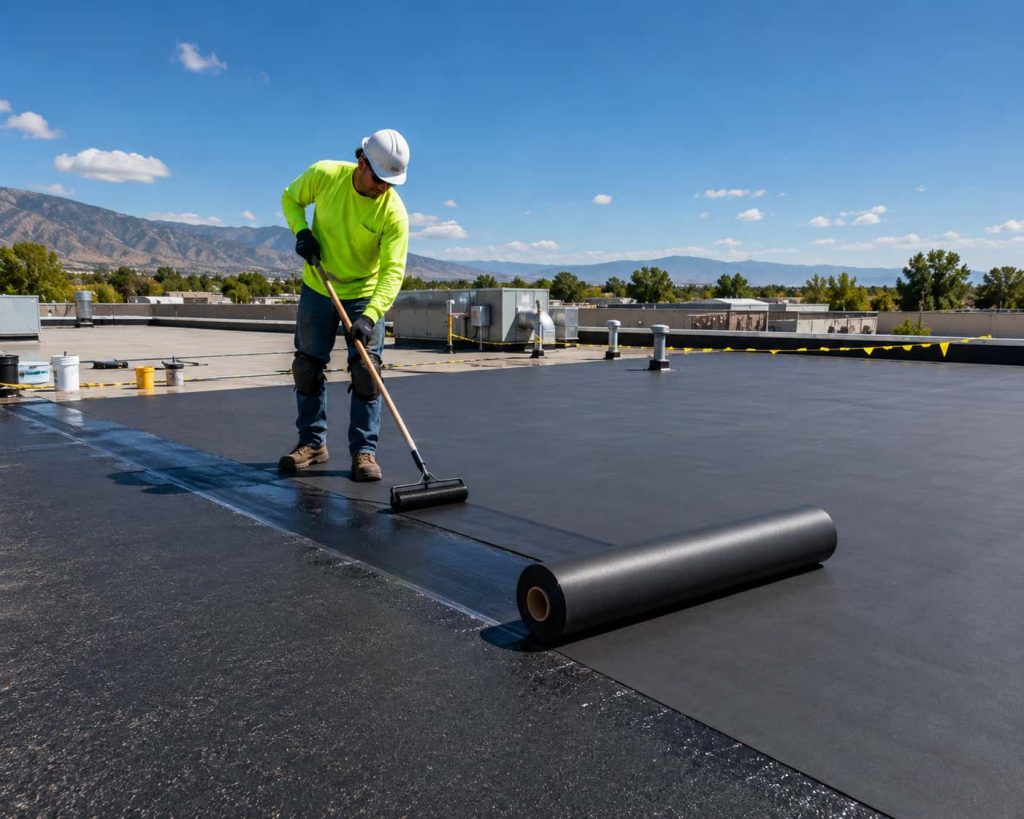
Seams between sheets are usually created with primers, seam tapes, and adhesives. This is different from PVC and TPO systems, which rely mainly on heat welding. When people say “rubber roof,” they almost always mean EPDM Roofing. It’s become the standard rubber roofing system for commercial and residential flat roofs across North America.
Repairability is another reason for its popularity. Even a simple EPDM roof repair can restore waterproof performance quickly when damage is caught early. Modern repair methods let contractors fix punctures, seams, and local damage — without replacing large sections of roof.
Flexibility. Weather resistance. Durability. Repairability. Together, these qualities keep EPDM Roofing one of the most trusted low-slope roofing systems available today.
More advantages of EPDM Roofing:
- Works for many building types
- Suits commercial and residential roofs
- Comes in multiple installation methods
- Adapts to different roof designs
- Provides reliable waterproofing
- Easy to maintain and repair
- Delivers long-term value
- Keeps ownership costs low
- Backed by decades of proven performance
Frequently Asked Questions About EPDM Roofing
Can an EPDM Roof Be Installed Over an Existing Roof?
An EPDM roof can sometimes be installed over an existing roof if it is dry, stable, and structurally sound. A professional inspection and local code check are required.
What Thickness of EPDM Roofing Membrane Is Best for Commercial Buildings?
EPDM roofing membrane is commonly available in 45-mil, 60-mil, and 90-mil thicknesses. Most commercial property owners choose 60-mil or 90-mil EPDM roofing because these options offer better durability, stronger puncture resistance, and a longer service life. The right thickness depends on the roof size, local weather, foot traffic, and budget.
Does Black EPDM Roofing Increase Cooling Costs?
Black EPDM roofing absorbs more heat than white or reflective roofing materials. This may increase rooftop temperatures and cooling costs during summer. However, black EPDM roof systems can also help lower heating costs in winter. The overall energy impact depends on the building’s location, insulation, ventilation, and roof design.
What Causes EPDM Roofing Seams to Fail?
EPDM roofing seams may fail because of poor installation, aging adhesives, standing water, harsh weather, or missed maintenance. Regular EPDM roof inspections can identify loose seams early and prevent leaks, insulation damage, and costly roof repairs.
Is EPDM Roofing Better Than TPO for Cold Climates?
EPDM roofing is often a better choice for cold climates because the rubber membrane stays flexible in freezing temperatures. This flexibility allows the membrane to expand and contract during freeze-thaw cycles without becoming brittle. TPO may offer better heat reflection in warmer regions, but EPDM roofing is often preferred for cold-weather durability.
Need Help with Your Next Project? Call Royal Empire Builder Today!
Fast responses. Expert advice. Trusted service across NYC and beyond.