Spalling concrete is one of the most common forms of concrete deterioration, causing the surface to crack, flake, peel, or break away over time. If left untreated, the damage can expose reinforcing steel, weaken structural components, and lead to more expensive repairs.
In New York City, especially on older buildings throughout Brooklyn, Manhattan, Queens, the Bronx, and Staten Island, years of moisture exposure, freeze-thaw cycles, de-icing salts, and natural aging make concrete spalling a frequent problem. It often appears on sidewalks, balconies, parking garages, foundations, retaining walls, and building facades.
What Is Spalling Concrete?
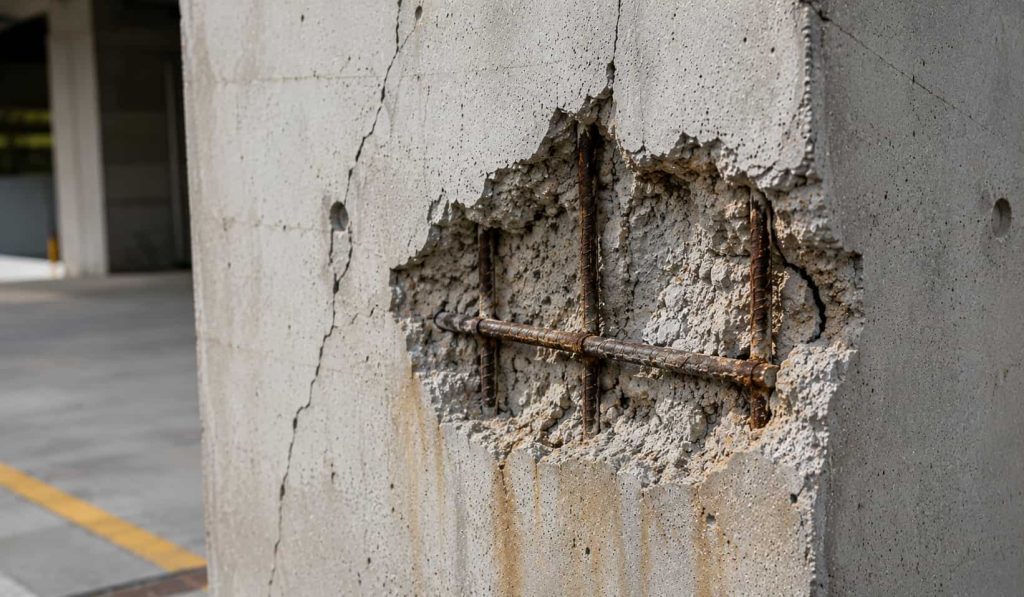
If you’re wondering what is spalling concrete, it refers to the process where the surface of concrete begins to crack, chip, flake, or peel away. As the damage progresses, pieces of concrete may break off completely, exposing the reinforcing steel underneath. The spalling concrete meaning is simply the deterioration of concrete caused by moisture, corrosion, freeze-thaw cycles, or other environmental and structural factors.
Concrete Spalling Causes
Understanding concrete spalling causes is the first step toward preventing costly repairs. If you’ve ever wondered what causes concrete spalling, the damage is usually the result of moisture intrusion, reinforcing steel corrosion, freeze-thaw cycles, chemical reactions, or poor construction practices. The following are the most common causes.
(a) Corrosion of rebars – Steel reinforcement bars can rust when moisture and air reach them. As steel corrodes, it expands and creates pressure inside the concrete. This pressure eventually forces the concrete to crack and separate and causes spalling concrete.
(b) Sulphate attack – Sulphates found in soil, groundwater, or other sources can react with concrete and weaken its internal structure over time.
(c) Alkali-silica reaction – This chemical reaction occurs between certain aggregates and alkalis in cement. The reaction creates expansion inside the concrete, which can lead to cracking and deterioration.
(d) Freeze-thaw cycles – Water can enter small pores and cracks in concrete. During cold weather, the water freezes and expands. Repeated freezing and thawing can damage the concrete surface and contribute to spalling.
While all these factors can cause spalling concrete, this article focuses mainly on concrete spalling caused by the corrosion and expansion of embedded steel reinforcement. This is one of the most common causes of damage in reinforced concrete structures and often requires timely repair to prevent further deterioration.
Carbonation: The Leading Cause of Spalling Concrete
Freshly placed concrete is naturally highly alkaline and typically has a pH value of around 12. This high alkalinity plays an important role in protecting the reinforcing steel inside the concrete. It creates a thin protective layer around the rebars, helping prevent corrosion and extending the life of the structure.
However, concrete does not remain in this condition forever. As years pass, the alkalinity of the concrete slowly decreases. When the pH level drops to about 9 or lower, the protective layer around the steel reinforcement is destroyed. Once this protection is lost, the rebars become vulnerable to rust and corrosion.
The gradual loss of alkalinity is caused by a process known as carbonation. Carbonation is one of the leading causes of spalling concrete in reinforced concrete structures.
Once carbonation reaches the reinforcing steel, corrosion can begin. Rust occupies more space than the original steel, causing the rebars to expand. This expansion creates internal pressure within the concrete. As the pressure increases, cracks start to form, and sections of the concrete surface begin to separate. This process ultimately leads to spalling concrete.
Understanding how carbonation works helps explain why some concrete structures deteriorate faster than others.
The following points are especially important:
• The main causes of carbonation, moisture and carbon dioxide, are found almost everywhere. Structures located in open and exposed environments are generally more vulnerable.
• In high-quality, dense concrete with few defects, carbonation progresses very slowly. It may take many years before the process reaches the reinforcing steel.
• Poor-quality concrete often allows carbonation to move faster. Concrete with high porosity provides an easier path for moisture and carbon dioxide to travel through the structure.
• Construction defects such as honeycombs, voids, cracks, and poorly compacted areas can significantly increase the rate of carbonation.
For this reason, controlling carbonation is an important part of preventing spalling concrete and extending the service life of reinforced concrete structures.
RESTORING SPALLED CONCRETE AND IMPROVING ITS DURABILITY
Once spalling concrete becomes visible due to steel corrosion, the damage is usually more advanced than it appears on the surface. By this stage, carbonation has often penetrated deep into the concrete and reached the reinforcing steel. As corrosion progresses, the steel expands, creating internal pressure that causes cracking, delamination, and eventually concrete spalling.
To stop further deterioration and restore the structure’s strength, a systematic repair process should be followed. Proper repair not only restores the damaged area but also helps protect the concrete against future corrosion and environmental damage.
The following steps are commonly used when repairing spalling concrete.
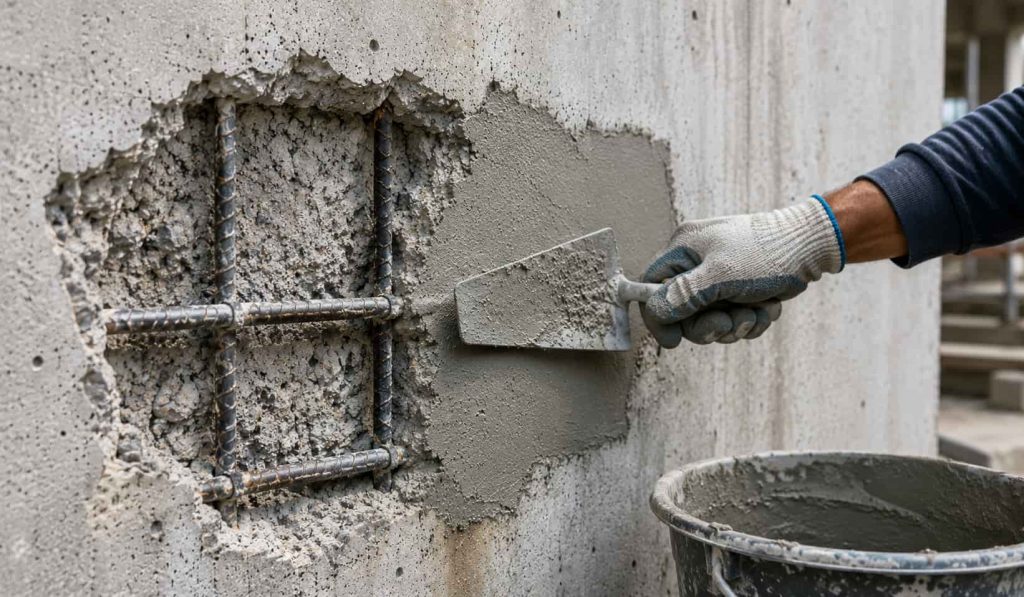
(i) Removing Loose and Damaged Concrete
The first step is to remove all loose, cracked, and delaminated concrete until only sound and solid concrete remains. Any weak material left behind can reduce the effectiveness of the repair.
The removal process should also expose the corroded reinforcement bars. In most cases, concrete behind the steel reinforcement should be cut back by approximately 20 mm to allow complete access for cleaning and treatment.
The repair cavity should be kept as simple as possible. Square or rectangular shapes are generally preferred because they make repair work easier and improve bonding performance.
The edges of the repair area should be saw-cut perpendicular to the concrete surface to a depth of around 12 mm. This helps avoid thin feather edges that may fail prematurely after the repair is completed.
(iI) Surface Preparation and Thorough Cleaning
After the damaged concrete has been removed, the exposed surface must be prepared properly.
A rough surface profile is usually recommended because it improves the bond between the existing concrete and the repair material.
All dust, loose particles, debris, oil, grease, and contaminants should be completely removed before repair materials are applied. Any material that interferes with adhesion can reduce the durability of the repair.
High-pressure water jetting is often used to clean the substrate effectively.
(III) Cleaning and Protecting Exposed Reinforcement Steel
Once the reinforcement bars are exposed, all visible corrosion must be removed from the steel.
Cleaning methods may include wire brushing, abrasive blasting, or needle scaling, depending on the severity of the corrosion. The objective is to expose clean steel and remove rust that may continue to expand after repairs are completed.
In some cases, corrosion may have significantly reduced the cross-sectional area of the reinforcing steel. If substantial loss of steel has occurred, a structural engineer should assess the damage and determine whether strengthening measures are necessary. A reduction of around 20% is often considered a threshold for further evaluation.
After cleaning, the reinforcement should receive a protective coating to help prevent future corrosion. Products such as MAPEFER 1K are commonly used because they provide re-alkalising protection for reinforcing steel and improve long-term durability.
(Iv) Choosing the Right Repair Material and Rebuilding the Surface
Selecting the correct repair material is one of the most important parts of a successful spalling concrete repair project.
The repair mortar should be chosen based on the specific requirements of the structure and the conditions of the repair area.
Several factors should be considered during material selection:
Several factors should be considered during material selection:
- Size of the damaged area
- Structural requirements
- Indoor or outdoor exposure
- Moisture and weather conditions
- Freeze-thaw exposure
- Expected traffic loads
Choosing the right repair material depends on the size of the damaged area, the location of the concrete, and the severity of the spalling. High-quality structural repair mortars are designed to restore damaged concrete, improve durability, and provide long-lasting performance when applied correctly. Always choose a repair product that is suitable for the type of concrete and the environmental conditions it will be exposed to.
(v) Proper Curing and Protection of Repaired Areas
Once the repair material has been applied, proper curing becomes essential.
Curing helps maintain the moisture required for cement hydration and allows the repair material to achieve its intended strength and durability. Without proper curing, the repaired area may crack, shrink excessively, or lose performance.
Most cementitious repair materials require continuous curing protection for approximately seven days, although the exact period may vary depending on the product used.
If formwork is involved, it should remain in place until the minimum removal period specified by the manufacturer has been reached.
Always follow the curing recommendations provided by the product manufacturer to achieve the best possible results.
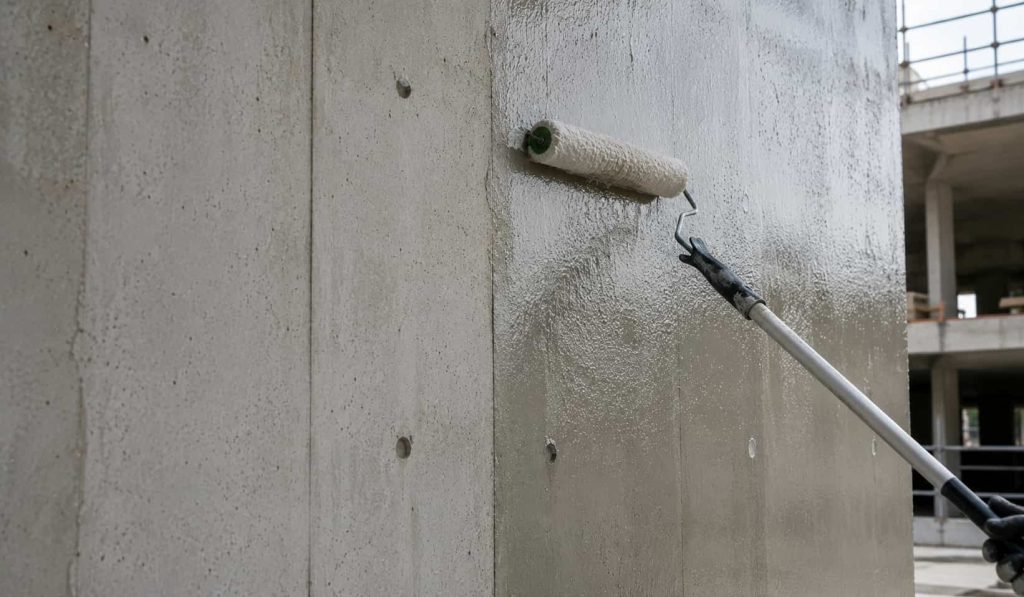
(vI) Applying Protective Coatings for Long-Term Performance
Even after repairs have been completed successfully, additional protection is often recommended.
Since the structure has already experienced deterioration in its service environment, engineers frequently specify protective coatings to increase durability and reduce the risk of future damage.
Protective systems can provide resistance against:
• Carbonation
• Chloride ion diffusion
• Water absorption
These protective treatments create an additional barrier that helps preserve the repaired concrete and extend the service life of the structure.
In addition to improving durability, protective coatings can also enhance the appearance of the repaired surface. Coloured or pigmented coatings are often selected when aesthetics are important.
Products such as MAPELASTIC GUARD, the ELASTOCOLOR range of anti-carbonation coatings, and the PLANISEAL WR range of protective treatments are commonly used to provide long-term protection against environmental exposure and future spalling concrete.
How to Prevent Spalling Concrete
Preventing spalling concrete is much easier and less expensive than repairing damaged concrete. With proper construction practices and regular maintenance, many cases of concrete spalling can be avoided before serious damage occurs.
Use High-Quality Concrete
Using dense, low-porosity concrete helps reduce the movement of moisture and carbon dioxide into the structure. Quality concrete provides better protection for reinforcing steel and slows the carbonation process.
Ensure Proper Placement and Compaction
Even a good concrete mix can fail if it is not installed correctly. Proper placement and compaction help eliminate voids, honeycombs, and weak spots that can allow water to penetrate the concrete.
Maintain Adequate Concrete Cover
Concrete cover acts as a protective barrier around reinforcing steel. When the cover thickness meets design requirements, it takes longer for carbonation and moisture to reach the rebars, reducing the risk of corrosion.
Repair Cracks and Defects Early
Small cracks, voids, and surface defects should be repaired as soon as they are discovered. Early repairs help prevent moisture from entering the concrete and causing further deterioration.
Apply Waterproofing and Protective Coatings
Waterproofing systems, sealers, and anti-carbonation coatings help protect concrete from water absorption and environmental exposure. These treatments can significantly improve the durability of exposed concrete structures.
Perform Regular Inspections
Routine inspections help identify early signs of damage, such as hairline cracks, rust stains, or surface deterioration. Addressing these issues quickly can prevent larger spalling concrete repairs later.
Protect Against Freeze-Thaw Damage
In cold climates, water trapped inside concrete can freeze and expand. Proper drainage and suitable concrete design help reduce damage caused by repeated freeze-thaw cycles.
By following these preventive measures, property owners can reduce the risk of spalling concrete, extend the service life of structures, and minimize future repair costs.
Need Help with Your Next Project? Call Royal Empire Builder Today!
Fast responses. Expert advice. Trusted service across NYC and beyond.