If you recently typed the phrase “roofing cop” into a search bar, you are likely looking at a new commercial roofing estimate or trying to figure out what that protective cap running along the top edge of your building is called. In the professional construction industry, the correct term is roof coping.
It might look like a simple piece of finish trim, but it is actually one of the most critical components of a low-slope or flat roofing system. When installed correctly, this cap acts as a continuous shield for the exposed structural edges of your building, keeping harsh weather from rotting out the assembly from the top down.
What Is Coping in Building Construction?
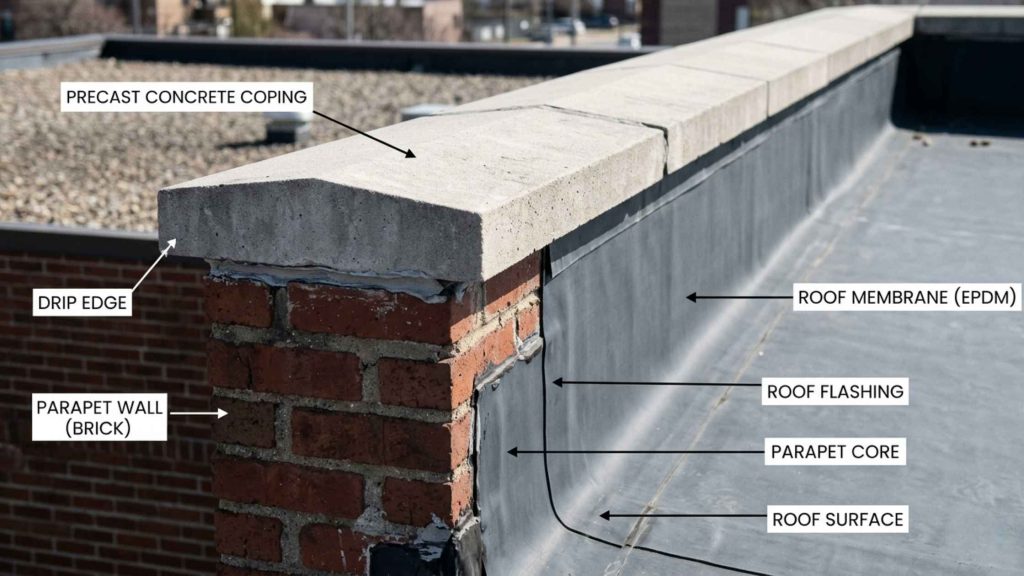
Coping in building construction is a protective covering installed on top of an exposed wall to protect it from water and weather. When installed on a parapet wall around a flat or low-slope roof, it is commonly called roof coping.
Coping is the finishing layer placed on top of any exposed wall to keep water out. Without it, rain and snow would sit directly on the exposed top of the wall, soak in, and slowly break the material down from the inside cracking masonry, rusting fasteners, and rotting whatever’s underneath.
You’ll see coping on more than just roofs. It shows up on garden walls, retaining walls, chimneys, and freestanding brick or block walls — anywhere the top of a wall is left open to the sky. The material changes depending on the job. Stone and precast concrete coping are common on masonry walls and fences. Metal coping is more common in commercial construction because it’s lighter, faster to install, and holds up well over large runs.
When this same detail is used on a parapet wall around a flat or low-slope roof, contractors just call it roof coping. Same idea, same job — it’s just doing that work at the roofline instead of a garden wall.
Where Roofing Cop Is Commonly Used
You will usually find roofing cop on buildings that have parapet walls. These are especially common on commercial flat roofs and low-slope roofing systems. Office buildings, retail stores, warehouses, schools, multifamily properties, and industrial buildings often use metal roof coping along the roof perimeter.
Some residential structures also have parapet walls, although it is more common in commercial construction. In those cases, wall coping serves the same purpose. It protects the top of the wall from weather exposure and supports the overall performance of the roof edge.
So while this detail is not used on every type of roof, it is a major detail anywhere parapet walls are present. If a building has that wall design, ignoring coping details is a mistake.
Does Every Roof Need Coping?
Standard pitched or sloped residential roofs generally do not require coping because their angled design naturally sheds water directly into a gutter system. Coping is specifically required for flat or low-slope roofing systems that feature parapet walls. When these structures extend past the main roofline, their top edges stay completely unprotected from severe weather, making an engineered capping system absolutely essential.
Common Types of Roofing Cop
| Type of Roof Coping | Best For | Key Benefits |
|---|---|---|
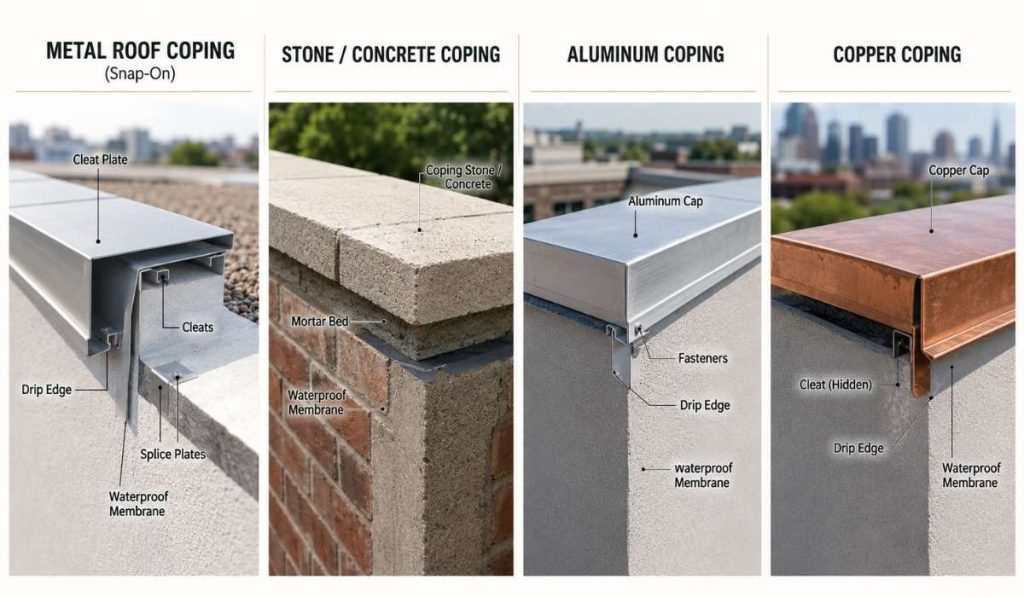
| Metal Roof Coping | Commercial buildings and flat roofs | Durable, lightweight, weather-resistant, and easy to customize for different wall sizes. |
| Stone or Concrete Coping | Historic, decorative, and masonry buildings | Strong, long-lasting, and provides excellent protection with a traditional appearance. |
| Aluminum Coping | Coastal and humid areas | Rust-resistant, lightweight, and requires very little maintenance. |
| Copper Coping | Premium and historic buildings | Highly durable, corrosion-resistant, and develops a natural protective finish over time. |
Main Components of a Roof Coping System
A roof coping system is made up of several parts that work together to protect the top of a parapet wall from water and weather damage. A proper coping detail includes the coping cap, joints, fasteners, corners, flashing, and connections to the roofing system.
Coping Cap
The coping cap is the top cover installed over the parapet wall. It protects the wall from rain, snow, and direct sunlight while directing water away from the roof edge.
Joints
Joints connect one coping section to the next. They must be properly sealed because damaged or open joints are one of the most common causes of water leaks.
Corners and Miters
Corners and miters are installed where coping changes direction. If these areas are not fitted and sealed correctly, water can enter the wall and cause damage.
Cleats and Fasteners
Cleats and fasteners hold the coping securely in place. They help the system stay stable during strong winds and changing weather conditions.
Flashing and Roof Membrane
Roof coping works together with the flashing and roof membrane to create a waterproof roof edge. If these parts are not connected properly, water can enter the building and reduce the performance of the roofing system.
How Does Roof Coping Protect Your Roof?
Roof coping protects one of the most exposed parts of a building by covering the top of a parapet wall. Instead of letting rainwater soak into the wall, it directs water away from the roof edge. This helps keep the wall dry and reduces the risk of leaks and water damage.
A properly installed coping system also works together with the roof flashing and roof membrane to create a stronger waterproof barrier. It helps protect the roof from wind-driven rain, changing temperatures, and moisture that can slowly weaken the building over time.
Roof coping protects your roof by:
- Directing rainwater away from the top of the wall.
- Preventing water from entering the parapet wall.
- Protecting roof flashing and roof edges.
- Reducing cracks caused by freeze-thaw weather.
- Helping the roof last longer with fewer repairs.
Signs Your Roofing Cop May Be Failing
A failing roofing cop system usually shows warning signs before the damage becomes severe. The problem is that many owners miss those signs or ignore them until leaks begin to show up.
Some common red flags include loose or displaced coping sections, open joints, visible rust, cracks in nearby masonry, and water stains running down the exterior wall. You may also notice recurring leaks near parapet areas after heavy rain or wind.
If the coping has shifted, rattles during storms, or shows separation at seams, that is not something to brush off. It is a sign that the system may no longer be protecting the wall properly. Damaged coping can allow water into the wall assembly and lead to much bigger issues over time.
Even small warning signs like minor rust or visible movement at the corners deserve attention. A weak coping cap system usually gets worse, not better. The longer it is ignored, the more expensive the problem can become.
Common Causes of Roof Coping Problems
Wind Uplift
Strong winds put pressure on roof edges. If the coping is not securely attached, it can shift, loosen, or even come off.
Lack of Maintenance
Small issues like cracks, loose joints, or rust can turn into costly repairs if they are not fixed in time.
Poor Installation
Incorrect measurements, loose fasteners, or poorly sealed joints and corners can cause the coping system to fail early.
Aging Materials
Over time, sealants wear out, fasteners loosen, and joints begin to open, making the system more vulnerable to damage.
Thermal Movement
Metal expands and contracts as temperatures change. Without proper expansion joints, this movement can damage seams and attachments.
Roofing Cop Repair or Replacement: Which Is Better?
The answer depends on the actual condition of the system. Some problems can be repaired if they are limited to a few joints, isolated corrosion, or a small fastening issue. In situations like that, a targeted repair may restore performance without needing full replacement.
But repair is not always the smart choice. If the surrounding wall is deteriorating and the coping detail itself is weak, professional masonry services may be needed before repairing one small section. Patching a failing system again and again can waste money without solving the real issue.
The same goes for parapet walls that already show broader moisture damage. If the surrounding masonry is deteriorating and the coping detail itself is weak, repairing one small section will not fix the underlying problem.
A qualified contractor should inspect the full parapet wall coping system before recommending repairs or replacement. Any contractor pushing a quick answer without a full look at the condition of the system is not doing careful work.
Why Proper Roof Coping Installation Matters
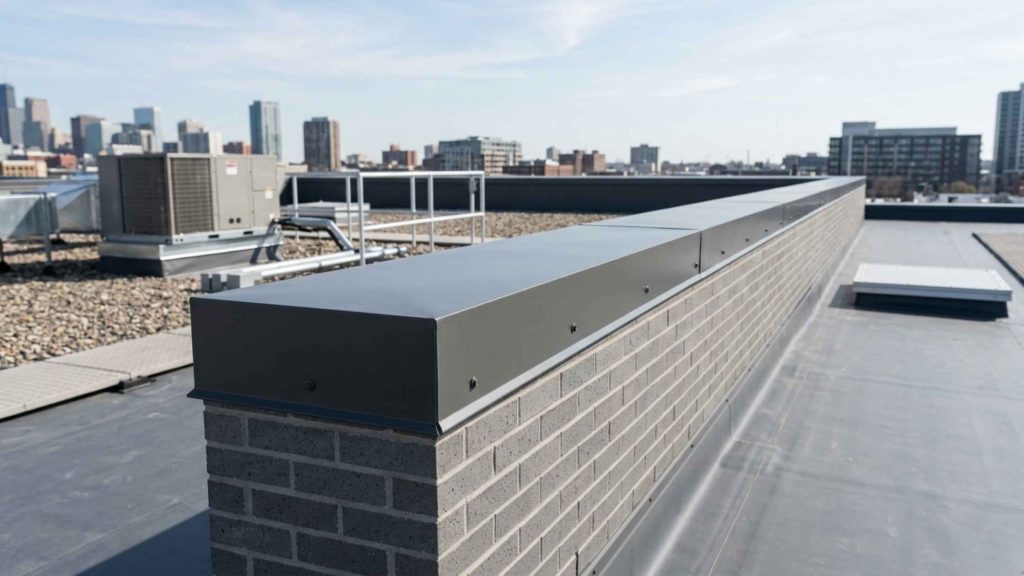
Installation quality makes a huge difference in how well roofing cop performs. Proper slope and drainage details help water move away from the coping instead of collecting around seams. Correct overlaps and tight detailing reduce the number of weak points. Secure attachment helps the system stand up to wind pressure. Material compatibility helps the coping work properly with the flashing and roof membrane.
This is why metal roof coping should never be treated like a decorative edge trim. It is a working part of the roofing system. If the installation is poor, the roof perimeter becomes more vulnerable to leaks and damage.
Professional installation matters even more because parapet walls are not all the same. Wall width, corner conditions, building height, exposure level, and joint spacing all affect performance. That is one reason many commercial buildings rely on custom-fabricated coping cap systems rather than one-size-fits-all solutions.
How Long Does Roof Coping Last?
The lifespan of roof coping depends on the material used, the quality of installation, and how well it is maintained. Regular inspections and timely repairs can help extend its life.
| Material | Average Lifespan |
|---|---|
| Galvanized Steel | 20–30 years |
| Aluminum | 30–40 years |
| Copper | 50 years or more |
| Stone or Concrete | 50+ years with proper maintenance |
How to Maintain Roofing Cop Over Time
Maintaining this roofing detail is not complicated, but it does require consistency. The system should be inspected at least twice a year and again after major storms. Look for loose sections, open joints, rust, stains, and visible movement. Clear away debris around roof edges and parapet areas. If leaks appear, deal with them early instead of waiting.
If the building has older parapet coping, regular inspections become even more important. Catching a failing seam or loose section early is far less costly than repairing water damage inside the wall later.
Property owners who ignore roof edge maintenance usually end up paying more in the long run. That is not bad luck. That is what happens when small problems are left alone until they grow.
Frequently Asked Questions About Roofing Cop
Is roofing cop the same as roof coping?
Yes. Roofing cop is a search phrase many people use, but the professional term is coping.
What does roof coping do?
Coping protects the top of parapet walls and roof edges from water intrusion, weather damage, and long-term deterioration.
Is roof coping only used on commercial buildings?
No. It is most common on commercial flat and low-slope roofs, but some residential buildings also use parapet wall coping.
Can damaged roof coping cause leaks?
Yes. Open joints, loose sections, and failed seams in a coping cap system can let water enter the wall and roof edge assembly.
What is the difference between coping and fascia?
They are different components. Coping covers the top of a parapet wall, while fascia usually covers the vertical edge of a roof structure.
Final Thoughts on Roofing Cop
Roofing cop, or roof coping, is much more than a finishing detail. It protects the top of parapet walls from rain, wind, and moisture, helping prevent leaks, masonry damage, and costly roof repairs. When it is installed and maintained properly, it adds strength to the roof edge and helps your roofing system last longer.
If you notice loose coping, rust, open joints, or signs of water damage, don’t wait for the problem to get worse. Regular inspections and timely repairs can help you avoid expensive structural damage and keep your roof in good condition for years. Understanding how roof coping works makes it easier to protect your property and make informed decisions when repairs or replacement are needed.
Need Help with Your Next Project? Call Royal Empire Builder Today!
Fast responses. Expert advice. Trusted service across NYC and beyond.