A chimney leak usually starts as something small. Maybe you notice a faint brown stain near the fireplace after heavy rain, or you hear dripping sounds inside the wall during a storm. Many NYC homeowners ignore these early signs until the damage becomes much worse. In many cases, the real issue is damaged flashing around the chimney. Chimney flashing repair helps seal the connection between the roof and chimney so water cannot slip into vulnerable areas of the home.
The area where the roof meets the chimney is one of the weakest parts of any roofing system. Constant exposure to rain, snow, ice, and temperature changes slowly wears down flashing materials over time. Once small gaps appear, water intrusion can spread into ceilings, attic insulation, walls, and wood framing.
In older NYC homes, especially brownstones and properties with aging masonry chimney structures, flashing damage is very common. Winter weather, freeze-thaw cycles, and years of roof movement can slowly loosen flashing around the chimney edges. Understanding the warning signs early can help homeowners know when chimney flashing repair is needed before leaks turn into major structural problems.
What Is Chimney Flashing?
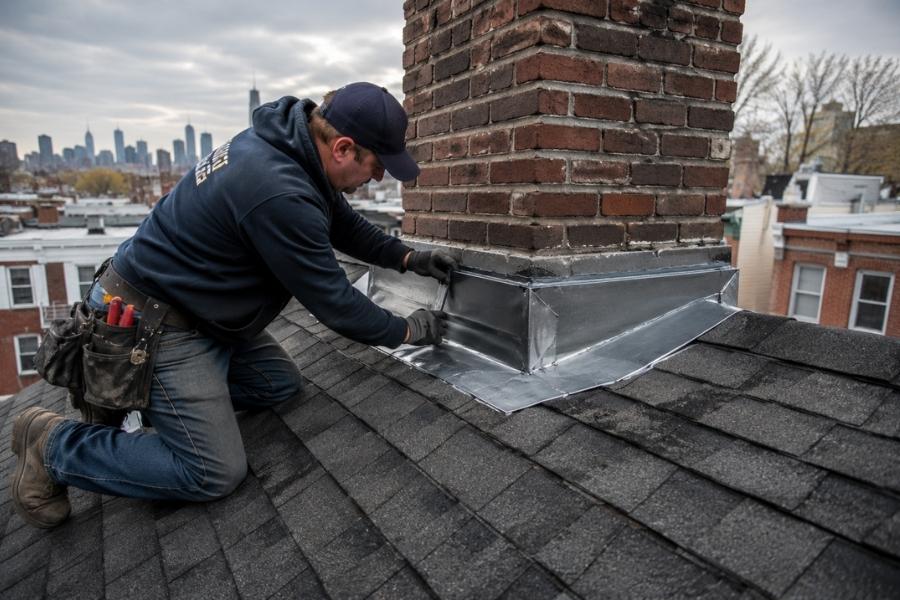
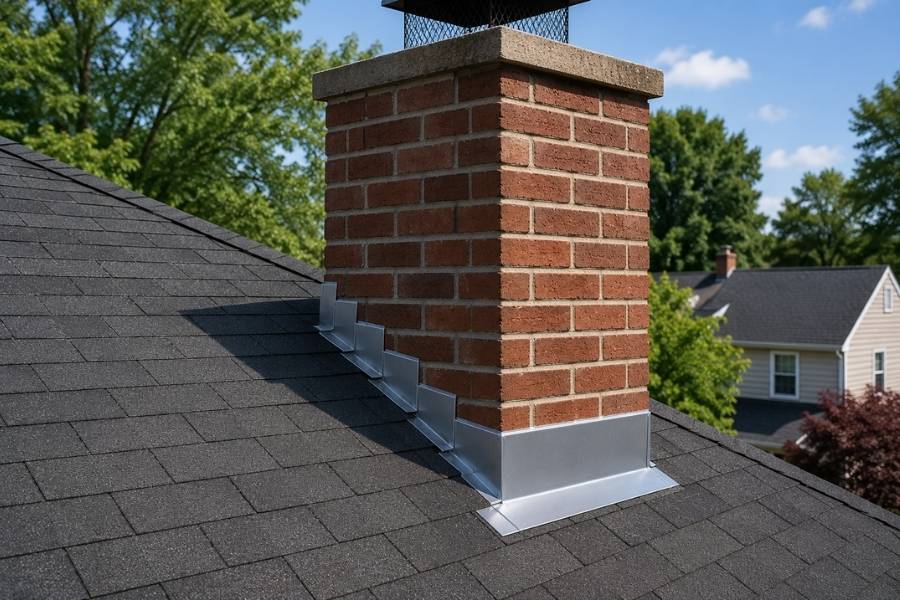
Chimney flashing is a metal waterproofing system installed around the base of a chimney where it connects to the roof. Its job is simple but extremely important. It helps keep rainwater from entering the small gaps between the chimney and roofing material.
Without flashing, even a light rainstorm could allow moisture to seep into the roof system. Water may slowly spread beneath shingles and eventually reach attic spaces or interior walls. Professional chimney flashing repair helps prevent moisture from entering these vulnerable roof areas before larger problems develop.
Most flashing systems are made from durable materials such as:
- Aluminum
- Galvanized steel
- Copper
These materials are designed to handle years of harsh weather exposure. Still, no flashing system lasts forever. Over time, rust, cracked sealant, roof movement, and changing temperatures weaken the metal and create openings where leaks begin.
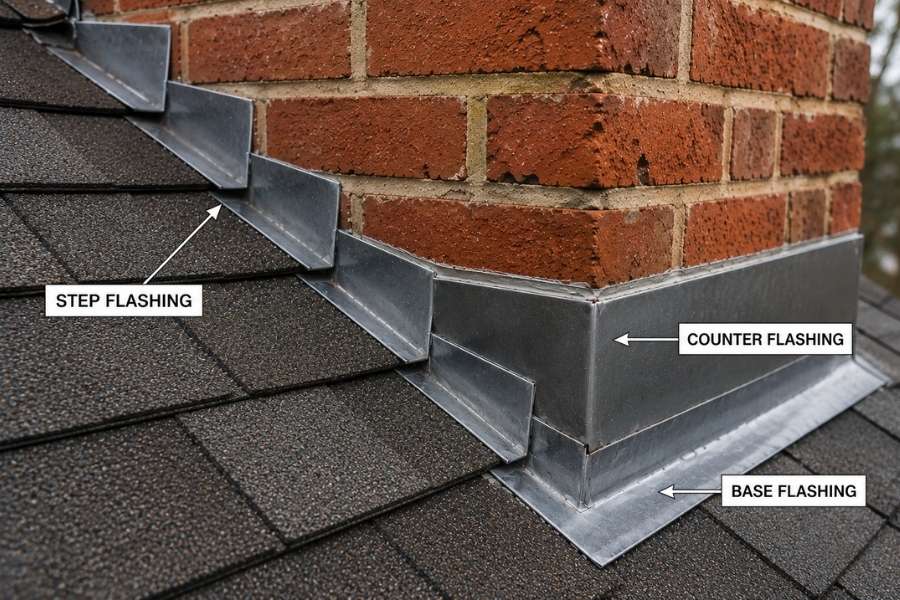
A complete flashing system usually includes step flashing, counter flashing, and base flashing. Each section works together to protect the masonry chimney and direct water safely away from the roof.
Many homeowners assume roof leaks always come from missing shingles, but flashing failure is actually one of the most common causes of roof water intrusion in NYC homes.
Why Chimney Flashing Is Important
Flashing may not be the most visible part of a roof, but it plays a huge role in protecting the home from water damage. Even a tiny gap around the chimney can allow moisture to enter hidden roof areas.
Once water gets beneath the roofing material, the damage can spread quietly for months. By the time homeowners notice the problem indoors, moisture may already be affecting insulation, drywall, ceiling framing, and nearby wood structures.
Professional chimney flashing repair helps prevent:
- Roof leaks
- Mold growth
- Ceiling stains
- Wood rot
- Insulation damage
Timely chimney flashing repair also helps homeowners avoid larger roofing expenses later. A small repair today is usually far less expensive than replacing damaged framing, insulation, or interior drywall.
In many older NYC properties, flashing problems become worse after winter storms. Snow and ice often sit around the chimney area for long periods, slowly pushing moisture beneath the roof surface.
Common Signs You Need Chimney Flashing Repair
Flashing damage usually gives warning signs before major leaks happen. The key is catching these problems early. Many homeowners delay chimney flashing repair until water stains and roof leaks become difficult to ignore.
One of the most common signs is a water stain near the fireplace or upper ceiling area. Many homeowners first notice the problem after heavy rain or melting snow. Scheduling chimney flashing repair early can prevent leaks from spreading deeper into attic spaces and walls.
Other common warning signs include rust around flashing metal, peeling paint, damp insulation, or mold smells near the chimney.
You may also notice:
- Dripping water during storms
- Cracked flashing sealant
- Loose flashing pieces
- Water spots near ceilings or walls
In NYC, strong winds and seasonal temperature changes often loosen flashing around older masonry chimney structures. Small openings form around the roof edges, allowing water to enter during storms.
Sometimes the leak does not appear directly near the chimney. Water may travel along roof beams before becoming visible indoors. Professional chimney leak repair helps identify the exact source of moisture before more damage occurs.
Ignoring a chimney flashing leak can eventually lead to major structural problems, especially in homes with aging roofing material.
Interior Signs You Need a Chimney Roof Flashing Repair
You do not always have to climb onto your roof to know your chimney area is compromised. In fact, many property owners spot the first red flags right from the fireplace mantle.
When inspecting your interior spaces for signs that you need a chimney flashing repair, look for these telltale signs:
Active Dripping: Hearing water hit your damper or fireplace floor during heavy seasonal rainstorms.
Ceiling Stains: Brown, yellow, or bubbling water rings on the plaster or drywall surrounding the chimney breast.
Damaged Paint: Peeling, blistering, or flaking paint along the walls nearest to the fireplace structure.
Attic Moisture: Damp insulation, water spots on the plywood roof decking, or persistent musty odors in your attic crawl space.
What Causes Flashing Damage?
Several different problems can weaken flashing over time. Weather is one of the biggest reasons homeowners eventually need chimney flashing repair in NYC.
Exterior Signs of Flashing Failure
If you can safely view your roof from the ground using binoculars, or during a routine property walkthrough, pay close attention to the transition areas where the brick meets the roof shingles. These are clear indicators that a professional chimney roof flashing repair is necessary:
Cracked Sealants: Old roofing cement, tar, or silicone caulking that looks brittle, split open, or completely dried out by solar heat.
Deteriorating Mortar Joints: Crumbling mortar, missing brick fragments, or deep cracks in the chimney masonry itself, which easily absorb driving rain and bypass the metal barriers.
Distorted Metal Protectors: Metal sheets wrapping the base of the chimney that look warped, lifted by high winds, or detached from the brickwork.
Rust and Corrosion: Reddish-brown flaking on metal components indicates that the material is thinning out and losing its ability to repel moisture.
Types of Chimney Flashing
Common Areas Where Chimney Leaks Start
Not every chimney leak starts in the same location. Understanding where problems commonly develop can help homeowners identify issues before significant damage occurs.
Step Flashing
Step flashing is installed beneath shingles along the sides of the chimney. If these metal pieces become loose or damaged, water can work its way beneath the roofing material.
Counter Flashing
Counter flashing is embedded into the chimney masonry and covers the upper portion of the flashing system. Cracked sealant or loose counter flashing is a common source of chimney leak problems.
Chimney Crown
The chimney crown sits at the very top of the chimney structure. Cracks in the crown can allow water to enter and eventually affect nearby flashing components.
Mortar Joints
Deteriorating mortar joints can create pathways for moisture. Water entering through damaged masonry often contributes to chimney flashing repair needs.
Roof-to-Chimney Connection
The area where the roof meets the chimney is one of the most vulnerable parts of the roofing system. Most chimney flashing leaks begin in this transition area because it experiences constant exposure to water and temperature changes.
How Local Weather Cycles Force the Need for Repair
Varying weather conditions place intense physical stress on masonry chimneys. Winter freeze-thaw cycles are particularly harsh; water seeps into tiny brick pores or metal gaps, freezes and expands, and physically forces the gaps wider.
In the summer, extreme heat dries out flexible sealants, causing them to shrink and crack. Over time, these combined forces weaken the roof-to-chimney connection, making a specialized chimney flashing repair an absolute necessity to prevent active water intrusion.
How to Inspect Chimney Flashing After a Storm
Severe weather can damage flashing without creating an immediate leak. After a major storm, it is a good idea to perform a visual inspection of the chimney area.
Check for:
- Loose or lifted flashing
- Missing shingles near the chimney
- Cracked flashing sealant
- Bent metal flashing
- Water stains inside the attic
Homeowners should avoid climbing onto steep roofs without proper safety equipment. In many cases, binoculars or a professional roof inspection can help identify flashing damage safely.
Regular chimney flashing inspection after storms can help catch problems early and reduce the need for more extensive chimney flashing repair later.
Chimney Flashing Inspection Checklist
Use this simple checklist to identify possible flashing problems:
✓ Water stains on ceilings
✓ Musty odors near the fireplace
✓ Damp attic insulation
✓ Rusted flashing metal
✓ Cracked flashing sealant
✓ Loose flashing sections
✓ Damaged mortar joints
✓ Missing shingles near the chimney
✓ Signs of a roof leak after heavy rain
If you notice several of these warning signs, scheduling a professional chimney flashing inspection can help determine whether chimney flashing repair is needed.
How to Prevent Chimney Flashing Leaks
Regular maintenance is one of the best ways to avoid major flashing problems.
Homeowners should inspect roof flashing after severe storms, winter weather, or visible roof damage. Small cracks and loose flashing sections should be repaired quickly before water intrusion spreads deeper into the roof system.
Helpful prevention steps include:
- Schedule yearly roof inspections
- Keep gutters clean
- Replace cracked sealant early
- Repair damaged roofing material quickly
Routine chimney flashing repair and maintenance can significantly extend roof lifespan and reduce future repair costs.
Waterproofing nearby roof sections may also help improve protection around the chimney area.
Common Mistakes Homeowners Make
One of the biggest mistakes homeowners make is ignoring small leaks because they seem harmless at first. Unfortunately, moisture problems often spread quietly behind walls and ceilings before becoming visible.
Another common issue is using temporary roof sealants without fixing the real flashing problem. DIY repairs may stop leaks briefly, but they often fail during heavy rain or winter storms.
Delaying inspections after severe weather can also create bigger problems later. Even small flashing damage may eventually lead to expensive structural repairs.
Experienced roofing contractors can usually identify weak roof areas before the damage becomes severe.
How Long Does Chimney Flashing Last?
Flashing lifespan depends on the material used, weather exposure, and installation quality. Most properly installed flashing systems last between 15 and 30 years.
Copper flashing usually lasts longer because it resists corrosion better than aluminum or steel. However, harsh NYC weather may shorten flashing lifespan over time.
Routine maintenance and inspections help extend flashing durability and reduce the need for early replacement.
Older roofing material may also weaken flashing connections because of years of roof movement and weather exposure.
Why Professional Flashing Repair Matters
Flashing repair may seem simple, but proper installation requires roofing experience and attention to detail. Incorrect repairs often hide leaks temporarily while moisture continues spreading beneath the roof.
Professional chimney flashing repair provides stronger long-term protection because experienced contractors understand how flashing systems interact with different roofing material types.
Experienced roofers can also identify hidden attic damage, weak roof areas, and moisture buildup before larger structural problems develop.
In NYC, weather conditions can quickly turn a small roof leak into a major repair project. Professional chimney leak repair helps protect homes from mold growth, insulation damage, and expensive structural repairs.
Frequently Asked Questions
How do I know if chimney flashing is leaking?
Common signs include water stains near ceilings, mold smells around the fireplace, dripping water during storms, and rust around flashing metal.
Can flashing leaks damage my roof?
Yes. Water intrusion may damage roofing material, insulation, attic framing, ceilings, and nearby walls.
Is chimney flashing repair expensive?
Minor repairs are usually affordable. Costs become higher when leaks spread beneath the roof or when full flashing replacement is necessary.
How often should flashing be inspected?
Most roofing professionals recommend yearly inspections, especially after severe storms or winter weather.
Can I repair chimney flashing myself?
Temporary repairs are possible, but professional roof flashing repair usually provides safer and longer-lasting protection.
Conclusion
A damaged flashing system can quickly lead to roof leaks, moisture problems, and structural damage if ignored. Proper chimney flashing repair protects the connection between the roof and chimney, helping prevent costly water intrusion problems.
Whether the issue involves rusted flashing, cracked sealant, or storm damage, early repairs can save homeowners significant money over time. Regular inspections and maintenance are important for protecting roofing material and keeping a masonry chimney in good condition.
Professional chimney flashing repair is one of the most effective ways to prevent long-term roof water damage.
If you notice signs of a chimney flashing leak, scheduling repairs early can help prevent larger roofing problems later.
Need Help with Your Next Project? Call Royal Empire Builder Today!
Fast responses. Expert advice. Trusted service across NYC and beyond.