The average vinyl siding cost in NYC is around $15,508, including materials and professional installation. Most homeowners spend between $9,153 and $21,880, although the final price can be higher for large homes, premium siding, difficult access, or complex exterior work.
The total vinyl siding installation cost depends on your home size, siding style, material quality, labor rates, and whether old siding must be removed. Many homeowners choose vinyl siding because it is affordable, durable, easy to maintain, and available in many colors, textures, and designs.
What Affects Vinyl Siding Installation Cost in NYC?
Several factors can influence the total project price. The biggest factors include the property size, vinyl siding type, material quality, labor rates, and building accessibility.
New York City properties with narrow spaces, multiple stories, dormers, gables, or detailed architectural features may cost more to complete. Removing old siding, repairing damaged exterior walls, and installing insulation can also increase the final cost.
Vinyl Siding Cost Based on Home Size
Property size plays a major role in determining vinyl siding costs. Larger homes require more siding materials and installation time.
However, contractors normally calculate the price using the exterior wall area rather than the interior floor space.
The table below shows estimated 2026 vinyl siding costs in New York City.
| House Size | Estimated NYC Price Range |
|---|---|
| 1,000 square feet | $3,000–$12,000 |
| 1,500 square feet | $4,500–$18,000 |
| 2,000 square feet | $6,000–$24,000 |
| 2,500 square feet | $7,500–$30,000 |
| 3,000 square feet | $9,000–$36,000 |
These prices are general estimates. The final vinyl siding cost depends on the property’s exterior measurements, number of stories, material selection, accessibility, and installation complexity.
Vinyl Siding Cost Per Square Foot
The vinyl siding installation cost in NYC depends on material quality, labor, building height, and property access. Your final vinyl siding install cost may also increase if scaffolding, wall repairs, or old siding removal are needed.
The table below shows estimated material, labor, and total installation costs for basic to standard vinyl siding projects.
| Exterior Wall Area | Material Cost | Labor Cost | Estimated Total Cost |
|---|---|---|---|
| 500 square feet | $1,000–$3,000 | $500–$3,000 | $1,500–$6,000 |
| 1,000 square feet | $2,000–$6,000 | $1,000–$6,000 | $3,000–$12,000 |
| 1,500 square feet | $3,000–$9,000 | $1,500–$9,000 | $4,500–$18,000 |
| 2,000 square feet | $4,000–$12,000 | $2,000–$12,000 | $6,000–$24,000 |
| 2,500 square feet | $5,000–$15,000 | $2,500–$15,000 | $7,500–$30,000 |
| 3,000 square feet | $6,000–$18,000 | $3,000–$18,000 | $9,000–$36,000 |
These are general 2026 estimates for New York City. The final price may be higher for insulated vinyl siding, decorative styles, old siding removal, wall repairs, scaffolding, or difficult building access.
Vinyl Siding Cost by Style and Design
The style of vinyl siding affects both the appearance and total installation cost. Homeowners can choose designs that resemble traditional wood siding, shakes, logs, brick, or stone.
Standard clapboard and Dutch lap are usually among the more affordable options. Decorative styles, detailed textures, and insulated panels often cost more because they require additional materials and installation work..
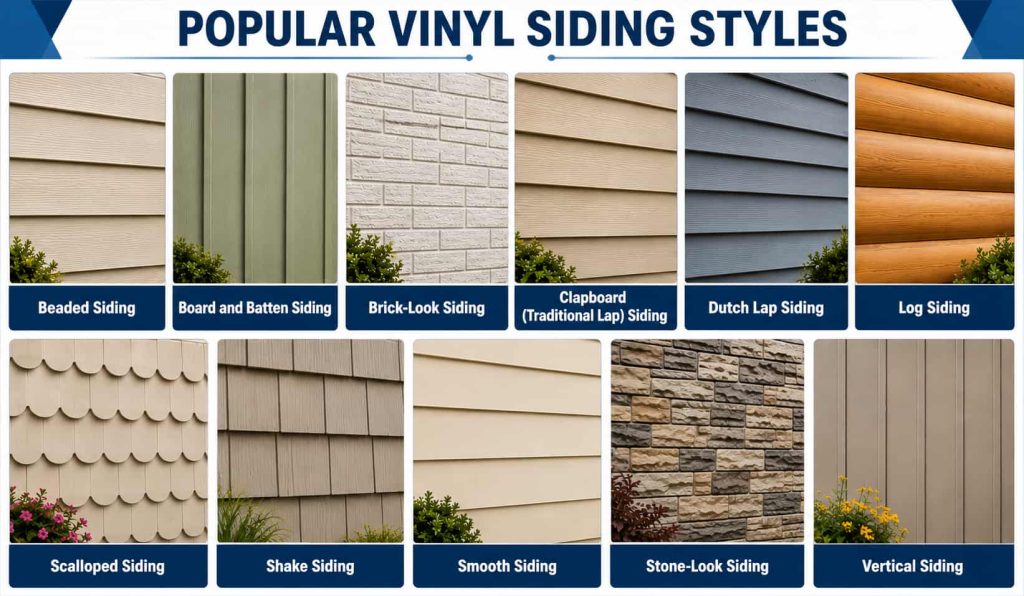
The table below shows estimated 2026 material and installation costs.
| Vinyl Siding Style | Estimated Cost per Square Foot |
|---|---|
| Beaded | $3–$8 |
| Board and batten | $3–$8 |
| Brick-look | $5–$12 |
| Clapboard or traditional lap | $2–$7 |
| Dutch lap | $2–$7 |
| Log-style | $3–$6 |
| Scalloped | $5–$10 |
| Shake | $5–$10 |
| Smooth | $3–$7 |
| Stone-look | $5–$12 |
| Vertical | $4–$8 |
These prices include basic materials and professional installation. NYC projects may cost more because of building height, limited access, scaffolding, old siding removal, exterior repairs, and detailed trim work.
Installation Quality Matters
Tom Silva from This Old House stresses the importance of proper installation. Vinyl expands and contracts as temperatures change. If panels are nailed too tightly, they can warp, buckle, or create noise during windy conditions.
Proper installation helps prevent costly repairs later and allows the siding to move naturally with seasonal temperature changes.
How Siding Thickness Impacts Price
Vinyl siding thickness usually ranges from 0.040 to 0.055 inches. Thicker panels generally cost more but offer better strength and durability.
High-quality panels resist sagging and hold up better against strong winds. Features such as reinforced nail hems and deeper panel profiles also improve performance.
Budget-grade siding may cost less upfront, but it may not perform as well during harsh weather. Always review manufacturer warranties and wind-resistance ratings before making a decision.
Vinyl Siding Cost by Material Type
One reason homeowners choose vinyl siding is the wide variety of styles and finishes available. You can find options that match almost any home design and budget.
The most common choice is traditional clapboard, also called horizontal lap siding. This style is usually one of the most affordable options, with an estimated vinyl siding material and installation cost of $2 to $7 per square foot. However, it provides less insulation than premium products.
For better energy efficiency and durability, insulated vinyl siding is worth considering. The insulated vinyl siding cost typically ranges from $4 to $12 per square foot installed, with an average of about $8 per square foot. Although the upfront price is higher, many homeowners appreciate the added comfort and potential energy savings.
Think About Long-Term Savings
While vinyl siding has one of the lowest installation costs, it can also save money over time. Unlike wood siding, vinyl does not require regular scraping, sanding, or repainting.
According to experts at This Old House, wood siding often needs repainting every seven to ten years. Vinyl siding eliminates that expense, making it a cost-effective choice for many homeowners.
Additional Factors That Influence Vinyl Siding Cost
Material prices are only part of the total project cost. Several other factors can affect the final price of your siding installation.
Extra Home Improvements
Many homeowners complete additional exterior upgrades during vinyl siding installation. Since contractors may remove gutters to access the exterior walls, this can be a convenient time to replace damaged or outdated gutters.
In NYC, new gutter installation generally costs $6 to $40 per linear foot, depending on the material, building height, roof design, and accessibility. Most standard projects cost around $541 to $1,607, although larger homes, copper gutters, scaffolding, or difficult access can raise the total.
Some homeowners also replace fascia boards, soffits, trim, and exterior molding to match the new siding. These additional improvements can increase the total cost of siding installation.
Installing Over Existing Siding
If your home has brick, stucco, foam board, or wood siding, you may be able to install vinyl siding over the existing surface.
This option can reduce labor costs because it avoids a full tear-off. However, the existing siding must be stable, secure, and free of major damage. If not, removal may be necessary before installation begins.
Labor Costs
Labor is another major factor affecting vinyl siding cost. In NYC, professional siding labor may cost around $2 to $6 per square foot for standard work. Difficult access, multiple stories, or scaffolding can raise the price.
Most crews can complete an average home within one week. Installation may cost more during spring and summer because contractors are busier.
Removing Old Siding
Damaged siding often needs to be removed before new materials can be installed. In NYC, removing old vinyl siding usually costs around $1 to $1.50 per square foot. Heavier siding materials may cost $1 to $4 per square foot to remove. New vinyl siding should not be installed directly over old vinyl siding. The existing panels must be removed first.
Material Quality
Vinyl siding comes in several quality levels. The difference usually comes down to panel thickness. Economy-grade siding starts at approximately 0.035 inches thick, while premium products can reach 0.055 inches. Most residential siding falls between 0.042 and 0.048 inches.
Thicker panels are generally stronger, more durable, and better at resisting dents and weather damage. Premium styles designed to mimic wood logs or cedar shakes also tend to cost more.
Vinyl Siding Repair vs. Full Replacement
If your siding looks worn or damaged, a full replacement may not be necessary. Small repairs can improve its appearance and help it last longer. Painting old vinyl siding with acrylic paint can refresh the color, but it will not increase the siding’s lifespan.
Replacing only cracked or damaged panels is often more affordable than paying the full cost to replace vinyl siding across the entire home. It is also smart to keep a few extra panels after installation because older colors and styles can be difficult to match later.
The final vinyl siding repair cost depends on the amount of damage, the number of panels needed, and whether repainting is required.
Professional vs. DIY Vinyl Siding Installation
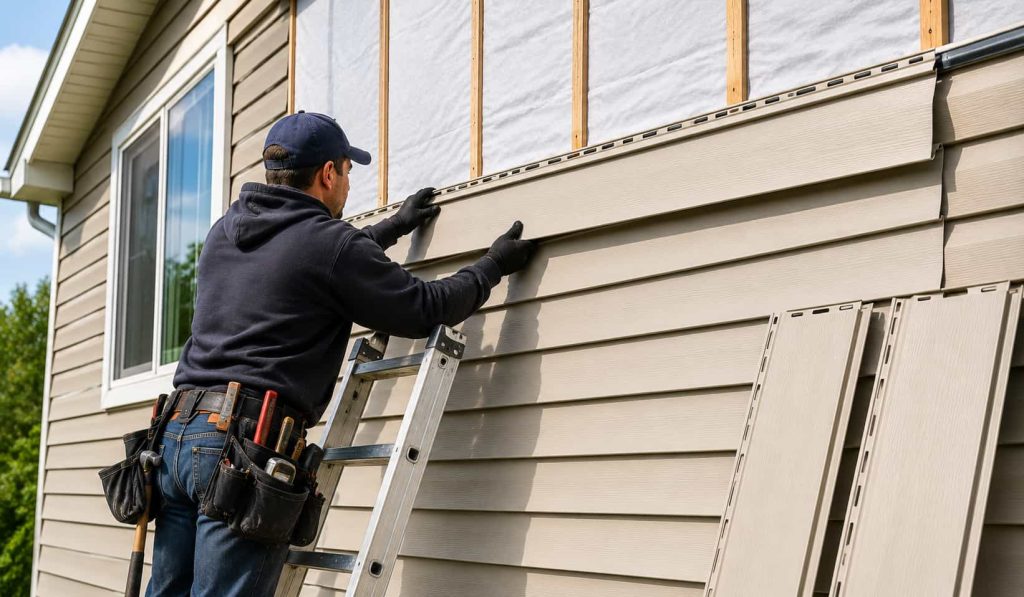
Vinyl siding is designed for easier installation than many other siding materials. Because of this, some homeowners choose the DIY route. However, siding installation requires careful measurements and proper techniques. Small mistakes can lead to gaps, buckling, warping, or water intrusion.
Before deciding, it’s important to understand the benefits and challenges of both options.
Hiring a Professional Installer
Professional contractors bring experience, specialized tools, and industry knowledge to the project.
Labor typically costs $54–$60 per hour, depending on your location and contractor. While this increases project costs, it also reduces the risk of installation errors.
Experienced installers know how to work around windows, doors, gables, rooflines, and other architectural details. They also handle material calculations, color matching, and project planning. Although labor can add 30%–50% to the total project price, many homeowners find the convenience and peace of mind worthwhile.
DIY Vinyl Siding Installation
DIY installation can lower your overall vinyl siding cost, but it requires patience, skill, and attention to detail.
Incorrect installation can lead to buckling, warping, loose panels, and moisture problems. If you choose the DIY route, proper preparation is essential.
The basic process includes:
- Repairing exterior wall damage.
- Removing obstacles such as gutters and light fixtures.
- Installing moisture barriers where needed.
- Measuring walls and installing starter strips.
- Adding corner posts and J-channels.
- Installing siding panels from the bottom upward.
- Leaving proper expansion gaps.
- Securing the final row with utility trim.
Following manufacturer guidelines carefully helps prevent costly mistakes and improves long-term performance.
Ways to Reduce Vinyl Siding Costs
There are several ways to lower your overall vinyl siding cost without sacrificing quality.
Choose Simpler Styles
Smooth and beaded siding styles are often less expensive than premium textured options. Selecting a simpler design can help reduce material costs.
Avoid Unnecessary Thickness
Thicker siding offers additional durability, but not every home needs the highest-grade product. Choose a thickness that matches your climate and budget.
Look for Energy-Efficiency Incentives
Some states and local governments offer tax credits or rebates for energy-efficient exterior upgrades. Check local programs before starting your project.
Schedule Installation During the Off-Season
Spring and summer are the busiest times for siding contractors. Scheduling work during fall or winter may help you secure better labor rates.
Compare Multiple Quotes
Always request at least three estimates before choosing a contractor. Comparing quotes helps you find competitive pricing and understand what is included in each proposal.
Consider Partial Repairs First
If only a small section of your siding is damaged, repairs may be more cost-effective than full replacement. A professional inspection can help determine the best option.
Frequently Asked Questions
How can I estimate my vinyl siding cost?
Start by measuring the total exterior wall area of your home. Multiply the square footage by the average material cost per square foot. Then add labor, removal costs, trim work, and any additional upgrades to estimate your total project cost.
Is vinyl siding cheaper than other siding materials?
Yes. Vinyl siding is generally one of the most affordable siding options available. It usually costs less than wood, fiber cement, brick, and stone while requiring less maintenance over time.
Is insulated vinyl siding worth the extra cost?
Insulated vinyl siding costs more upfront, but it can improve energy efficiency and comfort. Many homeowners find that the long-term savings on utility bills help offset the higher initial investment.
Can I install vinyl siding myself?
Yes, many homeowners complete DIY vinyl siding projects. However, proper installation is important. Mistakes can lead to warping, buckling, moisture problems, and expensive repairs. Professional installation often provides better long-term results.
Need Help with Your Next Project? Call Royal Empire Builder Today!
Fast responses. Expert advice. Trusted service across NYC and beyond.