Ever glance up at your roofline and notice that flat strip tucked under the overhang? That’s your soffit — and honestly, most homeowners never think about it until it’s already causing a problem. It’s easy to overlook, but it’s actually doing a lot of quiet work behind the scenes: keeping moisture out of your attic, blocking pests from sneaking in, and helping your roofing system hold up longer than it otherwise would.
So let’s break down what you actually need to know if you’re a homeowner in NYC what a soffit is, how to tell if yours is damaged, what fixing it usually costs, when it makes sense to repair versus replace it, and which material actually holds up best in this city’s weather.
What Is a Roof Soffit?
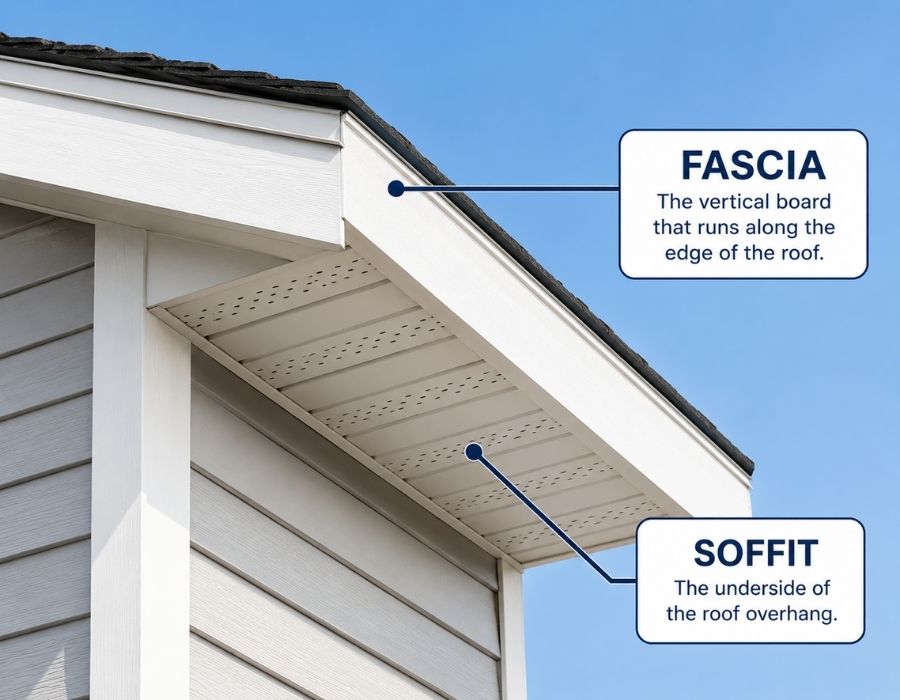
A roof soffit is the exposed surface underneath your roof’s overhang, also called the eave. It connects the edge of your roof to the outer walls of your house. Soffits usually have small vents built in, which let air flow into your attic.
Without a soffit, your attic would be exposed to rain, snow, pests, and outside air year-round. In NYC, where homes deal with harsh winters, humid summers, and salty coastal air in some boroughs, a well-maintained soffit matters more than most homeowners realize.
Soffit vs Fascia: What’s the Difference?
People mix these up all the time.
- Soffit is the horizontal piece under your roof overhang. You’d see it if you looked straight up from below the roofline.
- Fascia is the vertical board that runs along the edge of the roof, right where your gutters attach.
Think of it this way: the fascia is the “face” of your roofline, and the soffit is the “ceiling” of the overhang above it. Both work together to protect your roof structure, but they do different jobs fascia supports your gutters and gives your roofline a finished look, while soffit covers and protects the rafters from below.
Signs of Soffit Damage
Soffit problems often start small and get expensive if ignored. Here’s what to check for:
- Peeling or bubbling paint on the soffit or nearby fascia — usually a sign of trapped moisture
- Sagging or warped panels — the soffit material is losing its shape, often from water damage
- Visible holes or gaps — these let pests like squirrels, birds, and wasps into your attic
- Water stains or dark streaks — a sign water is getting past the soffit and into your roof structure
- Increased pest activity in the attic — droppings, nests, or noises usually mean there’s an entry point somewhere in the soffit
- Mold or a musty smell near the roofline or in the attic
If you notice any of these, it’s worth having someone inspect the soffit before it turns into a bigger repair on your roof deck or attic insulation.
Roof Soffit Repair Cost in NYC
Soffit repair costs in NYC typically range from $300 to $1,500, depending on a few factors:
- Material — vinyl soffit repairs cost less than aluminum or wood
- Extent of damage — patching a small section costs far less than replacing an entire run of soffit
- Access and roof height — soffits on taller homes or row houses with tight side access can cost more due to labor and equipment needs
- Hidden damage — if water has reached the rafters or fascia board underneath, that adds to the repair cost
Full soffit replacement for an entire house can run higher, often $1,000 to $4,000+, depending on the size of the home and material chosen. Getting a professional inspection first helps avoid surprise costs once work begins.
When to Repair vs Replace Your Soffit
Not every roof soffit problem needs a full replacement. Here’s how to tell which route makes sense:
Repair is usually enough if:
- Damage is limited to one small section or a few panels
- The soffit is otherwise structurally sound, with just cosmetic wear or minor holes
- The rafters and fascia underneath show no signs of rot or water damage
- The soffit is relatively new and just needs a patch or panel swap
Replacement is the better call if:
- Damage is spread across multiple sections or the whole roofline
- You see soft, rotted wood underneath when you press on the soffit
- There’s ongoing pest activity that keeps coming back despite repairs
- The soffit is old and made from outdated or mismatched material
- You’re already replacing your roof or gutters, since doing it all together saves on labor costs
A quick rule of thumb: if the damage is isolated and caught early, repair saves money. If it’s widespread or tied to a bigger moisture problem, replacement protects you from paying for repeated fixes.
Aluminum vs Vinyl Soffit: Which Is Better for NYC Homes?
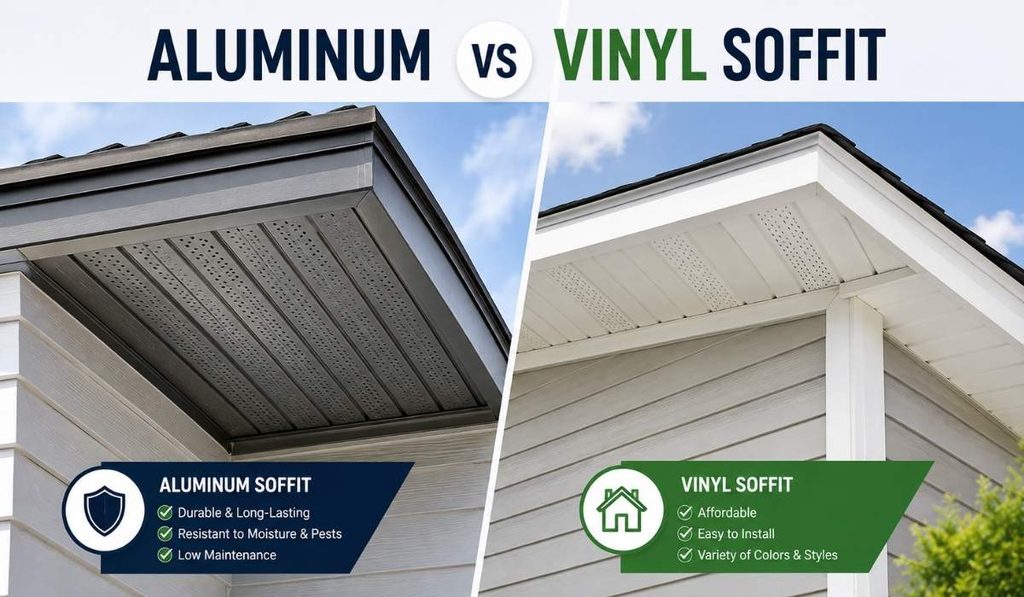
Aluminum soffit
- More durable in harsh weather and holds up well against NYC’s coastal air, especially in boroughs closer to the water
- Resists warping and doesn’t fade as quickly
- Costs more upfront but lasts longer with less maintenance
Vinyl soffit
- More budget-friendly
- Comes in a wide range of colors and styles
- Can become brittle over time in extreme cold, which is worth considering for NYC winters
For most homeowners, vinyl is a solid choice if you’re looking to keep costs down. If your home is closer to the water or you want a longer-lasting option with less upkeep, aluminum is usually the better investment.
Get Your Soffit Inspected
Roof soffit issues are easy to miss from the ground but can lead to bigger roof and attic problems if left alone. If you’ve noticed any warning signs — or just want a professional to take a look — Royal Empire Builder NYC offers soffit inspections and roof repairs across all five boroughs.
Call (718) 717-4016 to schedule an inspection today.
Need Help with Your Next Project? Call Royal Empire Builder Today!
Fast responses. Expert advice. Trusted service across NYC and beyond.