A horizontal foundation crack runs side to side across a basement or foundation wall, instead of up and down. You’ll usually spot it in one of two places: straight through a poured concrete wall, or along a mortar joint if your wall is built from concrete block (sometimes called cinder block). Horizontal cracks show up in all kinds of buildings, not just houses, but they’re most commonly found and reported in residential basements and foundation walls.
This crack pattern is different from other types you might see in your foundation. Vertical cracks usually come from the concrete curing and shrinking, and they’re rarely a structural threat. Stair-step cracks, which zigzag along the mortar joints in brick or block walls, usually point to uneven settling. Horizontal cracks stand apart because they typically mean the wall itself is being pushed inward by outside force, not just settling under its own weight.
Where the crack sits on the wall tells you something too. A crack near the middle often lines up with bowing. One closer to the top may be linked to frost or heavy soil pressing against the upper section.
Horizontal vs Vertical Foundation Cracks: What’s the Difference?
Not all foundation cracks mean the same thing, and knowing which type you’re looking at changes how worried you should be.
- Vertical cracks run straight up and down. These are usually caused by the concrete naturally curing and shrinking as it settles into place. They’re common, especially in newer homes, and rarely point to a structural problem.
- Stair-step cracks zigzag diagonally along the mortar joints in brick or block walls. These usually mean one part of the foundation is settling unevenly compared to the rest.
- Horizontal cracks run side to side across the wall. These are the ones to take most seriously, since they usually mean something outside the wall, like waterlogged soil or expanding clay, is pushing against it with enough force to bend it.
The short version: vertical cracks are typically cosmetic, while horizontal cracks are typically structural. If you’re not sure which one you’re looking at, it’s worth having a professional take a look before deciding whether it’s a quick fix or a bigger issue.
Are Horizontal Foundation Cracks Serious?
In most cases, yes. Horizontal cracks are tied to lateral pressure, meaning the wall is being pushed from the side rather than simply sinking. That’s a different problem than a small settlement crack, and it needs a different response.
A simple way to judge urgency: if you can slide a dime into the crack, roughly 1/8 inch wide, it’s already considered moderate to severe and worth a prompt inspection. A crack around 1/8 inch in width is generally the point where a foundation crack goes from cosmetic to a concern worth inspecting. Pay extra attention if you also notice:
- The wall bulging or curving into the basement
- Water seeping through the crack
- Blocks or mortar crumbling
- Diagonal cracks forming near the corners
- Gaps opening between the wall and floor joists
- Doors or windows nearby that stick
- Floors above the wall that feel uneven
Don’t let a thin crack fool you. Width alone doesn’t tell you how much pressure is behind the wall, so even a hairline horizontal crack deserves a second look. This applies whether you’re spotting the crack from inside your basement or from outside your foundation wall — the same causes and urgency apply either way.
What Causes Horizontal Foundation Cracks?
Horizontal cracking in a foundation wall doesn’t happen randomly — here’s what typically causes it. Knowing the cause is what separates a real fix from a temporary patch. Sealing the crack without dealing with what’s pushing on the wall usually means you’ll see the problem again.
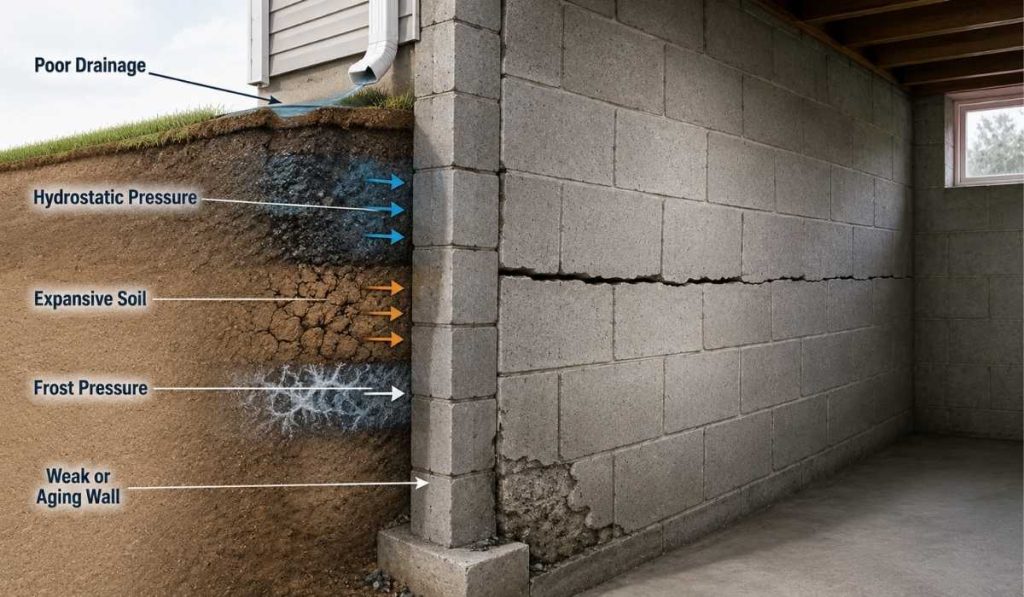
Hydrostatic Pressure
This happens when water builds up in the soil around your foundation. Saturated soil is heavier, and it pushes against the wall. Overflowing gutters, downspouts that empty too close to the house, and ground that slopes toward your home all make this worse.
Expansive Soil
Clay-heavy soil swells when it gets wet and shrinks as it dries out. That back-and-forth movement puts repeated stress on the wall, and a stretch of heavy rain can be enough to expose a weak spot.
Frost Pressure
In colder climates, moisture in the soil freezes and expands. When that frozen soil presses against the foundation season after season, it can gradually cause cracking, often nearer the top of the wall.
Poor Drainage
Clogged gutters, short downspouts, and low spots near the house all let water collect exactly where you don’t want it. Fixing drainage is often just as important as fixing the wall itself.
Weak or Aging Walls
Some walls simply weren’t built to handle long-term soil pressure. Thin sections, deteriorated mortar, or construction shortcuts can all make a wall more likely to crack under stress.
Signs the Wall May Be Bowing
The crack is often just the first clue. A professional will also check the wall itself for signs of movement, including:
- A visible curve or bulge into the basement
- Blocks that no longer line up straight
- Mortar joints pulling apart
- A crack that’s noticeably wider in the middle
- The top or bottom of the wall shifting out of place
Contractors typically use a level, laser, or plumb line to measure exactly how far the wall has moved from where it should be. That measurement matters more than the crack’s width when it comes to choosing a repair.
How Horizontal Foundation Cracks Are Inspected
A proper inspection of horizontal foundation cracks looks at the whole wall, not just the line you can see.
- Crack location and length – where it starts, how far it runs, and whether it passes through concrete, block, or mortar.
- Crack width – the widest point is measured and documented, though this is only one part of the picture.
- Wall movement – how far the wall has bowed or shifted from vertical.
- Moisture and drainage – checking gutters, downspouts, grading, and any signs of water getting in.
- Overall wall condition – looking for crumbling concrete, loose blocks, or weak mortar that could affect which repair will work.
How Are Horizontal Foundation Cracks Repaired?
There’s no one-size-fits-all fix for horizontal foundation cracks. The right method depends on how far the wall has moved, what caused it, and how much room you have to work with outside.
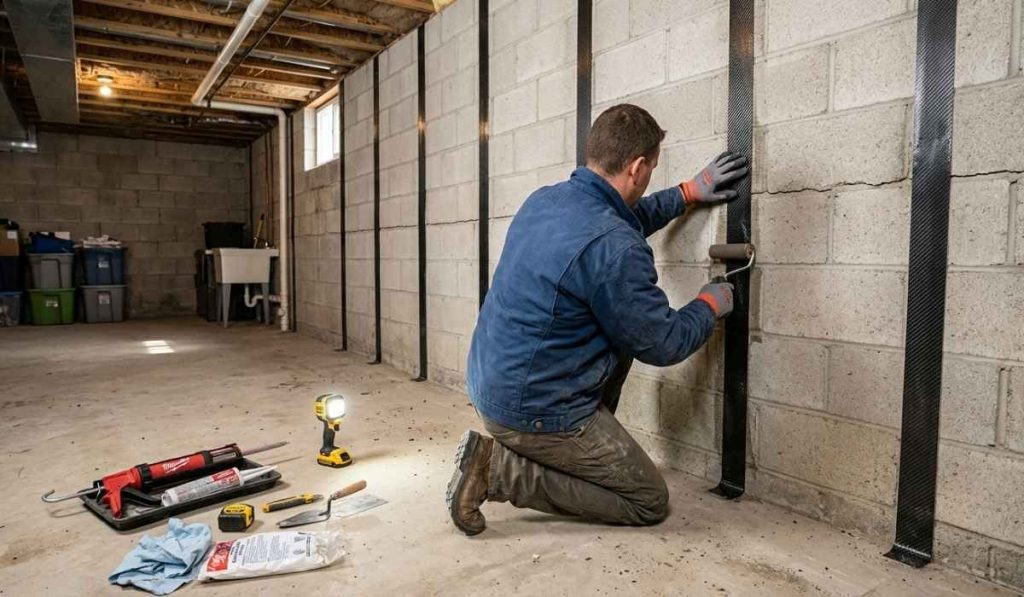
Carbon Fiber Straps
These work well for walls with limited movement that are still in decent shape. The contractor bonds vertical carbon fiber strips to the wall with structural epoxy. They take up almost no space and can usually be covered over once your basement is finished, but they’re built to stop further bowing, not straighten a wall that’s already shifted a lot.
Wall Anchors
For moderate bowing, steel plates are set into stable soil outside the home and connected through rods to plates on the inside of the wall. Tightening the system stabilizes the wall and can sometimes help straighten it over time. This method needs enough open ground outside, so a tight yard, patio, or nearby property line can limit where anchors go in.
Steel I-Beams
Installed vertically against the inside of the wall and anchored at the floor and framing above, steel beams work well when there isn’t enough exterior space for anchors. They’re strong, though they do take up more room in the basement than carbon fiber.
Buttress Supports
In some cases, a contractor may pour a reinforced concrete buttress at key points along the wall to redistribute pressure and add support, especially where other methods aren’t practical.
Exterior Excavation
When the wall has moved too far for interior fixes, digging out the soil outside gives a contractor direct access to correct, reinforce, and waterproof the wall from the outside. It’s more disruptive and costs more, but it may be the only real option for serious damage.
Partial or Full Wall Rebuilding
Badly cracked or deteriorated walls sometimes can’t be saved with reinforcement alone. In that case, temporary support goes in while the damaged section is removed and rebuilt. This is usually a last resort.
Epoxy Injection and Crack Sealing
Once the wall is stable, epoxy or polyurethane injection can seal the actual crack and keep water out. This step should always come after structural work, not instead of it. Sealing a crack on a wall that’s still moving just hides the problem.
Can You Repair a Horizontal Foundation Crack Yourself?
You can handle a few things on your own: clean out your gutters, extend your downspouts, and take photos of the crack to track any change over time. But repairing horizontal foundation cracks yourself isn’t a good idea, since the structural work behind it isn’t a do-it-yourself job.
The real challenge isn’t filling the crack. It’s figuring out how far the wall has moved, whether it’s still moving, how much reinforcement it actually needs, and whether the framing above has been affected. A surface patch might make the wall look better for a while, but it won’t stop the pressure working against it.
How Much Does Horizontal Foundation Crack Repair Cost?
Pricing depends on the repair system and how much work the wall actually needs, not just the length of the crack. Here’s a general breakdown:
| Repair Method | Approximate Cost |
|---|---|
| Carbon fiber straps | $500–$1,000 per strap |
| Wall anchors | $400–$700 per anchor |
| Steel beam reinforcement | $4,000–$12,000 |
| Moderate bowing wall repair | $5,000–$15,000 |
| Excavation or wall rebuilding | $15,000–$30,000 or more |
These are broad planning figures. Your actual cost will depend on the length and height of the wall, how much it has moved, whether it’s poured concrete or block, how many reinforcement points are needed, and how easy the site is to access.
How Long Does the Repair Take?
Carbon fiber straps can often go in within a day or two on a straightforward wall. Wall anchors and steel beams usually take a bit longer, depending on how many supports are needed. Excavation or rebuilding takes the longest, since it involves digging, structural work, waterproofing, and backfilling, and weather or permits can add to the timeline. Ask your contractor directly whether the goal is to stabilize the wall, straighten it, or both, since those aren’t always the same job.
How to Stop the Crack From Coming Back
Reinforcing the wall solves the structural side of horizontal foundation cracks. Managing water around your home solves the reason it cracked in the first place.
- Keep gutters clean and firmly attached
- Extend downspouts so they discharge at least 5 to 10 feet from the house
- Make sure the soil around your foundation slopes away from the house
- Fix any leaking exterior plumbing
- Keep window wells and foundation drains clear
- Test your sump pump regularly
- Check the repaired wall after heavy rain
When Should You Call a Professional?
Reach out as soon as you notice horizontal foundation cracks, and don’t wait if the wall is visibly bowing, the crack is growing, water is getting in, or you’ve noticed sticking doors or uneven floors nearby. For serious movement, it’s worth bringing in an independent structural engineer who can give you an unbiased assessment separate from whoever is selling the repair.
Choosing a Foundation Repair Contractor
A trustworthy contractor should walk you through the condition of your wall before pitching a specific product for repairing horizontal foundation cracks. Ask what caused the crack, how much the wall has moved, why they’re recommending a particular method, what drainage or waterproofing work is included, and what the warranty covers. Be cautious of anyone who offers to simply seal a crack on a wall that’s clearly bowing.
Frequently Asked Questions
Are horizontal foundation cracks always structural?
Not always, but they’re far more likely to signal wall pressure than a small vertical crack. Have the wall checked for movement before treating it as cosmetic.
Are horizontal cracks in a foundation always bad?
Not every horizontal crack means immediate danger, but they’re serious often enough that none should be ignored. A crack around 1/8 inch or wider, or one paired with bowing or water intrusion, should be inspected right away.
How do you fix a horizontal crack in a foundation wall?
The fix depends on how far the wall has moved. Minor cracks with little movement can often be stabilized with carbon fiber straps, moderate bowing usually needs wall anchors or steel beams, and severe cases may require excavation or wall rebuilding.
Can epoxy fix a horizontal foundation crack?
Epoxy can seal the visible crack, but it won’t stop a wall from bowing. Structural movement needs to be addressed first.
Does a horizontal crack always mean the wall is bowing?
Not necessarily, but it’s common enough that the wall should be measured rather than assumed safe.
Will homeowners insurance cover the repair?
It depends on your policy and what caused the damage. Issues linked to long-term soil pressure or water are often treated differently than sudden, covered events, so it’s worth checking directly with your insurer.
How quickly should a horizontal crack be inspected?
As soon as you can arrange it. Move faster if the crack is growing, the wall is bowing, or water is getting in.
Final Thoughts
A horizontal crack in your foundation wall is your home’s way of telling you something is pushing back. The right response isn’t to cover it up, it’s to find out why it happened and match the repair to how much the wall has actually moved. Carbon fiber, wall anchors, steel beams, and exterior reconstruction each have their place, and the earlier you catch the problem, the more of those options stay on the table. If you’re seeing a horizontal crack in your basement, don’t wait for it to get worse. A proper inspection now can save you a much bigger repair later.
Need Help with Your Next Project? Call Royal Empire Builder Today!
Fast responses. Expert advice. Trusted service across NYC and beyond.