Every homeowner knows the feeling: gutters packed with wet leaves, water spilling over the edge, and a growing sense that something’s about to go wrong. It usually does. Clogged gutters are one of the easiest problems to prevent, yet one of the most common causes of water damage to a home leaky roofs, damaged siding, even foundation trouble. Gutter guard installation fixes this at the source, keeping debris out and water flowing where it should, all year round.
This guide breaks down what gutter guard installation actually involves, the main types of gutter guards available, typical gutter guard cost, and the mistakes homeowners should avoid so you can make an informed decision for your property.
What Is Gutter Guard Installation?
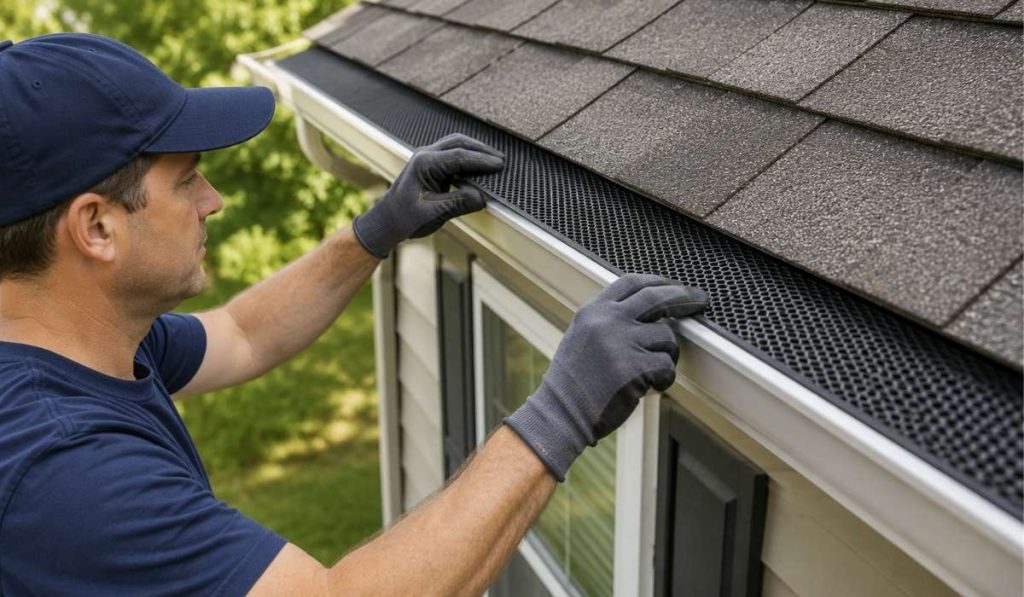
Gutter guard installation involves fitting a protective cover or insert over your existing gutters so that rainwater can still pass through while leaves, twigs, roof grit, and other debris are kept out. In simple terms, it acts as a filter for your entire gutter system.
The benefit for homeowners is straightforward: fewer trips up the ladder, a lower risk of clogged gutters backing up onto your roof or siding, and greater peace of mind during storm season. It won’t eliminate gutter maintenance altogether, but it does reduce a twice-a-year chore to little more than an occasional check.
Most installations are completed within a day or two for an average home. A typical project involves clearing out the existing gutters, repairing any sagging sections, and fitting the guards along the roofline a relatively quick upgrade compared to a full gutter replacement.
Types of Gutter Guards
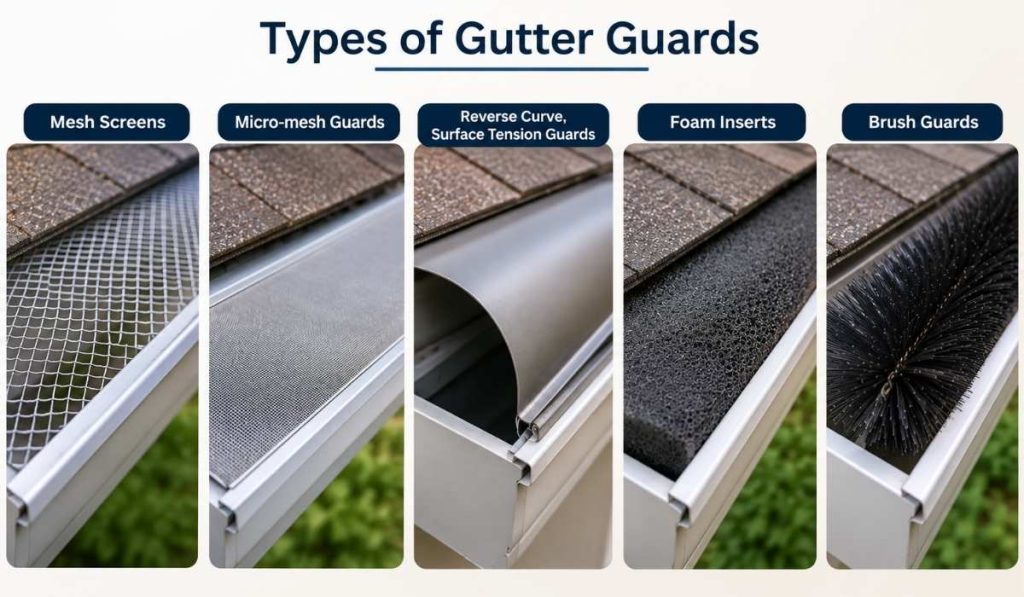
There isn’t a single standard product on the market there are several types of gutter guards, each suited to a different type of home, tree coverage, and budget.
Mesh screens are the most common entry point. A screen sits over the top of the gutter, allowing water through while blocking larger debris. They’re affordable and widely available, making them a reasonable choice for homes without heavy tree cover. The trade-off is that finer debris can still work its way through over time.
Micro-mesh guards are a step up, often considered among the best gutter guards for homes surrounded by trees. The fine weave blocks pine needles, seeds, and other small debris almost entirely, significantly cutting down on maintenance. They cost more upfront and generally require professional installation.
Reverse curve, or surface tension, guards use a curved design that channels rainwater into the gutter while directing leaves and debris off the edge. They perform well in heavy rain and hold up over time, though they’re more visible from the ground and tend to sit at the higher end of gutter guard cost.
Foam inserts fit inside the gutter channel, allowing water to soak through while trapping debris on the surface. They’re inexpensive and simple to install, but foam breaks down with sun and weather exposure and typically needs replacing every few years.
Brush guards consist of bristled inserts placed inside the gutter channel, catching debris before it can cause a blockage. They’re low-cost and easy to install, though they’re the least effective option at filtering out finer debris.
DIY vs. Professional Installation
Screen and brush guards are simple enough that many homeowners install them without professional help. They’re lightweight, don’t require precise cutting, and a minor error is unlikely to cause lasting damage.
Micro-mesh and reverse curve systems require more precision they need to be measured, cut, and fastened at the correct angle, and are sometimes fitted beneath the shingle line. An improper fit can allow water to run behind the gutter instead of into it, leading to the very damage the guards are meant to prevent. For these systems, professional installation is less about convenience and more about protecting the investment.
Gutter Guard Installation Cost
GuGutter Guard Installation Cost
Gutter guard cost varies depending on the type of guard selected and whether installation is professional or DIY. As a general guide, typical pricing per linear foot installed is as follows:
| Gutter Guard Type | Typical Cost per Linear Foot |
|---|---|
| Foam or Brush Guards | $3–$8 |
| Screen Guards | $1–$8 |
| Reverse Curve / Surface Tension Systems | $4–$25 |
| Micro-Mesh Guards | $8–$20+ |
Most homes require approximately 150–200 linear feet of coverage, which puts a typical professional installation between roughly $800 for basic screens and $4,000–$5,000 or more for premium micro-mesh or surface tension systems on a larger or more complex roofline.
DIY installation can lower these costs considerably, though it may come without the warranty and workmanship guarantee that typically accompany professional roofing service.
Several factors can increase overall cost regardless of guard type: multi-story homes, steep or complex rooflines, and gutters requiring repair prior to installation. If your gutters are already sagging or pulling away from the fascia, it’s advisable to budget for those repairs separately, as installing guards over damaged gutters only conceals the underlying issue.
Is Gutter Guard Installation Worth the Investment?
For homes with mature trees nearby or gutters that are difficult to access, gutter guard installation typically pays for itself through reduced cleaning costs and avoided water damage within a few years. Homes with minimal tree cover and easy gutter access may find that routine cleaning is sufficient.
The greatest value of a reliable gutter protection system lies in preventing costlier issues: water intrusion at the fascia, ice dams caused by clogged gutters in winter, and water pooling near the foundation instead of draining away properly. Addressing these problems after the fact is considerably more expensive than the guards themselves.
It’s worth setting realistic expectations, however — reduced maintenance is not the same as no maintenance. Even a well-installed gutter protection system benefits from periodic inspection, particularly after severe weather.
Common Gutter Guard Installation Mistakes to Avoid
Gutter guards can reduce maintenance and help protect your home, but choosing or installing the wrong system can create new problems. Before investing in gutter protection, watch out for these common mistakes:
- Installing over damaged gutters: Repair leaks, sagging, or poor drainage first.
- Choosing by price alone: Consider quality, durability, and performance not just cost.
- Using the wrong guard type: Choose a system based on your roof and surrounding trees.
- Blocking water flow: Poorly fitted guards can cause rainwater to overflow.
- Skipping proper measurements: Incorrect sizing can leave gaps and loose sections.
- Expecting zero maintenance: Inspect your gutters regularly, even with guards installed.
- DIY on complex roofs: Multi-story homes and difficult rooflines may need professional installation.
Frequently Asked Questions
How long does gutter guard installation take? Most homes can be completed in a single day, though larger homes or more complex rooflines may take two days.
Do gutter guards stop all debris? No system blocks everything completely. Micro-mesh guards offer the highest level of filtration, but even these benefit from occasional inspection and light cleaning.
Can gutter guards be installed on existing gutters? Yes, in most cases. Gutter guards are designed to fit over or inside existing gutter systems, provided the gutters are in good condition. Damaged or sagging gutters should be repaired first.
Do gutter guards increase home value? While not a major selling point on their own, gutter guards can be an appealing feature for buyers looking for lower-maintenance homes, particularly in areas with heavy tree coverage.
How often should gutter guards be inspected? A general recommendation is once or twice a year, ideally in spring and fall, or after any significant storm.
Get Professional Gutter Guard Installation
Choosing the right gutter protection system depends on your home’s roofline, surrounding trees, and budget. Reach out to Royal Empire Builder to find the right solution for your home and get the job done right the first time.
Need Help with Your Next Project? Call Royal Empire Builder Today!
Fast responses. Expert advice. Trusted service across NYC and beyond.