A crawl space foundation is a short, open space between the ground and the first floor of a home. It is usually too low to stand in, so workers have to crawl underneath to inspect or repair pipes, wiring, and ducts.
Crawl spaces are common in older homes across New York, including many in Brooklyn, Queens, and Staten Island. They lift the floor off the soil and give easy access to plumbing, wiring, ductwork, and other key parts of the house.
In NYC, crawl spaces also deal with heavy rain, high water tables, and freezing winters. That makes moisture control and regular inspections very important.
What Is a Crawl Space Foundation?
A crawl space foundation is a shallow foundation that lifts a house several feet above the ground. It creates a protective space between the soil and the wooden floor structure.
The main purpose of this foundation is to reduce direct contact between the home and the ground. It can also help protect the property from minor flooding, ground moisture, and certain soil conditions.
The open space under the home makes it easier for contractors to reach:
- Plumbing pipes
- Electrical wiring
- Heating and cooling ducts
- Floor supports
- Insulation
- Drainage lines
This access can make repairs easier than they would be in a home built directly on a concrete slab.
How Crawl Space Foundations Differ From Other Foundations
Homes are commonly built on crawl spaces, basements, or concrete slabs. Each foundation type works differently. A basement foundation creates a full-height space below the home. Homeowners may use it for storage, utilities, or even extra living space.
A slab foundation is a solid concrete base placed directly on the ground. It does not create an open area beneath the house. A crawl space foundation is somewhere between these two options. It creates more access than a slab but less usable space than a basement.
Crawl spaces are more common in warmer regions because builders do not always need to place the foundation far below the frost line. However, they are also found in many older homes in New York and other cold areas.
Main Types of Crawl Space Foundations
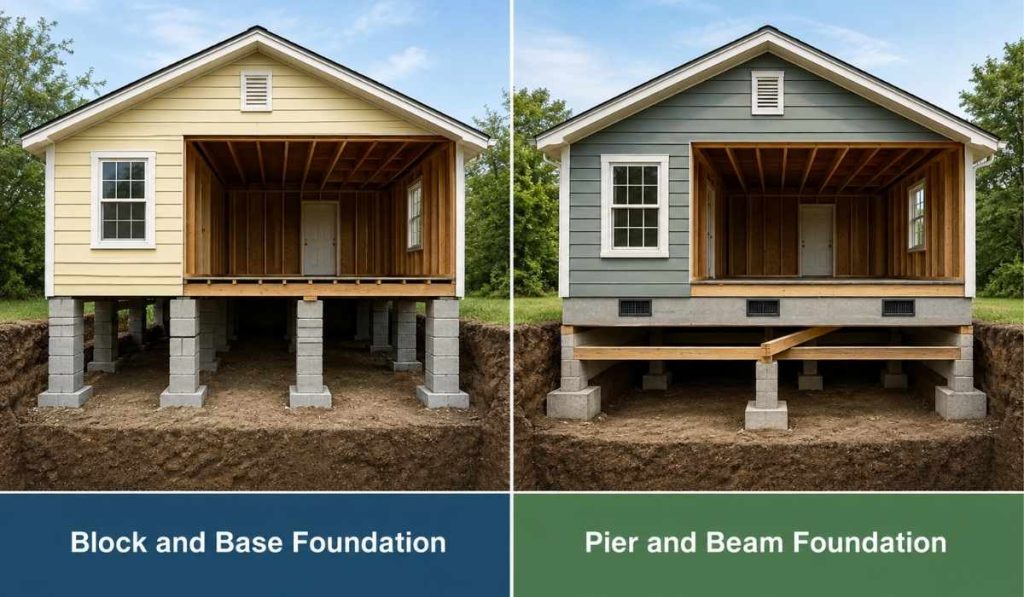
There are two common types of crawl space foundations:
- Block and base foundations
- Pier and beam foundations
Although these systems are similar, their support structures are different.
Block and Base Foundations
A block and base foundation supports the home with separate piers or blocks. These supports are placed beneath important sections of the floor structure.
The piers may be made from:
- Concrete blocks
- Bricks
- Stone
- Timber
- Poured concrete
Some block and base homes remain open underneath. Others have skirting or panels around the outside to improve appearance and reduce access by animals.
Because the supports are separate, there is often plenty of airflow beneath the home. However, poor drainage or weak supports can still lead to movement and uneven floors.
Pier and Beam Foundations
A pier and beam foundation uses vertical piers to support horizontal beams beneath the house. These beams carry the weight of the floor and transfer it to the supporting piers. Many pier and beam homes also have a solid perimeter wall made from concrete, brick, or concrete blocks. Small vents are often installed around the base of the home. These vents allow air to move through the crawl space.
Proper ventilation is important because trapped moisture can lead to:
- Mold growth
- Musty odors
- Wood rot
- Pest activity
- Damaged insulation
- Foundation problems
Some modern crawl spaces are sealed instead of vented. A sealed crawl space may use a vapor barrier, insulation, and a dehumidifier to control moisture.
Benefits of a Crawl Space Foundation
A crawl space foundation can provide several practical benefits, especially when the space is properly designed, drained, and maintained.
Easier Access to Home Systems
Plumbers, electricians, and HVAC technicians can enter the crawl space to reach pipes, wiring, ductwork, and other systems. This access can make certain repairs easier without removing flooring or breaking through concrete.
Protection From Ground Moisture
The raised design keeps the home’s floor structure above the soil, providing some separation from damp ground and minor surface water. However, a crawl space still needs proper drainage, ventilation or encapsulation, and moisture control. This is particularly important in NYC, where heavy rainfall and drainage issues can contribute to water problems.
Easier Home Additions
A crawl space can make it easier to extend plumbing, electrical lines, or other systems when adding a room or making certain changes to the home. Contractors can often access these areas from below rather than opening finished floors.
Potentially Easier Repairs
Some plumbing, electrical, HVAC, and structural repairs may be easier when workers can access the systems from underneath the home. Easier access does not always mean a lower repair cost, but it can reduce the amount of demolition needed for certain projects.
Disadvantages of Crawl Space Foundations
Crawl space foundations also have drawbacks. Without regular inspection and proper moisture control, problems can develop underneath the home and eventually affect the living areas above.
Moisture Problems
Water can enter a crawl space through the soil, foundation walls, vents, drainage problems, or plumbing leaks. Heavy rain and storms can make these issues worse. Persistent moisture can contribute to mold growth, wood rot, damaged insulation, and unpleasant odors.
Hidden Plumbing Leaks
Small plumbing leaks can continue for a long time before homeowners notice them. Water may collect beneath the home and damage nearby wood or insulation. During cold NYC winters, poorly insulated pipes in an exposed crawl space may also be at risk of freezing.
Pest Activity
Rodents, insects, and other pests can enter through damaged vents, gaps, cracks, or openings around the crawl space. Moisture and damaged wood can make the area even more attractive to pests.
Uneven or Sagging Floors
Crawl space piers, beams, or floor joists can shift or deteriorate because of soil movement, moisture, age, or structural damage. This may cause floors to slope, bounce, or sag and can sometimes lead to cracks in walls or ceilings.
Heat and Energy Loss
Poor insulation can allow heat to escape through the floor during winter and allow unwanted heat to enter during warmer months. This can make rooms less comfortable and may increase heating and cooling costs, particularly during cold NYC winters.
Ongoing Maintenance
Crawl spaces require regular inspection and maintenance. Homeowners should check drainage, moisture levels, insulation, ventilation or encapsulation, plumbing, wood supports, and signs of pests or water damage. Finding problems early can help prevent more expensive repairs later.
Why Are Crawl Space Foundations Less Common Today?
Crawl space foundations are still used, but many builders now prefer slab foundations. One reason is cost. Crawl space foundations require more materials, labor, and construction time. Workers must install piers, beams, floor joists, ventilation, and moisture protection.
The system also requires careful planning. Every support must be placed correctly to carry the weight of the home. Slab foundations are often faster and less expensive to build. This makes them a popular choice for many new housing developments.
However, crawl space foundations may still be a good option for:
- Older-style homes
- Rural properties
- Uneven building sites
- Areas with minor flood risks
- Homes that need easy access to utilities
The right choice depends on the soil, climate, budget, and design of the property.
Common Crawl Space Foundation Problems
Crawl space problems often develop slowly. You may notice changes inside the house before you see any damage under it.
Inside the home, watch for sagging or uneven floors, sticking doors, gaps around windows, cracks in interior walls, and a musty smell.
Under the home, look for standing water, damp insulation, mold, rotten wood, rusted supports, and signs of rodents or insects.
These signs do not always mean the foundation is failing, but they should not be ignored. In NYC, heavy rain and high water tables often make moisture the cause. A professional inspection can find out if the problem comes from moisture, drainage, damaged wood, weak supports, or soil movement.
How to Protect a Crawl Space Foundation
Regular maintenance can help prevent expensive repairs. Start by keeping gutters and downspouts clear. Downspouts should direct rainwater away from the foundation. The soil around the home should slope away from the building. This helps prevent water from collecting near the crawl space.
Homeowners should also check for:
- Leaking pipes
- Damaged vents
- Open gaps
- Torn vapor barriers
- Wet insulation
- Mold growth
- Standing water
- Wood damage
A vapor barrier can reduce moisture rising from the soil. In damp crawl spaces, drainage systems, sump pumps, insulation, or dehumidifiers may also be needed.
Crawl Space Foundation Repair
The righThe right repair depends on the cause of the problem.
For structural problems, repairs may include replacing damaged wooden beams, adding support piers, adjusting existing supports, and leveling uneven floors.
For moisture problems, repairs often include fixing drainage, installing a vapor barrier, sealing foundation openings, and installing a sump pump. Damaged insulation should be removed, and mold or wood rot should be treated. In some homes, improving ventilation or sealing the crawl space (encapsulation) works better.
Repairs should always start with a full inspection. Adding supports without fixing drainage or moisture problems may only give a temporary result.
Mid-blog CTA: Seeing these signs in your Brooklyn, Queens, or Staten Island home? Book a crawl space inspection with Royal Empire Builder.
Final Thoughts
A crawl space foundation raises the home above the ground and provides useful access to plumbing, wiring, ductwork, and structural supports. It can make repairs easier and offer some protection from ground moisture. However, regular maintenance is still important.
Moisture, poor drainage, weak supports, mold, and wood rot can cause serious damage when ignored. Homeowners should inspect the area regularly and act quickly when they notice musty odors, uneven floors, standing water, or other warning signs.
With proper ventilation, drainage, insulation, and professional care, a crawl space foundation can remain stable and reliable for many years. If you are concerned about moisture or foundation damage, visit our Contact Us page to schedule an inspection and discuss the right solution for your home.
Need Help with Your Next Project? Call Royal Empire Builder Today!
Fast responses. Expert advice. Trusted service across NYC and beyond.