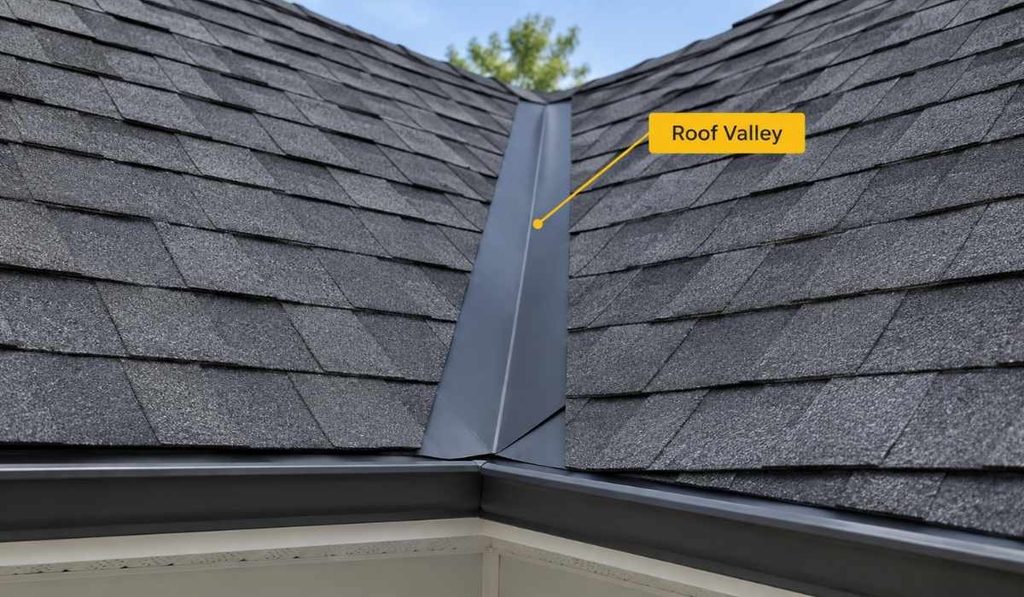
A roof valley is the V-shaped line where two roof slopes meet. It is the channel that carries rain and melting snow down to your gutters. You will find one on any roof with more than one section, like an L-shaped house or a roof with a dormer.
Because of this, a roof valley handles more water than any other part of your roof. It also collects leaves, dirt, and ice. That is why valleys are one of the most common places for roof leaks, especially in New York City, where heavy rain, snow, and freezing weather put the roof under stress all year. When a valley is built well, it keeps water out of your home. When it is built poorly or gets damaged, water can slip under the roofing and cause costly repairs.
Most roof valleys have a waterproof layer under the shingles, and many also have metal flashing on top. Flashing is a thin strip of metal that guides water away from the seam. If your valley is leaking or worn out, our roofing services in NYC can inspect it and fix it.
Types of Roof Valleys
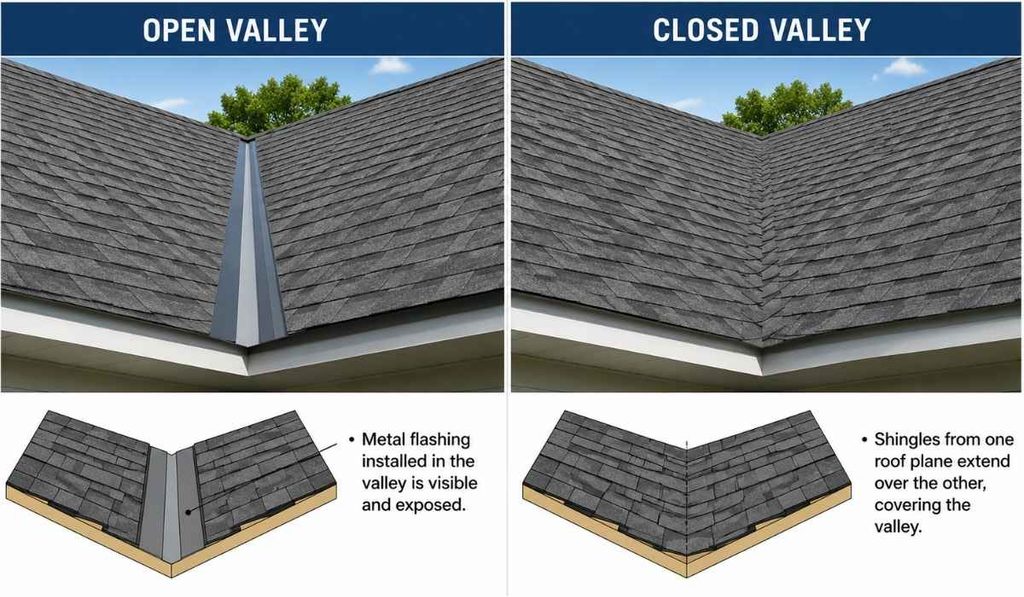
There are two main types of roof valleys: open valleys and closed valleys. The difference is in how the valley is covered.
Open Valley
An open valley has a strip of metal flashing down the center, and the metal stays visible. The shingles on both sides are cut in a straight line and stop a few inches short of the middle. Water runs down the smooth metal and out of the valley without touching the shingles. The metal is usually galvanized steel, aluminum, or copper.
Closed Valley (Woven and Cut)
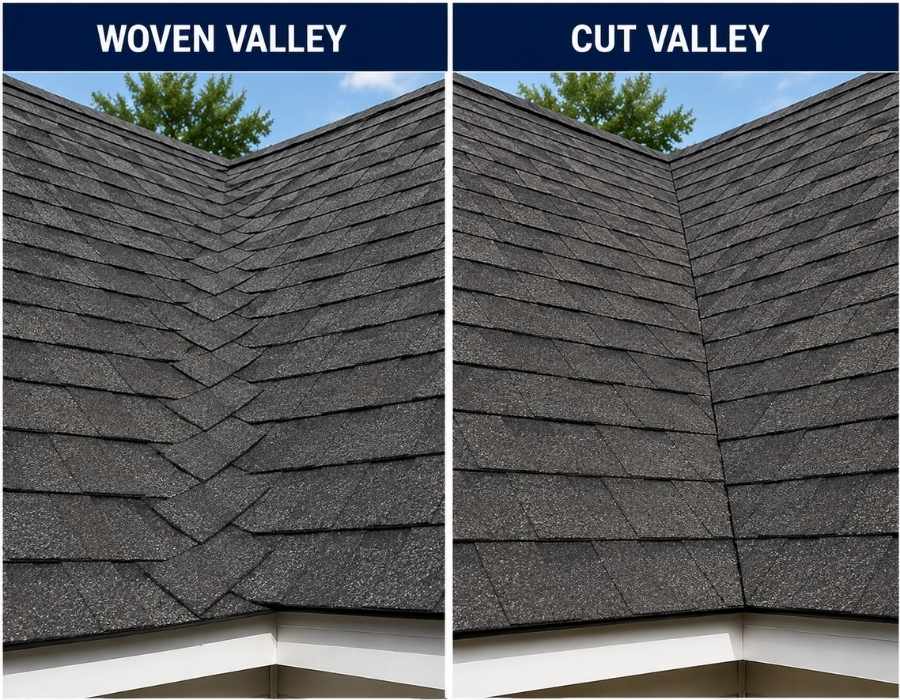
A closed valley is covered with shingles, so you cannot see any metal from the outside. There are two styles. In a woven valley, shingles from both slopes overlap across the center, a bit like weaving. In a cut valley, shingles from one slope run all the way across the valley, and shingles from the other slope are trimmed and laid on top along a straight line. Both styles give the roof a clean, smooth look, and they are mostly used with asphalt shingles.
Which Roof Valley Is Better?
The open valley is the better choice for most homes, and it is especially strong for homes in New York City. The smooth metal lets water, snow, and ice slide off quickly. Leaves and dirt wash away more easily, so the valley is less likely to clog. Since the metal is in plain view, it is also much easier to spot rust, cracks, or damage early. Repairs are simpler too, because a roofer can reach the problem without pulling up a lot of shingles.
A closed valley does not perform as well in heavy weather. Water flows over the shingle edges instead of smooth metal, and debris can get stuck in the overlaps. Over time, the shingles in the valley wear down faster than the rest of the roof. You often cannot see the damage until a leak shows up on your ceiling. The only real advantage of a closed valley is its look, since it blends in with the rest of the roof.
Still, the right choice depends on your roofing material and roof design.
Roof Valley Replacement: When Is It Needed?
You need a roof valley replacement when the valley is leaking, rusted, cracked, or worn out, and a simple repair will not fix it. Most roof valleys last about 20 to 30 years. Problems can start sooner if the flashing was installed the wrong way or if leaves and debris were left to pile up.
Signs Your Roof Valley Needs Replacement
There are some clear warning signs. Water stains on your ceiling or walls, especially near where two roof sections meet, are a big one. Look for rust or small holes in the metal, or shingles along the valley that are curled, cracked, or missing. A musty smell in the attic can also mean water is getting in. If you see any of these, do not wait for the next storm to make it worse.
Can a Damaged Valley Be Repaired?
Yes, small problems can often be repaired. A tiny crack, a loose piece of flashing, or a few damaged shingles can usually be fixed by resealing the area or swapping out the bad pieces. But if the metal is rusted through, the layer under it is soaked, or the leak has been going on for a long time, a repair will only buy you a little time. In that case, replacement is the safer and smarter choice. It costs more up front, but it can save you from bigger damage to your roof deck, insulation, and ceilings.
When to Call a Professional Roofer
Call a roofer as soon as you see a stain on your ceiling or find a leak after a storm. Roof valleys sit where two slopes meet, often high up and on a steep angle, so walking on the roof yourself can be dangerous. A professional can also find the real cause of the leak. The spot where water shows up inside your home is often not the spot where it enters the roof. Fixing the problem early almost always costs less than waiting.
Final Thoughts
A roof valley may look like a small part of your roof, but it does a big job. It carries water away from your home, and when it fails, leaks usually follow. Open valleys are the stronger choice for most homes because they drain better and are easier to check and repair. If you notice signs of damage or are not sure what type of valley your roof has, it is best to get it checked early.
Royal Empire Builder NYC provides roofing services across all five boroughs. Call us at (718) 717-4016 to schedule a roof inspection and get honest advice on your roof valley.
Need Help with Your Next Project? Call Royal Empire Builder Today!
Fast responses. Expert advice. Trusted service across NYC and beyond.