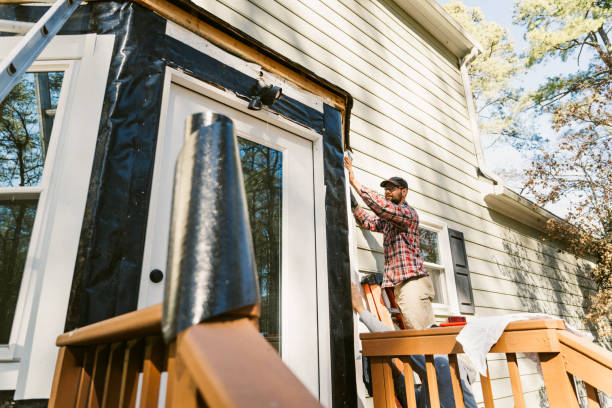
Water doesn’t need a big hole to wreck a wall. A hairline crack in the brick or a gap behind the siding is enough. Once water gets in, it has nowhere to go, and it sits there for years. You don’t see it until the paint peels or the mold shows up inside.
This is a real problem for buildings in Brooklyn, Queens, and across NYC, where rain, wind, and freezing winters hit old walls hard. A rainscreen, also called rainscreen cladding, is built to fix exactly this. Here is how it works, what it costs, and how to tell if your building needs one.
What Is Rainscreen Cladding?
Rainscreen cladding is an exterior wall system made of an outer layer, an air gap, and a water-resistant barrier. The outer layer blocks most rain. Any water that gets through drains out or dries in the gap. This protects the building from leaks, mold, and rot.
Is a rainscreen the same as rainscreen cladding? In everyday use, yes. Technically, the rainscreen is the full wall system, and the cladding is the outer layer you see.
How Does a Rainscreen Wall System Work?
This system works because it does not try to be 100% waterproof. It expects some water to get in and gives that water a way out.
It has four main parts:
- Outer cladding: blocks most of the rain, wind, and sun
- Air gap: a small space, usually three-quarters of an inch or more, that lets water drain and air move
- Weather barrier: a water-resistant layer that protects the wall behind it
- Structural wall: the brick, block, or framing of the building
Rain hits the cladding first. If a little water gets behind it, it runs down the gap and out at the bottom. Air moving through the gap dries the wall. In a normal wall with no gap, that water gets trapped.
Rainscreen vs. Siding: What Is the Difference?
Regular siding is often installed tight against the wall. It looks fine, but if water gets behind it, there is nowhere for it to go. A rainscreen leaves a gap so the wall can drain and dry.
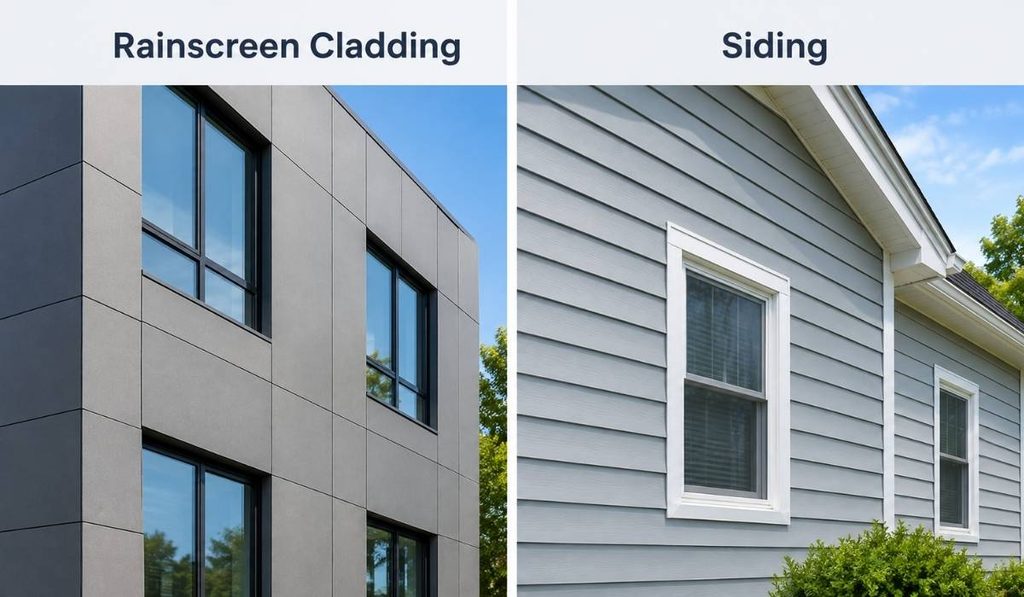
| Regular Siding | Rainscreen | |
|---|---|---|
| Moisture control | Basic | Strong |
| Drying | Slow | Fast, with air flow |
| Mold risk | Higher | Lower |
| Wall lifespan | Shorter | Longer |
| Upfront cost | Lower | Higher |
Siding costs less at the start. But if moisture damage shows up later, repairs can cost much more than doing it right the first time.
Benefits of Rainscreen Cladding
It costs more than basic siding, but it pays you back over time. The main benefits are:
- Less moisture in the wall. Water drains out instead of sitting inside.
- Lower mold risk. Dry walls do not grow mold.
- Longer wall life. The structure behind the cladding stays protected.
- Paint and finish last longer. Less trapped moisture means less peeling.
- Lower repair costs. You avoid rot, leaks, and repeat fixes.
For NYC building owners, this matters most in older buildings, where hidden water damage can go unnoticed for years.
Rainscreen Cost in NYC
The price depends on the job. A small brownstone front costs very different money than a six-story building. The main things that change the price are:
- Material. Fiber cement costs less than metal panels.
- Building height. Taller buildings need more equipment and labor.
- Access and scaffolding. Tight lots and street work add cost in NYC.
- Wall condition. Bad brick or damaged sheathing needs repair first.
- Permits and filings. Larger jobs may need DOB paperwork.
Most jobs in NYC fall somewhere between $30 and $80 per square foot installed. Your exact number depends on the points above. The best way to know is a site visit, and we offer free estimates.
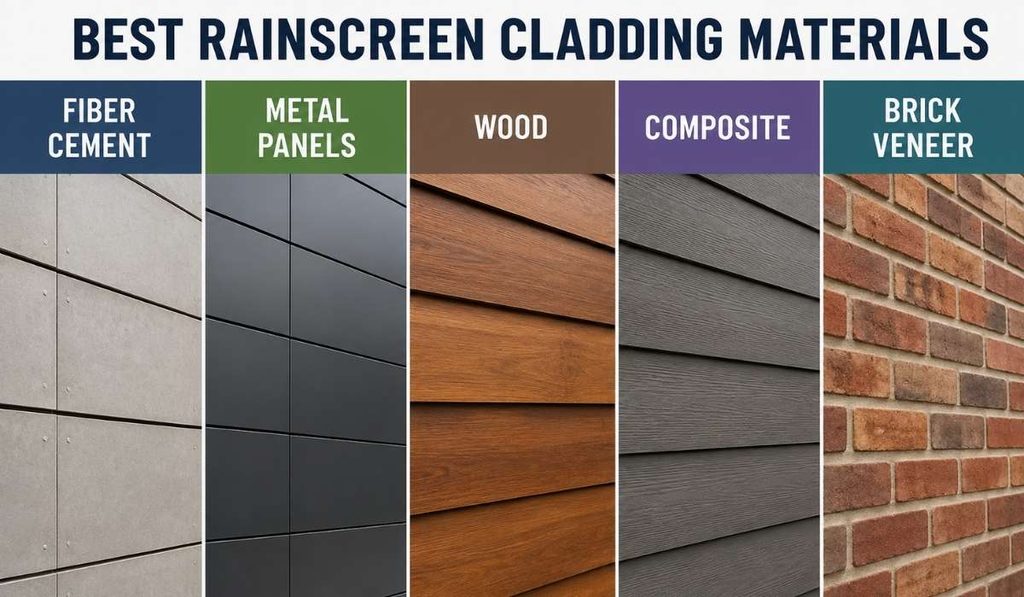
Best Rainscreen Cladding Materials
There is no single best material. It depends on your building, your budget, and the look you want.
- Fiber cement: strong, fire resistant, and good value
- Metal panels: modern look, very durable, and lightweight
- Wood: natural look, but needs more upkeep
- Composite: low maintenance and resists rot
- Brick veneer: a classic look that fits many NYC blocks
Rainscreen for Brick and Masonry Buildings in NYC
Brick and masonry buildings are everywhere in Brooklyn, Queens, and the Bronx. Brownstones, co-ops, and multi-family buildings often have old brick that absorbs water. Over time this leads to spalling, cracked mortar, and damp interior walls.
A rainscreen adds a protective layer over the masonry and gives moisture a place to drain. It does not replace good brickwork. If your mortar joints are failing, they should be fixed first. See our masonry services for tuckpointing and brick repair.
NYC also has rules for exterior walls. Buildings taller than six stories fall under Local Law 11, the facade inspection program. Before any facade project, check the current DOB requirements or ask your contractor to confirm them.
Waterproofing and Rainscreen Cladding: How They Work Together
They do different jobs, and they work best together. Waterproofing protects the wall itself, including flashing, sealants, and the weather barrier. The outer system manages the water that gets past the surface.
If you only do one, you leave a gap. A good outer wall with poor waterproofing details around windows or rooflines can still leak. Our waterproofing services cover both sides of the job.
Signs Your Building Needs a Rainscreen
Not every building needs one. But these are common signs that water is getting into your walls:
- Leaks or water stains on interior walls
- Peeling or bubbling paint on the outside
- Damp walls or a musty smell
- Mold on interior or exterior surfaces
- Bulging, warped, or rotting siding
- Cracked or crumbling brick and mortar
If you see more than one of these, get the wall checked before the damage spreads.
Rainscreen Installation and Maintenance
Every job is different, but a typical rainscreen installation follows these steps:
- Inspect the wall and repair any damage
- Install the weather barrier and flashing
- Add furring strips to create the air gap
- Fasten the cladding panels
- Seal the joints, edges, and openings
We handle rainscreen installation in Brooklyn and across all five boroughs, including Queens, Manhattan, the Bronx, and Staten Island.
Once installed, a rainscreen needs very little care. Check it once a year. Look for loose panels, cracked sealant, and blocked drainage openings at the bottom of the wall.
Frequently Asked Questions
How long does a rainscreen last?
With good materials and proper installation, a rainscreen can last 30 to 50 years. Metal and fiber cement tend to last longest.
Is a rainscreen worth the cost?
For most NYC buildings, yes. It costs more upfront, but it lowers the risk of leaks, mold, and expensive wall repairs later.
Can a rainscreen go over brick?
Yes. It can be installed over brick if the brick is in good shape. Loose bricks and failed mortar should be repaired first.
Does NYC require a rainscreen?
Not for every building. Requirements depend on the building type, height, and the work being done. Always check with the DOB or a licensed contractor.
Is a rainscreen the same as rainscreen cladding?
In everyday use, yes. The rainscreen is the full wall system, and the cladding is the outer layer. People use the terms the same way.
Conclusion
Water will find a way into a wall. The question is whether it can get back out. A rainscreen gives it that way out, so your walls stay dry, your paint lasts, and small leaks don’t turn into big repairs.
Rainscreen cladding costs more than basic siding at the start. But for NYC buildings, especially older brick ones, it can save you thousands in mold, rot, and repeat fixes.
Need Help with Your Next Project? Call Royal Empire Builder Today!
Fast responses. Expert advice. Trusted service across NYC and beyond.