Most homeowners don’t think about the parts of a chimney on a regular basis. But knowing what each part does can save you from costly repairs and serious safety hazards.
Your chimney is more than a brick structure above your roof. It’s a complete venting system of several parts working together to safely remove smoke, protect your home from moisture and improve fireplace performance.
Even if you schedule an annual professional chimney inspection, problems can arise between inspections. Understanding the basic parts of a chimney can help you notice warning signs early and articulate what you are seeing if you ever need chimney repairs.
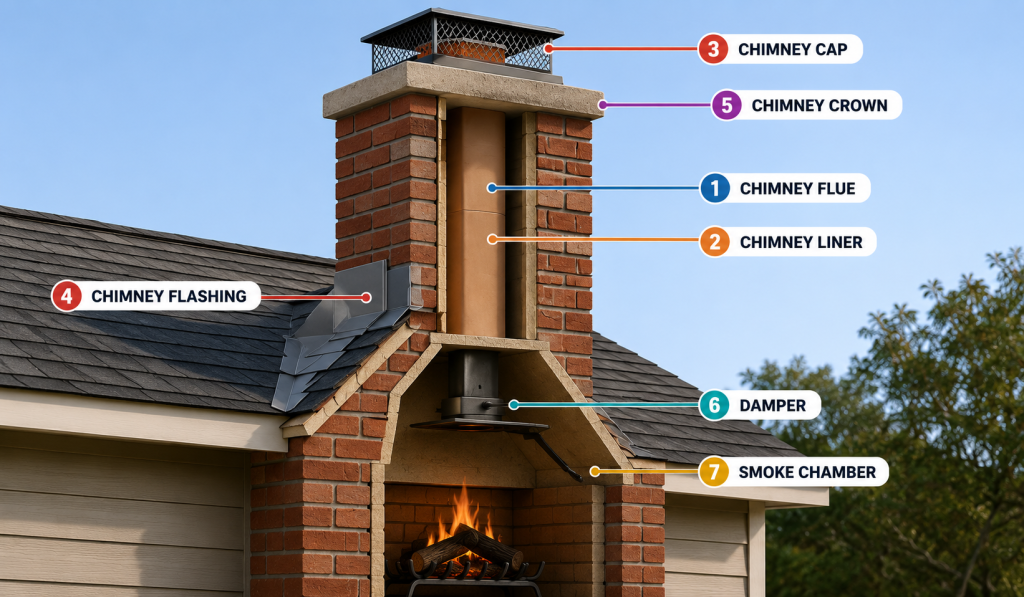
seven essential parts of a chimney every homeowner should know.
1. Chimney Flue
The chimney flue is the channel that lets smoke, heat and combustion gases safely escape your fireplace to the outside world. When you build a fire, the flue gives a way for dangerous gases to leave your house instead of settling inside.
Many homeowners get confused between the flue and the chimney liner but they are not the same thing. The flue is the main passage . The liner is inside the flue for extra protection . Many older homes had just exposed brick on the inside of the flue, but modern building codes require a properly installed liner for safety and efficiency.
If the flue becomes blocked by debris, bird nests, or excessive creosote buildup, smoke may back up into your living space instead of exiting through the chimney.
2. Chimney Liner
The chimney liner is one of the most important safety components inside your chimney system. It creates a protective barrier between the hot gases traveling through the flue and the surrounding brickwork and wooden framing of your home.
Even a small crack in a clay tile or metal liner can become a serious fire hazard. That’s why professionals recommend repairing a damaged liner before using your fireplace again.
If you install a new fireplace insert or wood-burning stove, the existing liner may also need to be resized to ensure proper airflow and drafting.
3. Chimney Cap
If you look at the very top of your chimney, you’ll usually see a chimney cap covering the opening. Although it’s a relatively small part, it provides some of the best protection for your entire chimney.
A chimney cap helps keep rain, snow, leaves, birds, squirrels, and other debris out of the flue. Many models also include a wire mesh that works as a spark arrestor, reducing the chance of hot embers landing on your roof.
Without a properly installed chimney cap, moisture and animals can quickly create costly problems inside your chimney.
4. Chimney Flashing
One of the most common places for roof leaks isn’t the roof itself—it’s where the chimney meets the shingles. That’s where chimney flashing comes in.
Chimney flashing consists of specially fitted metal pieces installed around the base of the chimney to create a waterproof seal. When flashing begins to rust, separate, or pull away from the masonry, rainwater can seep into the roof structure and eventually cause damaged insulation, stained ceilings, or wood rot.
Because flashing is constantly exposed to changing weather conditions, it’s worth checking during routine roof or chimney inspections.
5. Chimney Crown
Many homeowners never notice the chimney crown, yet it plays a major role in protecting the entire structure.
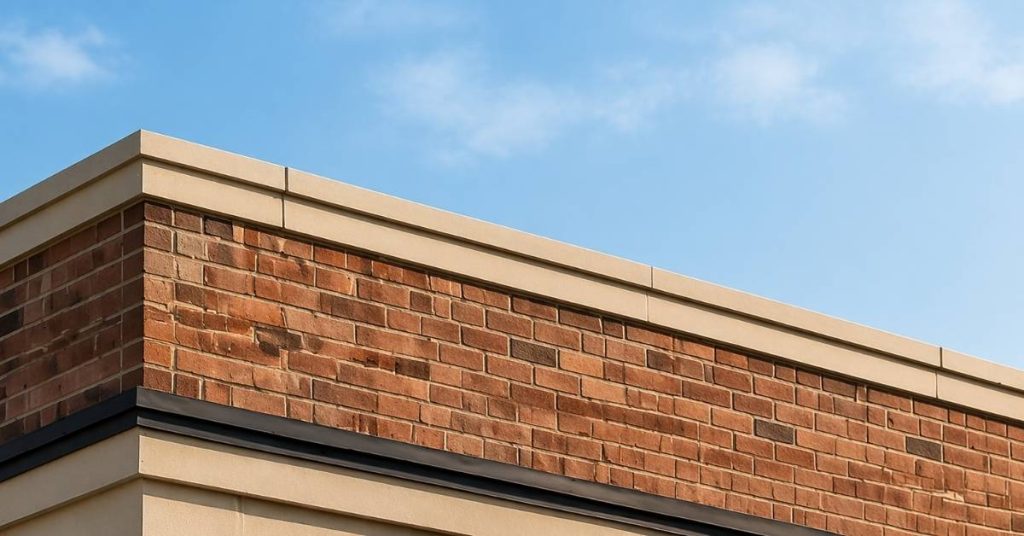
The chimney crown is the sloped concrete surface that covers the top of the masonry chimney around the flue opening. Its purpose is simple—it directs rainwater away from the brickwork instead of allowing moisture to soak into the chimney.
Small cracks in the crown may not seem like a big deal at first, but once water gets inside, freezing temperatures can make those cracks grow much larger. Over time, this freeze-thaw cycle can lead to loose bricks, damaged mortar joints, and expensive masonry repairs.
6. Damper
The damper is a movable metal plate located just above the firebox. Think of it as a door that controls airflow inside your chimney.
Before lighting a fire, the damper should always be fully open so smoke can travel freely through the flue. Once the fireplace has completely cooled, closing the damper helps keep heated or air-conditioned indoor air from escaping up the chimney.
Over time, dampers can rust, warp, or become difficult to operate, reducing both fireplace performance and your home’s energy efficiency.
7. Smoke Chamber
The smoke chamber sits between the firebox and the chimney flue. Although most homeowners never see it, this section plays an important role in helping smoke move smoothly through the chimney.
Its sloped walls funnel smoke and combustion gases into the narrower flue above, improving draft and reducing the chances of smoke spilling back into the room.
If the smoke chamber becomes rough, damaged, or coated with heavy creosote, airflow can suffer, making your fireplace less efficient and increasing the need for professional cleaning.
FAQs: What Homeowners Ask About the Parts of a Chimney
How often should a chimney be cleaned and inspected?
The National Fire Protection Association (NFPA) recommends having your chimney, fireplace, and venting system inspected at least once each year. Cleaning should be performed whenever creosote buildup becomes noticeable inside the flue, as this highly flammable residue can significantly increase the risk of a chimney fire.
Why is smoke backing up into my house when I light a fire?
Smoke usually enters the home because something is preventing it from moving up the chimney. Common causes include a blocked flue, a closed or damaged damper, excessive creosote buildup, or poor draft conditions. In colder weather, an exterior chimney may also contain a pocket of cold air that temporarily pushes smoke back inside until the flue warms up.
How much does it cost to repair a chimney crown or flashing?
Minor chimney crown repairs generally cost between $300 and $600, while rebuilding a severely damaged crown can range from $1,000 to $2,200. Repairing or replacing chimney flashing typically costs $400 to $1,000, depending on the roof design and the extent of the damage.
Can I use my fireplace if the chimney liner is cracked?
No. A cracked chimney liner should always be repaired or replaced before using your fireplace again. A damaged liner can allow excessive heat, sparks, and dangerous gases like carbon monoxide to escape into surrounding walls, creating a significant safety risk.
When Should You Call a Professional?
Learning about the parts of a chimney helps you recognize potential problems early, but it doesn’t replace a professional inspection. If you’ve noticed loose bricks, water stains around the fireplace, smoke entering your home, or visible cracks in the chimney, it’s best to have the system evaluated before the damage gets worse.
Routine maintenance, timely repairs, and annual inspections can help every component—from the chimney cap to the smoke chamber—continue working as it should. Taking care of these essential parts of a chimney not only protects your home but also keeps your fireplace safe, efficient, and ready to use for years to come.
Need Help with Your Next Project? Call Royal Empire Builder Today!
Fast responses. Expert advice. Trusted service across NYC and beyond.