Roof decking is the structural layer of wood or wood-based panels installed over the rafters or trusses of a roof. It sits underneath the underlayment and shingles and provides the solid surface that supports and holds the roofing system.
You usually cannot see this part of your roof because it is covered by the materials above it. But when a roofer tells you that your decking is damaged, it can affect the safety, strength, and cost of your roof.
Understanding what it is and what can go wrong with it can help you make better decisions when repairing or replacing your roof.
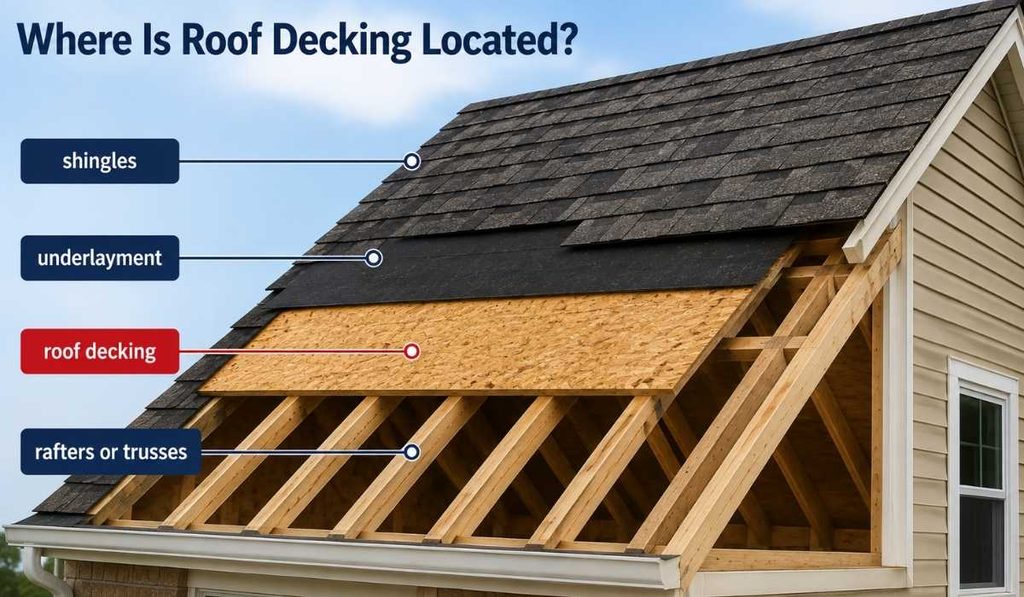
Where Is Roof Decking Located?
Think of your roof as a set of layers.
At the bottom are the rafters or trusses. These form the framework of the roof. The decking is attached over that framework. It creates a continuous surface across the roof. Above the decking are the underlayment and roof covering, such as asphalt shingles, metal, or another roofing material.
A simple way to picture it is:
Rafters or trusses → Roof decking → Underlayment → Shingles or other roof covering
The decking connects the roof’s structural frame to the materials you see from outside.
Purpose of Roof Decking
Almost everything above the decking depends on it having a solid surface. Its main jobs are:
- Supports the roof system: It holds up the underlayment and roof covering installed above it.
- Gives a surface for fastening: Shingles and other materials need a solid base for nails or other fasteners. If the wood underneath is rotten or weak, fasteners may not hold properly.
- Creates a continuous surface: The rafters and trusses form the framework, and the decking covers it.
- Helps transfer loads: The roof has to handle its own weight, weather, and, depending on the location and design, snow or other forces. The decking works with the framing as part of that structure.
Roof Decking Materials
The material depends on the home’s age, construction, roof design, and local requirements. The most common materials in residential roofs are plywood and OSB. Older homes may also have solid wood boards.
Plywood
Plywood is made by bonding thin layers of wood together. It has been used for roof sheathing for many years and comes in different grades and thicknesses. The right type depends on the roof and its structural requirements.
OSB
OSB stands for oriented strand board. It is made from small wood strands that are arranged and pressed together with adhesives to create structural panels. OSB is common in modern residential construction.
Wood Boards
Older homes may have individual wood boards instead of large plywood or OSB panels.
Some of these roofs are still in good condition. Others may have boards that are cracked, warped, or weakened by years of moisture. A contractor needs to inspect the existing material before deciding whether it can stay during a roof replacement.
Is Roof Decking the Same as Roof Sheathing?
Yes. In most residential roofing conversations, “roof decking” and “roof sheathing” mean the same thing.
You may see either term on a roofing estimate, inspection report, or building document. The name is not the important part. What matters is whether the material is strong, properly supported, and suitable for the roofing system being installed.
Common Causes of Roof Decking Damage
Water is one of the biggest problems for wood-based decking. A roof can look fine from the ground while water is slowly reaching the material underneath.
Common causes include:
- Roof leaks: Damaged shingles or other roof covering can allow water to reach the layers below.
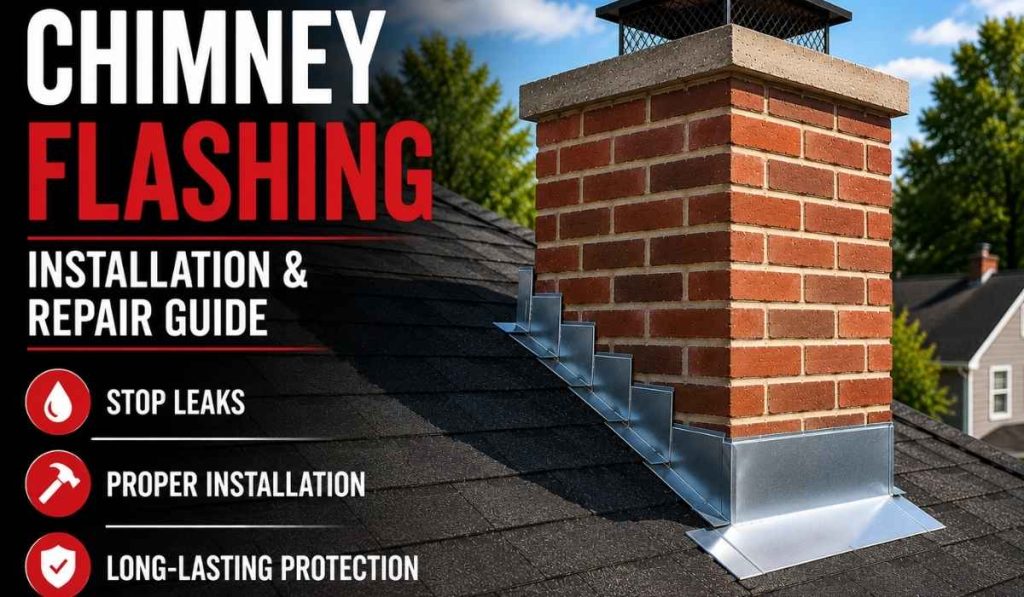
- Failed flashing: Flashing protects areas where the roof meets chimneys, walls, vents, skylights, and other structures. If it fails, water can get into the roof.
- Storm damage: High winds, hail, falling branches, and other weather events can damage the outer roof and let moisture get underneath.
- Long-term moisture: Wood that stays wet for long periods can swell, weaken, rot, or lose its ability to hold fasteners.
- Attic moisture: Moisture inside the attic can affect wood over time. The cause needs to be found and fixed rather than just covering up the visible damage.
The important thing is to fix both the damaged material and the source of the moisture.
Signs of Damaged Roof Decking
Because the decking is hidden, you may not know there is a problem until the damage becomes more serious. Some signs can be seen from inside the home or attic:
- Water stains: Brown or dark stains on the underside of the roof can mean water has entered the roof system.
- Soft or weak wood: Accessible wood that feels soft, spongy, or weaker than the surrounding material should be inspected.
- Rot: Wood that is crumbling, dark, or breaking apart may have been damaged by long-term moisture.
- Sagging or uneven areas: A dip or swelling on the roof can be a warning sign. It does not always mean the decking is the cause, so the roof should be inspected before drawing a conclusion.
- Mold or damp insulation: These can point to a moisture problem that may also affect the decking.
Why Decking Damage Is Often Hidden
You can check your shingles from the ground, but the decking is underneath them.
For example, imagine a small leak around a roof vent. Water may travel below the shingles and slowly reach the wood underneath. From the outside, you may only see an aging roof vent. The damage can continue until the shingles are removed.
That is why a contractor may find damaged areas during a roof replacement even when there was no obvious sign from outside. The full condition of the decking often cannot be confirmed until the old roofing is removed.
Does a New Roof Always Need New Roof Decking?
No. Replacing shingles or another roof covering does not automatically mean the entire decking needs to be replaced. A roof replacement is a good time to inspect it, and if the existing material is dry, sound, properly supported, and suitable for the new roofing system, it may be possible to keep it.
Replacement may be needed when sections are:
- Rotten
- Severely water-damaged
- Warped or badly deteriorated
- Structurally weak
- Unable to hold roofing fasteners properly
- Otherwise unsuitable for the new roofing system
The decision should be based on the actual condition of the material, not simply on the age of the roof.
Partial Roof Decking Replacement
Only part of the decking can be replaced when the damage is limited to certain areas.
For example, a leak near a chimney may damage only the surrounding section. In that case, the contractor may be able to remove the affected area and install new material without replacing the entire roof deck.
If the damage is spread across a large part of the roof, more extensive replacement may be necessary. The amount of work often becomes clear after the roof covering is removed and the decking can be inspected directly.
Roof Decking Replacement Process
The process is usually part of a roof repair or full roof replacement.
- Remove the roof covering. The contractor removes the shingles or other material in the affected area.
- Inspect the exposed surface. Once the decking can be seen, the contractor checks for rot, water damage, weak areas, and other problems.
- Remove damaged sections. Material that is no longer strong enough is taken out.
- Install new decking. New plywood, OSB, or another suitable material is installed according to the roof design and applicable requirements.
- Install the roof covering. Once the surface is ready, the contractor installs the underlayment, flashing, shingles, or other roofing materials.
The exact process depends on the construction of the roof and the roofing system being used.
Roof Decking Thickness
There is no single thickness that is correct for every roof. The right thickness can depend on:
- The spacing between rafters or trusses
- The type and grade of the material
- Structural requirements
- Roof design
- Local building codes
- Requirements for the roofing system
This is why it is better not to choose a thickness based on what was used on a neighbor’s house or another roof. The contractor should select material that meets the requirements for your specific roof.
How Much Does Roof Decking Replacement Cost?
There is no one price that applies to every home. The cost can change based on:
- How much material needs to be replaced
- The type of material used
- Roof size
- Roof pitch and design
- Access to the roof
- Labor
- Local material costs
- Whether the work is part of a larger roof replacement
The biggest issue is that the damage is often hidden. A contractor may give you an estimate before the roof is opened, but the exact amount of damaged material may not be known until the old roofing is removed.
Questions to Ask Your Roofer
Before work begins, ask:
- How much decking replacement is included in the estimate?
- How will additional damaged areas be priced?
- Will I be shown photos of damaged areas?
- What material will be used for replacement?
- Is the cost for decking separate from the rest of the roof replacement?
Clear answers can help you understand your final bill and avoid surprises.
Risks of Leaving Damaged Decking
Putting new shingles over severely damaged material does not fix the underlying problem. If the surface is too weak or rotten, it may not provide the support or fastening strength the new roof needs. Over time, continued moisture can make the damage worse.
That does not mean every small defect requires complete replacement. The important question is whether the material is still strong and suitable for the new roofing system.
Frequently Asked Questions
Can you see roof decking from outside?
Usually, no. It is normally covered by underlayment and the outer roofing material. You may see signs of a problem, such as dips or uneven areas, but the actual condition often cannot be confirmed until the roof covering is removed. This is also why a roofer may find damaged decking after removing your shingles.
Is plywood or OSB better for roof decking?
Both are commonly used for residential roofs. Neither is automatically the best choice for every home. The right material depends on the roof design, structural requirements, product specifications, and local requirements.
How long does roof decking last?
There is no fixed lifespan that applies to every roof. A deck that stays dry and is properly protected can last for many years. Repeated leaks and moisture exposure can shorten its useful life. Its condition matters more than its age alone.
Can you repair rotten roof decking?
Rotten wood generally cannot be restored to its original strength simply by covering it. The affected section may need to be removed and replaced. The source of the moisture should also be fixed so the new material does not suffer the same problem.
Final Thoughts
Roof decking may be hidden, but it is an important part of your roof.
It creates the solid surface that supports the roofing materials above and gives them a place to be securely fastened. Plywood, OSB, and wood boards are common materials, depending on the home’s construction.
The biggest concern is moisture. A leak that seems small from inside your home can cause much more damage underneath the roof if it is left unresolved.
If you are replacing your roof, ask your contractor to inspect the decking and explain its condition before new roofing materials are installed.
For homeowners in New York City, Royal Empire Builder can inspect your roof, identify damaged areas, and explain what repairs may be needed.
Contact Royal Empire Builder to schedule a roof inspection or request an estimate.
Need Help with Your Next Project? Call Royal Empire Builder Today!
Fast responses. Expert advice. Trusted service across NYC and beyond.