A parapet roof is a flat or low-slope roof with a low wall around its edge. The roof surface is waterproofed and wrapped up the inside of that wall, and rainwater leaves through drains or scuppers instead of running off the edge. In New York City, this roof type is common on brownstones, row houses, mixed-use buildings, and apartment buildings. The joint where the roof meets the wall is where most leaks start. For the wall itself, read our parapet wall guide.
Why Do Buildings Have Parapet Roofs?
Some of the main benefits include:
- Creates a modern and attractive roofline
- Helps reduce wind damage to roofing materials
- Makes roof maintenance safer
- Supports efficient roof drainage
- Adds another layer of protection around the roof edge
Parapet Roof vs Flat Roof: What Is the Difference?
A flat roof is the roof surface. A parapet roof is a flat or low-slope roof that also has a wall around its edge.
| Feature | Flat Roof Without Parapet | Parapet Roof |
|---|---|---|
| Roof Edge | Open | Protected by a wall |
| Drainage | Water runs off the edge | Water goes to drains or scuppers |
| Wind | Edge is exposed | Wall reduces wind pressure at the edge |
| Safety | No edge protection | Barrier at the roof edge |
| Leak Risk | Edge and surface | Surface, plus the roof-to-wall joint |
Main Parts of a Parapet Roof System
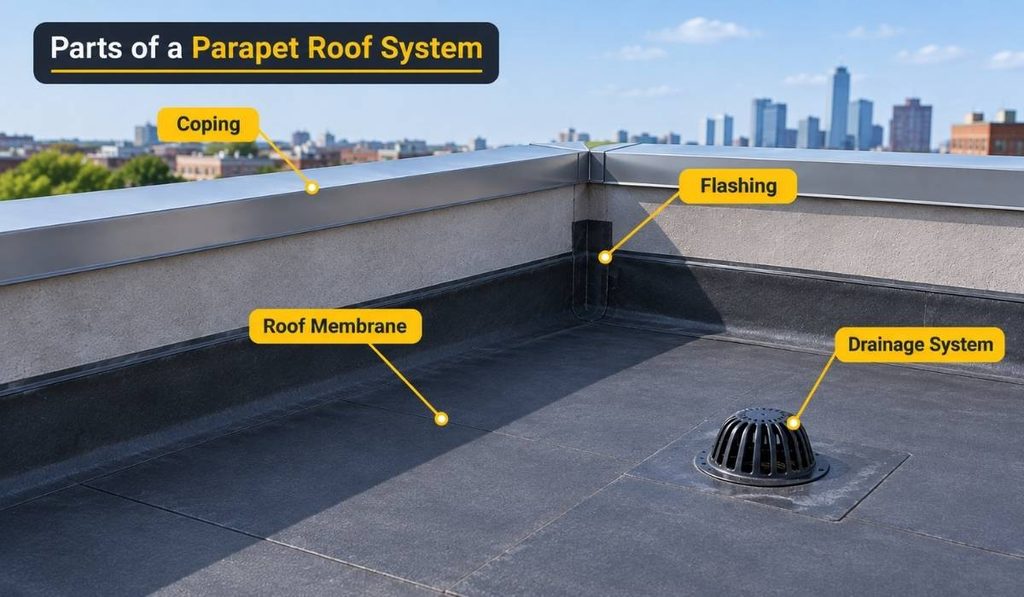
A parapet roof system is made up of several parts that work together to keep water out and protect the roof. If one part fails, the entire system can become vulnerable to leaks.
Coping
Coping is the cap on top of the parapet wall that sheds water. See our parapet wall guide for coping and wall repairs.
Roof Membrane
The roof membrane is the waterproof layer that covers the flat roof surface. It prevents rainwater from entering the building and is one of the most important parts of any roofing system.
Flashing
Flashing seals the connection between the roof membrane and the parapet wall. This area is one of the most common places where roof leaks begin because the roof changes direction from horizontal to vertical.
If flashing becomes loose, cracked, or damaged, water can quickly enter behind the membrane.
Drainage System
Flat roofs do not shed water like sloped roofs, so a parapet roof depends on its drainage system to move rain off the roof. Scuppers, roof drains, and a gentle slope work together to carry water away. If they fail, water stays on the roof and leaks follow.
How Long Does a Parapet Roof Last?
The roof membrane is the part that sets the life of a parapet roof. Most membranes last about 15 to 30 years, depending on the material.
| Roofing material | Typical lifespan | Notes |
|---|---|---|
| Modified bitumen | 15–20 years | Layered asphalt sheets, common on NYC flat roofs |
| EPDM (rubber) | 20–30 years | Flexible and easy to repair |
| TPO | 15–25 years | Light color, reflects heat |
| Built-up (tar and gravel) | 20–30 years | Multiple layers, very durable |
| Liquid-applied coating | 10–20 years | Used to restore a roof that is still sound |
These are typical ranges. Ponding water, blocked drains, foot traffic, and skipped inspections can shorten them. Flashing and sealants often wear out sooner than the membrane, so they need regular checks.
Common Parapet Roof Design Styles
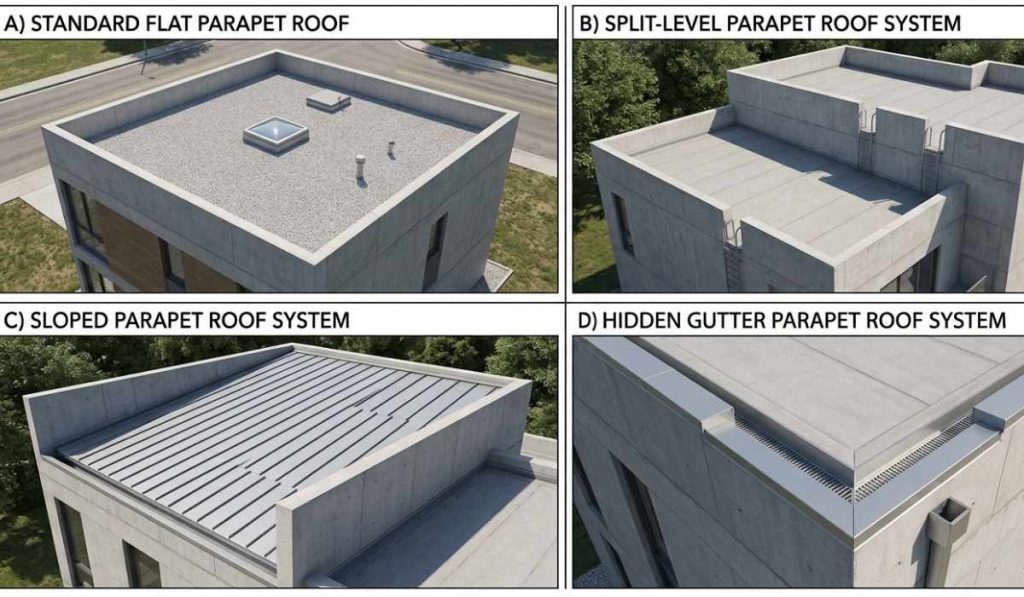
The design usually depends on the building’s architecture, climate, and roofing system.
Standard Flat Parapet Roof
A standard flat parapet roof system is the most common design used on modern buildings with a clean, box-shaped appearance. Although the roof looks completely flat from the ground, it has a slight slope that helps direct rainwater toward the drainage system. The waterproof roofing membrane extends across the roof surface and wraps up the inside of the parapet wall, creating a continuous seal that helps prevent water from entering at the roof edges. This design is popular because it combines a modern look with reliable waterproofing and drainage.
Split-Level Parapet Roof System
A split-level parapet roof system features two or more roof sections at different heights. This design is often found on larger and contemporary buildings where different roof levels create a unique appearance. Since rainwater flows between the higher and lower roof sections, proper flashing and waterproofing are essential to prevent leaks. When installed correctly, this design provides effective drainage while maintaining the building’s architectural style.
Sloped Parapet Roof System
A sloped parapet roof system may appear flat from the outside, but it is designed with a gentle internal slope that guides rainwater toward roof drains or scuppers. This slope is usually created using tapered insulation beneath the roofing membrane rather than visible roof angles. By preventing water from collecting on the roof, this design reduces the risk of ponding water, moisture damage, and common parapet roof leaks.
Hidden Gutter Parapet Roof System
A hidden gutter parapet roof system is designed with built-in drainage channels located behind the parapet wall instead of visible exterior gutters. Rainwater flows into these concealed channels before being directed safely through downspouts or internal drains. This design creates a clean, modern appearance while protecting the building from water damage.
How Does Parapet Roof Drainage Work?
Most roof drainage systems use one or more of the following methods:
Scupper Drains
Scuppers are openings built into the parapet wall that allow rainwater to flow out of the roof. They are one of the most common drainage solutions for flat roofs because they are simple, reliable, and easy to inspect.
Internal Roof Drains
These drains collect rainwater near the center of the roof and carry it through pipes inside the building. They are often used on larger homes and commercial buildings where keeping the exterior clean is important.
Overflow Drains
Overflow drains provide a backup route if the primary drainage system becomes blocked by leaves, dirt, or debris. They help prevent excessive water from building up on the roof during heavy rainfall.
Slight Roof Slope
Even though people call it a flat roof, it actually has a gentle slope that guides water toward drains. Without this slope, rainwater may collect in low areas and create standing water, increasing the chance of future roof leaks.
A well-maintained drainage system is one of the best ways to extend the life of a parapet roof. Simple tasks like cleaning drains, removing debris, and checking for standing water after storms can help property owners avoid costly repairs later.
Warning Signs Your Parapet Roof Needs Attention
Many roofing problems become serious simply because property owners do not recognize the early signs.
Watch for these warning signs:
- Water stains on ceilings or upper walls
- Damp spots after heavy rain
- Standing water on the roof
- Peeling paint near the ceiling
- Mold or mildew around upper walls
- Loose flashing
- Overflowing scuppers during storms
- Missing sealant around roof joints
If you notice one or more of these signs, it is best to schedule a roof inspection instead of waiting for the problem to become worse.
How to Prevent Parapet Roof Leaks
Preventing leaks is much easier than repairing water damage after it has already entered your building. Most parapet roof problems develop slowly, giving property owners plenty of opportunity to fix them early.
A few simple maintenance habits can greatly extend the life of your roof.
Keep Roof Drains Clean
Leaves, dirt, and debris can quickly block roof drains and scuppers.
Cleaning them regularly allows rainwater to flow away properly and reduces the chance of standing water.
Inspect Flashing Every Year
Since flashing is one of the most common leak points, it should be checked during annual roof inspections.
Small gaps or loose sections can usually be repaired before they become major leaks.
Remove Standing Water
After a heavy rain, check whether water remains on the roof for more than two days.
Persistent ponding often means the drainage system or roof slope needs attention.
Schedule Professional Roof Inspections
Even if your roof looks fine from the ground, hidden problems may already be developing.
A professional inspection every year—and after severe storms—can identify issues before they lead to expensive repairs.
When Should You Call a Roofing Contractor?
Call a professional if you see repeated leaks, ceiling stains, blisters in the membrane, or water that will not drain. Leaks can travel far from where water enters, so an inspection finds the real cause faster.
Royal Empire Builder NYC handles roof inspections, roof repair, and flat roofing across all five boroughs. Call us to schedule an inspection.
Frequently Asked Questions
How long does a parapet roof last?
The roof membrane usually lasts about 15 to 30 years, depending on the material and upkeep. Regular checks of flashing and drains add years to the whole roof.
Why does my parapet roof leak during heavy rain?
A parapet roof usually leaks during heavy rain because water finds weak points like damaged flashing, cracked coping, blocked drains, or a worn membrane. Even small gaps can let water into the wall or ceiling below. Addressing these issues early prevents recurring leaks.
Can a parapet roof be repaired without replacing the entire system?
Yes, most parapet roof problems, including damaged flashing, cracked coping, failed sealant, or clogged drainage, can be repaired without a full roof replacement. A professional inspection will confirm whether targeted repairs are enough or if replacement is the better long-term option.
How often should a parapet roof be inspected?
A parapet roof should be inspected at least once a year, plus after any major storm. Routine inspections catch small issues, like hairline cracks or loose coping, before they turn into expensive water damage or structural repairs.
Is standing water on a parapet roof always a problem?
Yes. If water sits on a parapet roof for more than 48 hours, it usually signals poor drainage or an uneven surface. Left unaddressed, standing water accelerates membrane wear and significantly increases the risk of leaks.
What Is the Difference Between a Parapet Roof and a Flat Roof?
A flat roof is the roof surface. A parapet roof is a flat or low-slope roof with a wall around its edge. The wall adds edge protection and controls where water drains, but the roof-to-wall joint needs extra care.
What Is the Best Roofing Material for a Parapet Roof in NYC?
There is no single best. Modified bitumen, EPDM, TPO, and built-up roofing are all common. The right choice depends on budget, how the roof is used, and what an inspection finds.
Conclusion
A well-designed parapet roof provides both style and protection, but proper drainage, waterproofing, and regular maintenance are essential for long-term performance. Understanding the main parts of a roof system can help homeowners spot early warning signs, prevent leaks, and avoid costly repairs.
Whether you are maintaining an existing roof or planning a new project, regular inspections and proper care of the drainage system, flashing, and coping can help extend the life of your roof. Addressing small issues early can keep your roofing system safer, stronger, and more leak-resistant for years to come.
Need Help with Your Next Project? Call Royal Empire Builder Today!
Fast responses. Expert advice. Trusted service across NYC and beyond.