Winter in New York City brings snow, cold nights, and sometimes a problem many homeowners don’t expect: ice dams. If you’ve noticed thick ice building up along your roof edge, this guide walks you through why it happens, how much ice dam removal costs, and what actually works.
What Is an Ice Dam?
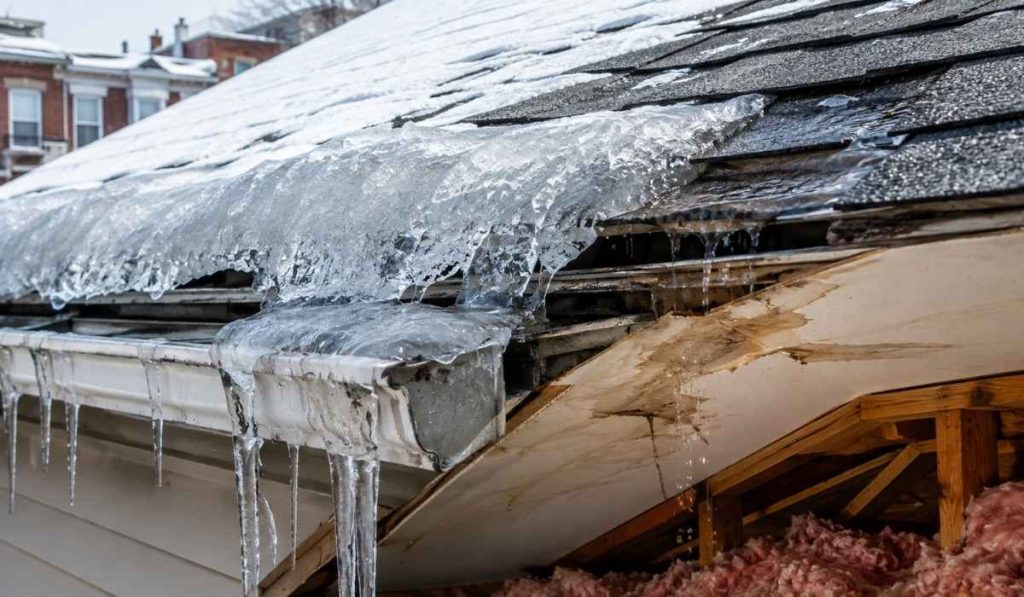
An ice dam is a ridge of solid ice that forms along the edge of a roof, usually right where the roof meets the gutter. It acts like a dam in a river it blocks water that’s trying to flow down and off the roof, forcing that water to pool up instead of draining away.
The key thing to understand: an ice dam isn’t caused by cold weather alone. It’s caused by an uneven temperature across your roof — part of the roof being warm enough to melt snow, while another part stays cold enough to refreeze that meltwater.Snow sitting on a uniformly cold roof, or a uniformly warm one, generally won’t create a dam. It’s the contrast that causes the problem, and it often points to an underlying roofing issue worth having checked.
Here’s how it forms, step by step:
- Heat escaping from your attic warms the upper part of the roof.
- Snow sitting on that warm section melts.
- The water runs down toward the roof edge, which stays colder.
- At the edge, the water refreezes and starts building up ice.
- Over time, this ice grows into a dam that blocks normal drainage.
Once the dam is in place, new meltwater has nowhere to go. It pools behind the ice and can work its way under your shingles, which is how leaks start.
Why Ice Dams Are Common on NYC Roofs
A few local factors make ice dams more likely in New York City compared to other areas.
Older Building Stock
Many NYC homes brownstones, prewar walk-ups, rowhouses were built decades before modern insulation standards existed. Attics and roof cavities in these buildings often lose more heat than newer construction, which speeds up the melt-and-refreeze cycle.
Dense Roof Lines and Flat Roofs
A lot of NYC residential buildings have flat or low-slope roofs, or shared roof lines between attached houses. These designs can trap snow and slow drainage compared to a steep, single-family roof, giving ice more time and space to build up.
Inconsistent Winter Temperatures
NYC winters swing above and below freezing often, sometimes within the same week. Each swing adds another layer to an existing ice dam instead of letting snow melt and drain away cleanly.
Heat Loss From Attics and Top Floors
In rowhouses and attached buildings, heat from a neighbor’s unit or a poorly sealed attic hatch can raise roof temperature just enough to trigger uneven melting, even if your own insulation is fine.
Signs You May Have an Ice Dam
Check for these signs after a snowstorm or a freeze-thaw cycle:
- Thick ice sitting along the roof edge or in the gutters
- Long, heavy icicles hanging from the eaves
- Water stains spreading across a ceiling or upper wall
- Damp insulation or a musty smell in the attic
- Paint bubbling or peeling near the ceiling line
- Water dripping around upper-floor window frames
- Gutters and downspouts packed solid with ice
Catching these signs early is the difference between a simple ice dam removal job and a full interior repair.
Why Ice Dams Are Risky for Your Home
The longer an ice dam sits, the more damage it can cause.
Roof Damage
Trapped water works under shingles and flashing, loosening them and creating entry points for future leaks even after the ice melts.
Interior Leaks
Water doesn’t always show up where it enters. It can travel along rafters and appear as a stain several feet away, which makes the real source harder to find without an inspection.
Wet Insulation
Once attic insulation gets wet, it loses much of its effectiveness and can take weeks to dry out, which makes the next ice dam more likely.
Gutter and Fascia Damage
The weight of ice can pull gutters away from the roofline or crack fascia boards, adding a repair cost separate from the ice removal itself.
Ceiling and Drywall Damage
In bad cases, water saturation can cause ceilings to sag, crack, or stain badly enough to need drywall replacement and repainting.
How Professional Ice Dam Removal Works
A professional job usually follows this sequence:
| Step | What Happens |
|---|---|
| 1. Inspection | The crew checks the roof, attic, and gutters to gauge how bad the buildup is |
| 2. Leak check | They look for existing signs of water intrusion before touching the ice |
| 3. Ice removal | Ice is cleared using a method suited to the roof (steam, hand tools, or melt agents) |
| 4. Drainage clearing | Gutters and downspouts are opened back up so water can flow normally |
| 5. Damage check | The roof is inspected again for cracked shingles, loose flashing, or other issues |
| 6. Prevention advice | You’re given specific recommendations — insulation, ventilation, or gutter fixes |
The point isn’t just clearing ice — it’s making sure nothing leaks once everything melts, and that the same spot doesn’t ice up again next week.
Ice Dam Removal Cost in NYC
Cost depends heavily on the removal method, how thick the ice is, and how accessible your roof is. Here’s a general breakdown based on typical methods used across the industry:
| Ice Dam Severity | Common Method | Typical Cost Range | Time Needed |
|---|---|---|---|
| Minor (thin ice, small section) | Calcium chloride / ice melt tablets | $150 – $300 | 1–2 hours |
| Moderate (visible ridge, some icicles) | Manual removal (hand tools, roof rake) | $400 – $900 | 2–4 hours |
| Large or thick buildup | Low-pressure steam removal | $800 – $2,000+ | 3–6 hours |
| Severe / multiple dams / hard-to-reach roof | Steam removal + repairs | $2,000 – $4,000+ | Half day or more |
| Emergency / after-hours callout | Any method, rush pricing | +$200 – $500 surcharge | Same as above |
A few notes on pricing:
- Steam removal is the safest method for shingles and is usually the most effective for large or stubborn dams, but it also costs the most.
- Chemical treatments (salt or melt tablets) are the cheapest option and work fine for minor buildup, but they aren’t strong enough for a thick, established dam.
- Manual chipping sits in the middle — effective, but riskier for your roof if not done carefully, since it’s easy to damage shingles.
- Roof pitch, height, and access (row house vs. detached home, for example) can push any of these ranges higher.
These figures are general estimates, not a quote — the only way to get an accurate number is to have your specific roof assessed.
DIY vs. Professional Removal
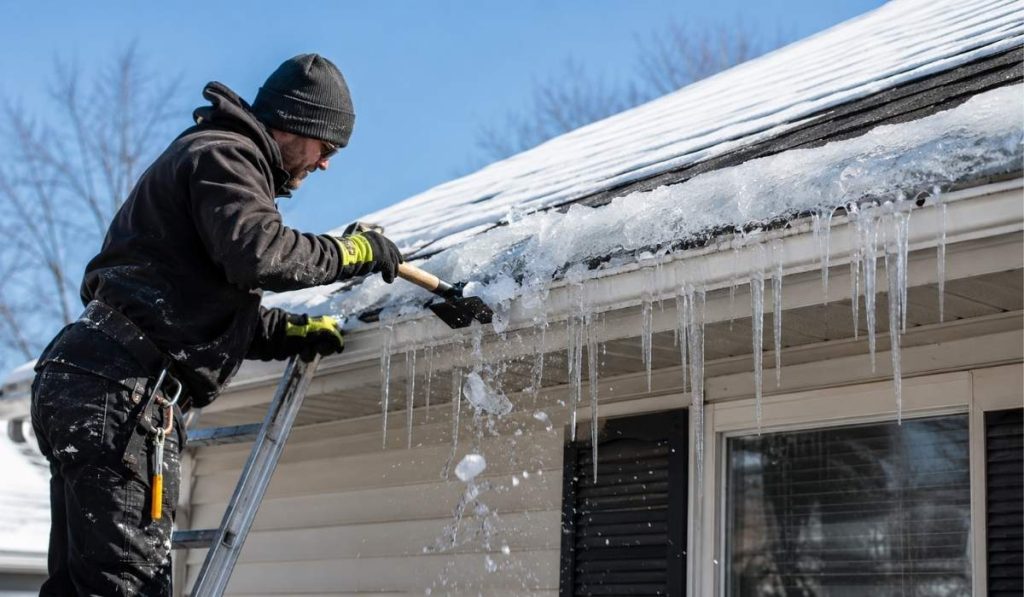
You can attempt small-scale ice dam removal yourself, but it’s worth weighing the risk against the savings.
DIY may be reasonable if:
- The ice is thin and limited to a small, easily reached section
- You can safely use a roof rake from the ground
- There’s no sign of water already entering the house
Call a professional if:
- The buildup is thick, wide, or has been there for more than a few days
- Your roof is steep, high, or hard to access safely
- You’re already seeing water stains or dripping indoors
- You’d need to climb onto the roof or use tools like a hammer, axe, or blowtorch
Climbing an icy roof is genuinely dangerous, and improper tools can crack shingles — turning a $300 ice dam removal job into a $3,000 roof repair.
Preventing Ice Dams Next Winter
Ice dam removal solves today’s problem, but it doesn’t fix the underlying cause. Preventing the next one means addressing what caused it:
- Upgrade attic insulation so heat stays inside your living space instead of leaking into the roof deck
- Improve attic ventilation so hot air doesn’t collect and warm the underside of the roof unevenly
- Seal attic bypasses — gaps around light fixtures, exhaust fans, or the attic hatch are common heat leaks
- Keep gutters and downspouts clear before the first snowfall so meltwater has somewhere to go
- Repair roof issues before winter — loose shingles or damaged flashing make ice dam damage worse when it happens
- Consider heat cables along the roof edge in chronic problem areas, as a supplemental (not standalone) fix
The best time to handle most of this is fall, before the first hard freeze — insulation and ventilation work is far easier (and cheaper) on a dry roof than mid-winter.
Does Insurance Cover Ice Dam Damage?
Many homeowners’ policies cover sudden interior water damage caused by an ice dam — think a stained ceiling or damaged drywall. However, policies often exclude damage that resulted from long-term neglect, like delaying ice dam removal for weeks after first noticing the problem. Coverage details vary a lot by insurer and policy, so it’s worth calling your provider before assuming either way, and documenting the damage with photos as soon as you notice it.
Frequently Asked Questions
Can an ice dam cause a roof leak? Yes. Trapped water can work under shingles and flashing and make its way into the attic or ceiling below.
How long does ice dam removal take? Most jobs take 2–4 hours. Larger or more severe buildups, or roofs that are hard to access, can take longer.
Can I remove a small ice dam myself? For small, easily reached buildup, yes — with caution. Icy roofs are still dangerous even in small amounts, so avoid climbing up if you’re not confident doing so safely.
Will removing the ice stop it from coming back? Not by itself. If the underlying cause — usually insulation or ventilation — isn’t addressed, the same spot can ice up again in the next freeze-thaw cycle.
Does ice dam removal include roof repairs? Usually not automatically. Removal and repair are typically billed separately, since repairs are only needed if the ice actually caused damage.
Is ice dam removal covered by insurance? Sometimes — it depends on your policy and whether the damage is considered sudden or the result of delayed action. Check with your insurer directly.
Getting Help With Ice Dam Removal in NYC
NYC roofs — from brownstones to prewar walk-ups to newer builds — all handle ice differently, which is why a proper inspection matters more than a generic ice dam removal fix. If you’re dealing with heavy ice, recurring buildup, or signs of a leak, it’s worth having your roof checked before the next freeze makes it worse.
Royal Empire Builder provides professional ice dam removal and roofing services across NYC.
Call for a Free Estimate: +1 (718) 717-4016
Secondary Line: +1 (718) 668-4424
Website: royalbuildernyc.com
Need Help with Your Next Project? Call Royal Empire Builder Today!
Fast responses. Expert advice. Trusted service across NYC and beyond.