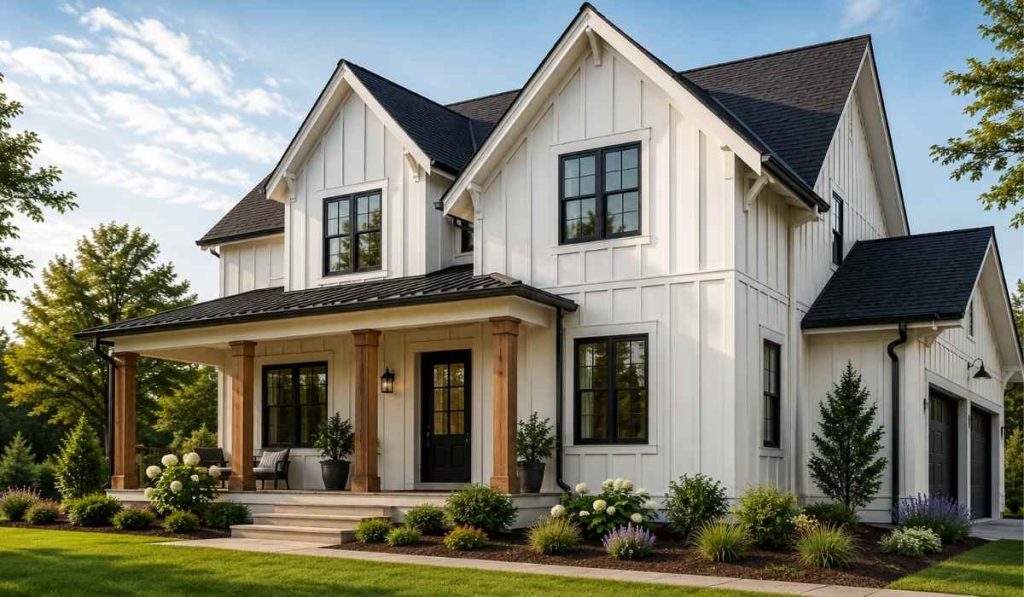
Walk past a home with real cedar board and batten siding and you’ll likely slow down to look at it. The rich wood grain, the warm natural color, and the clean vertical lines give a house a look that manufactured siding simply cannot copy. That beauty comes with a higher price tag and regular maintenance, though, so it’s not the right choice for everyone.
Before choosing cedar, homeowners should understand the installation costs, ongoing care, expected lifespan, and possible drawbacks. This guide explains these important factors and helps you decide whether cedar board and batten siding is worth the investment for your home.
What Is Cedar Board and Batten Siding?
Cedar board and batten siding is a vertical siding style built from wide cedar boards, with narrow strips called battens covering the seams between them. That’s what produces the raised, ridged pattern people recognize as board and batten. Because it’s real wood rather than a manufactured product, every board carries its own grain, knots, and tone.
Installers can finish it smooth or rough-sawn, and the wood itself can be painted, stained, or left to weather naturally over time. The final look depends heavily on the grade of cedar selected and how the boards are laid out. No two cedar homes end up looking quite the same, which is part of the appeal for homeowners after something custom rather than uniform.
Which Cedar Grade and Finish Should You Choose?
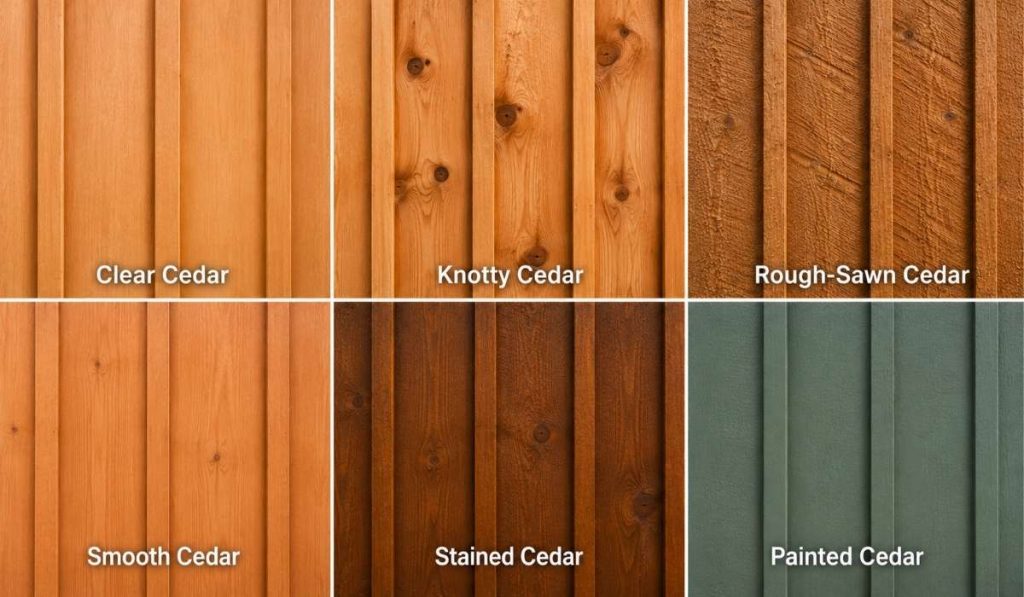
Not all cedar is the same, and the grade you pick affects price, appearance, and how much maintenance the siding will need down the line.
- Clear cedar vs. knotty cedar — Clear cedar has fewer knots and a more uniform surface, and it costs more. Knotty cedar is more budget-friendly and gives the wall a more rustic character.
- Rough-sawn vs. smooth cedar — Rough-sawn cedar holds stain well and leans toward a farmhouse or rustic look. Smooth cedar reads more modern and works well under paint.
- Stained vs. painted — Stain lets the natural grain show through and generally needs refreshing more often. Paint offers full color control and tends to hold up longer between coats.
Choosing the right combination up front makes a real difference in how the siding performs and how often it needs attention later.
How Much Does Cedar Board and Batten Siding Cost?
Cedar sits firmly in the premium siding category, and the total cost involves more than the price per board. Grade is the biggest factor, and board width, thickness, and finish all move the number further.
Labor costs tend to run higher with cedar than with vinyl or engineered panels. Installers have to space and cut boards carefully, account for the wood expanding and contracting with the seasons, and make sure moisture can’t get trapped behind the wall. That precision takes more time on the job site.
A typical cedar siding estimate breaks down like this:
| Cost Factor | What Affects the Price |
|---|---|
| Cedar grade | Higher grades cost more (see grade guide above) |
| Board size and finish | Wider boards and premium stains/paints raise material cost |
| Wall preparation | Weather barriers, drainage, and old siding removal |
| Flashing and fasteners | Around windows/doors, plus corrosion-resistant hardware |
| Trim and corner work | Detail work adds to labor time |
| Installation labor | Higher than vinyl due to precision cutting and spacing |
Before signing a quote, it’s worth confirming exactly what grade of cedar is included, how it will be finished, and whether any wall repairs are covered if damage is found underneath the old siding. A lower bid that skips moisture protection isn’t actually cheaper — those costs tend to show up later as repairs.
Cedar Board and Batten Siding Maintenance Requirements
This is one of the most important factors to weigh before committing to cedar. As a natural material, it reacts to sun, rain, and humidity over time. Left unmaintained, it can fade, crack, or develop moisture damage.
Staying ahead of it isn’t complicated, though. Walking the exterior a couple of times a year to check for peeling paint, faded stain, loose boards, or dark water stains is usually enough to catch problems early — well before they turn into costly repairs.
A basic maintenance routine includes:
- Rinsing off dirt, pollen, or algae buildup
- Checking painted or stained sections for wear and recoating faded areas
- Inspecting seams, joints, and fasteners
- Repairing small cracks before they spread
- Keeping mulch and plants a few inches off the siding
- Confirming flashing is intact and clearing debris from lower walls
- Watching for early signs of rot or insect activity
How often maintenance is needed depends largely on climate and sun exposure. A wall in full sun tends to fade faster, while a shaded wall may stay damp longer and be more prone to mildew. Homeowners who prefer a lower-maintenance option may want to consider vinyl board and batten siding instead.
How Long Does Cedar Board and Batten Siding Last?
With quality materials and correct installation, cedar siding can perform well for many years. Actual service life varies significantly, however, based on the cedar grade used, the quality of installation, local climate exposure, and how consistently the siding is maintained.
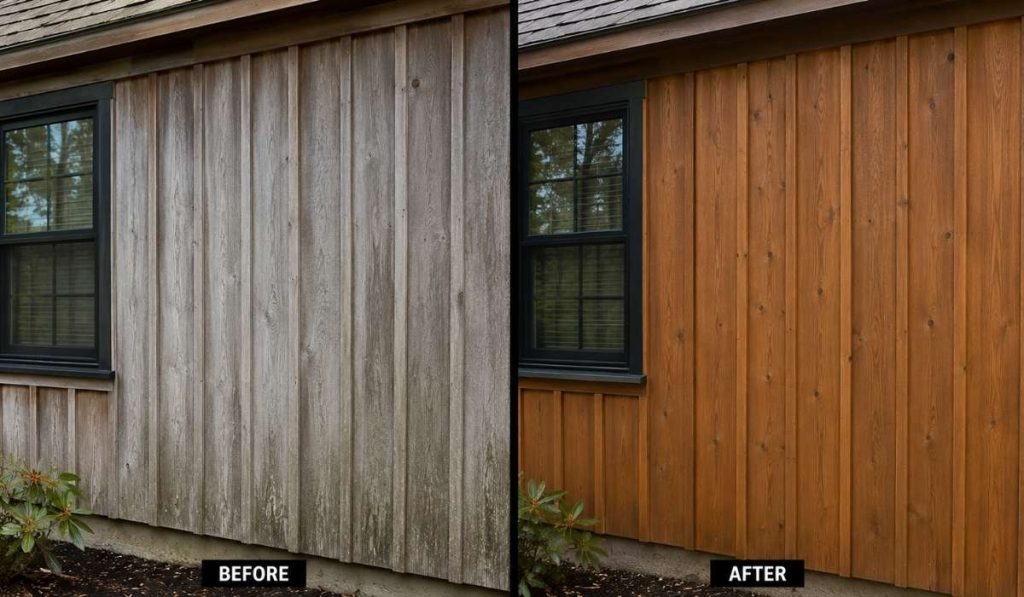
Longevity mainly comes down to three things: the grade of cedar used, the quality of the original installation, and how consistently the siding is maintained afterward. Moisture is the primary threat — when water becomes trapped behind the boards, it can lead to swelling, staining, and eventually rot. A wall system built to drain properly and let the wood dry between rain events matters just as much as the quality of the cedar itself.
How Does Cedar Perform in NYC Weather?
Local conditions play a real role in how cedar siding holds up, and New York City’s climate presents a few specific challenges worth planning for.
- Humidity and rain — NYC’s humid summers and frequent rain mean siding needs strong drainage and ventilation behind the boards to avoid trapped moisture.
- Freeze-thaw cycles — Winter freeze-thaw swings can stress wood and finishes, making sealed joints and quality fasteners especially important.
- Snow near lower walls — Snow piling against the base of a home can keep lower boards damp for extended periods, so proper clearance and drainage at ground level matters.
- Shaded elevations — Many NYC homes sit close together, leaving certain walls shaded for most of the day. These sections stay damp longer and may need more frequent inspection.
- Access and labor costs — Row houses, tight lot lines, and scaffolding requirements can add to installation costs compared to more open suburban settings.
None of this rules cedar out for NYC homes — it simply means moisture protection and installation quality matter even more here than in drier climates. For many properties, cedar works especially well as an accent on a covered or protected elevation, with a more moisture-resistant material used on fully exposed walls.
Benefits of Cedar Board and Batten Siding
Cedar offers a few qualities that manufactured siding can’t fully replicate. The grain is real, the color variation is real, and none of it is printed or molded to imitate wood — it simply is wood.
Other advantages include:
- An immediately premium exterior appearance
- Full flexibility to paint or stain in nearly any color
- Strong visual contrast on a street dominated by vinyl and fiber cement
- Natural compatibility with brick, stone, and metal roofing
- The ability to replace a single damaged board without redoing an entire wall
- Suitability for modern, farmhouse, and traditional architectural styles alike
For homeowners focused on architectural detail and a distinctive exterior, that flexibility is often the deciding factor.
Disadvantages and Long-Term Costs
Cedar isn’t the right fit for every home, and the drawbacks are worth weighing honestly. Cost is the most obvious one — between materials, labor, and ongoing upkeep, cedar adds up to more than most manufactured alternatives.
Other considerations include:
- Regular cleaning and inspection are required, not occasional
- Paint or stain will need refreshing over time
- Poor installation significantly increases the risk of moisture damage
- Boards can warp or split without consistent care
- Natural color variation may not suit homeowners who prefer a uniform finish
- Repairs generally cost more than equivalent vinyl repairs
Many of these issues trace back to installation quality. Missing flashing, incorrect fasteners, or unsealed cut ends can shorten the lifespan of even high-grade cedar. Homeowners should be prepared for the maintenance commitment, not just drawn in by how the siding looks immediately after installation.
Cedar vs Vinyl Board and Batten Siding
Both styles produce the same vertical, ridged look, but living with them day to day is a very different experience. Cedar offers authentic texture and grain along with full control over stain or paint color, in exchange for ongoing maintenance. Vinyl, as a manufactured material, offers a more uniform finish and requires little upkeep once installed.
Cedar tends to be the better fit when:
- Authentic natural wood matters more than low maintenance
- Periodic staining or painting is not a concern
- The siding is viewed as a long-term investment in the home
Vinyl tends to be the better fit when:
- Low maintenance is the top priority
- A consistent, factory-finished color is preferred
- Budget constraints are a significant factor
Is Cedar Board and Batten Siding Worth It?
For homeowners who want authentic wood and an exterior that feels custom rather than mass-produced, cedar is often a worthwhile investment. Properly installed and maintained, it can perform well for decades, and it may strengthen curb appeal for buyers who value natural materials and custom exterior details — though the actual effect on resale value depends on the property, neighborhood, and overall condition of the home at the time of sale.
The decision ultimately comes down to three things: how long you plan to stay in the home, how much ongoing maintenance you’re willing to take on, and how much long-term value you place on an authentic, natural exterior. Homeowners prioritizing low maintenance and predictable cost may be better served by a manufactured alternative. For those set on real wood, the right cedar grade, a qualified installer, and a consistent maintenance routine are what will determine whether the investment holds up.
Frequently Asked Questions
Does cedar board and batten siding need to be sealed?
Yes — it needs a stain, paint, or exterior wood sealer to hold up over time. The right choice depends on the desired appearance and how much sun and moisture the wall is exposed to.
Can you paint cedar board and batten siding?
Yes, but the wood must be properly prepped and primed first. Skipping this step often leads to early peeling or trapped moisture underneath the paint.
Does cedar siding turn gray over time?
Left unfinished, cedar naturally weathers to a silvery-gray tone with sun exposure. Some homeowners prefer this aged look, while others apply stain to preserve the original warm color.
Is cedar higher maintenance than vinyl?
Yes. Vinyl is largely maintenance-free once installed, while cedar requires regular cleaning, inspection, and periodic refinishing.
Can a damaged cedar board be replaced?
In most cases, yes. Individual boards can be replaced without disturbing the rest of the wall. The new board may look slightly different at first but will weather to match over time.
Does cedar hold up in wet climates like NYC?
It can, provided the wall includes proper flashing, drainage, and a quality protective finish. The real risk comes from moisture that never gets the chance to dry out, which is why installation quality matters as much as the wood itself.
Need Help with Your Next Project? Call Royal Empire Builder Today!
Fast responses. Expert advice. Trusted service across NYC and beyond.