A crack in a basement wall can be worrying, but not every crack means the foundation is failing. Some cracks develop naturally as concrete dries, while others may point to soil movement, water pressure, or foundation settlement.
The important things to check are the direction of the crack, whether it is getting wider, and whether you notice other signs such as bowing walls, uneven floors, or sticking doors. This guide explains when basement foundation repair may be needed, which repair methods are commonly used, what affects the cost, and when you should call a professional.
What Causes Basement Foundation Damage?
Concrete Shrinkage
Concrete contains water when it is first poured. As it cures and dries, it naturally shrinks slightly. This movement can create fine vertical cracks in basement walls.
In many cases, these cracks are cosmetic and do not affect the structure. However, they should still be monitored. If a crack becomes wider, starts leaking, or develops uneven edges, it may need a professional inspection.
Foundation Settlement
Foundation settlement happens when the soil under a home becomes weak, compressed, or washed away. This can cause one part of the foundation to sink more than another.
Common signs include stair-step cracks, uneven floors, sticking doors, and gaps near walls or windows. In serious cases, foundation settlement repair may be needed to stop further movement.
Hydrostatic Pressure
Hydrostatic pressure builds when wet soil pushes against basement walls. This often happens after heavy rain or when water collects around the foundation.
Over time, this pressure can cause leaking cracks, bowing walls, or other damage. Professional basement foundation repair may be needed if the wall starts moving inward.
Poor Drainage Around the Foundation
Poor drainage can leave water sitting close to basement walls. Clogged gutters, short downspouts, and poor yard grading are common causes.
This extra water can increase pressure around the foundation and make cracks worse. Improving drainage can help protect the home and support long-term foundation waterproofing.
Expansive Soil and Seasonal Movement
Some soils expand when they get wet and shrink when they dry. This repeated movement can place stress on basement walls and foundation footings.
Over time, seasonal soil movement may cause cracks, uneven floors, or foundation settlement. These signs should be checked before the damage becomes more serious.
Types of Basement Foundation Cracks and When to Worry
Basement cracks can appear for different reasons. Some are caused by normal concrete shrinkage, while others may point to settlement, soil pressure, or wall movement.
The direction, width, location, and movement of the crack can help determine whether it only needs monitoring or professional basement foundation repair.
Vertical Foundation Cracks
Vertical cracks run straight up and down, or slightly diagonal. They are incredibly common in poured concrete basements. Most of the time, these happen because the concrete shrank while drying during the original construction.
A narrow vertical crack that remains stable may be caused by concrete shrinkage. However, it should be inspected if it widens, leaks, shows displacement, or appears with other signs of foundation movement. In some cases, professional foundation crack repair may be recommended to prevent water infiltration and future structural concerns.
Stair-Step Foundation Cracks
If your basement walls are made of concrete blocks or brick, look out for cracks that follow the mortar joints. These cracks look like a flight of stairs climbing up your wall. Stair-step cracks usually mean that one specific corner or section of your building is sinking faster than the rest.
In the construction industry, this is called differential settlement. If you notice these cracks widening over several months, it may indicate that part of the foundation is settling unevenly and should be professionally inspected.
Horizontal Basement Wall Cracks
Horizontal cracks run sideways across your wall. If you see a horizontal crack, this is a major warning sign. It means the outside soil is pushing against the wall with extreme hydrostatic pressure, forcing the center of the wall to bow inward.
Horizontal cracks are usually more concerning because they can indicate strong soil pressure or inward wall movement. Professional basement wall repair is often necessary to strengthen the wall and prevent structural failure. Horizontal cracks may appear when soil pressure pushes inward against a basement wall. They are more concerning when the wall is also bowing, leaning, or shifting. If you spot one, you must contact a qualified contractor immediately to implement heavy-duty basement foundation repair solutions like carbon fiber straps or steel anchors.

Signs Your Home May Need Basement Foundation Repair
Sometimes, the clearest signs of a shifting building do not show up in the basement at all. When a foundation begins to sink or tilt, it throws the entire frame of your house out of alignment. The stress travels upward, causing noticeable issues on your main living floors.
If you want to know when it is time to invest in a basement foundation repair, you need to look for these secondary warning signs around your property.
Sticking Doors and Windows
Doors or windows that suddenly become difficult to open may be caused by humidity, but they can also appear when the home shifts out of alignment. If the problem happens alongside wall cracks, uneven floors, or gaps around frames, the foundation should be inspected.
Sloping or Uneven Floors
Sloping or uneven floors may appear when foundation footings or structural supports begin to move. The change may be gradual, so homeowners do not always notice it immediately. If uneven floors appear with cracks, sticking doors, or wall separation, professional basement foundation repair may be needed.
Uneven floors happen when the structural support beams beneath your home drop because the foundation footings are sinking. Over time, ignoring uneven floors will cause drywall to crack and tiles to snap. Checking your floor levels is a simple way to judge if your building requires deep structural basement foundation repair.
Gaps Around Walls, Ceilings, and Exterior Masonry
Take a close look at the corners of your rooms where the walls meet the ceiling. Look for gaps where the crown molding or baseboards are pulling away from the drywall.
Gaps between walls, ceilings, baseboards, or exterior brickwork may develop when parts of the home move unevenly. Small gaps can have other causes, but widening separation combined with foundation cracks or uneven floors should be professionally checked.
Bowing or Leaning Basement Walls
A basement wall that curves or leans inward may be under pressure from the surrounding soil. This is often more serious than a simple surface crack. If the wall movement is visible or continues to increase, basement wall repair may be needed to prevent further damage.
Common Basement Foundation Repair Methods
The right repair method depends on the type of damage. A stable crack may only need injection, while a bowing wall or sinking foundation may require structural reinforcement.
Steel Piers for Sinking Foundations
If one side of your property is sinking into weak soil, contractors use a method called underpinning or piering. To do this, they attach heavy steel brackets directly to the bottom edge of your foundation walls.
Next, they use powerful hydraulic machines to drive long steel pipes deep into the ground. These pipes are pushed past the weak, shifting top layers of dirt until they reach stronger load-bearing soil or enough resistance to support the structure. Once the pipes are secure, the weight of your building is transferred off the soft soil and onto the strong bedrock. The piers help stabilize the affected part of the foundation and may allow limited lifting when site conditions permit.
Carbon Fiber Straps: Fixing Bowing Walls
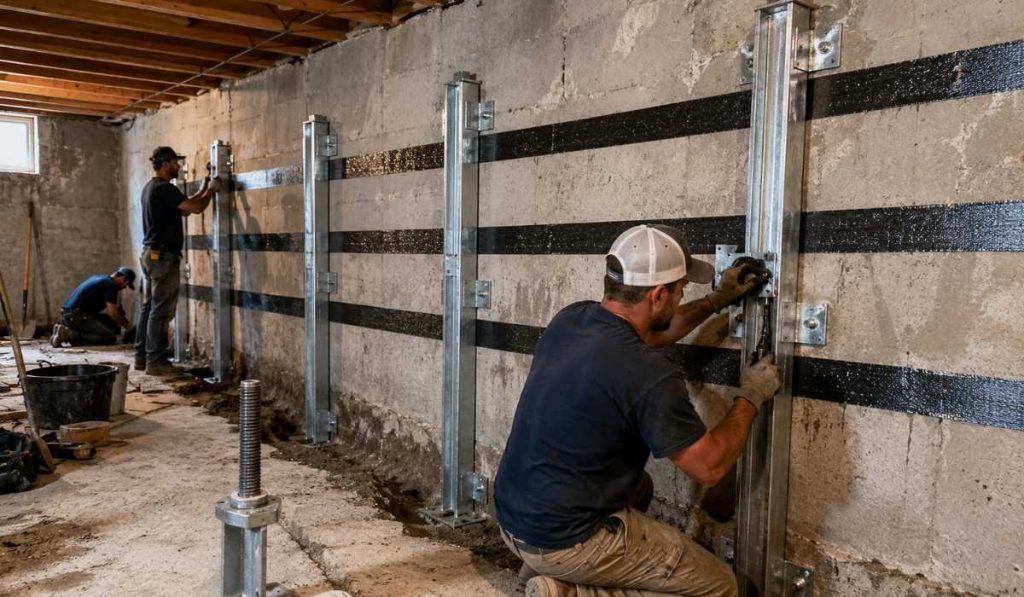
Carbon fiber straps may be installed on basement walls with limited inward movement. The straps are bonded to the wall with structural epoxy and help resist further bowing.
This method is less disruptive than exterior excavation, but it is not suitable for every wall. A professional should first measure the amount of movement and check the condition of the wall.
Epoxy and Polyurethane Crack Injection
Epoxy may be used to bond certain stable structural cracks, while polyurethane is often used to seal leaking cracks. These methods do not correct active settlement or wall movement.
Steel Wall Bracing
Steel beams may be installed against basement walls that need stronger support. They help limit further inward movement.
Wall Anchors
Wall anchors connect the basement wall to stable soil outside the home. They may be used when the wall is bowing and enough exterior space is available.
Underpinning and Foundation Settlement Repair
Underpinning strengthens the support beneath a sinking foundation. It may involve piers or other systems designed to transfer the building load to stronger soil.
Foundation Waterproofing and Drainage After Repair
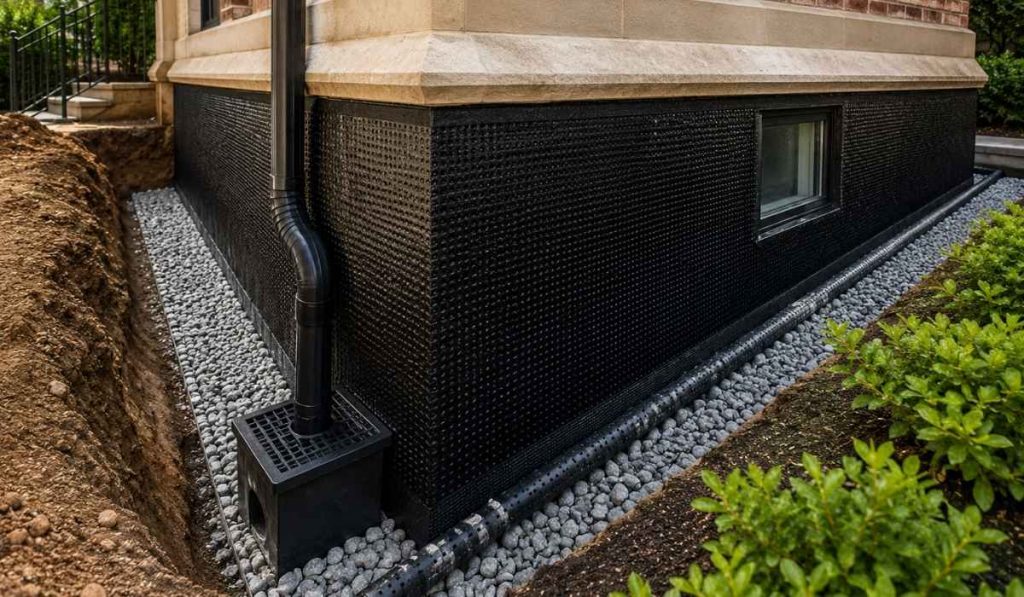
Fixing a structural crack is only half the battle. If you patch a wall but do not fix the water issue outside, the soil will keep expanding. Eventually, that heavy pressure will cause new cracks to form right next to the old ones.
True basement foundation repair must always address the root cause of the problem. Ninety percent of the time, that root cause is poor drainage. To keep your structural walls safe, you have to control how water moves around your property.
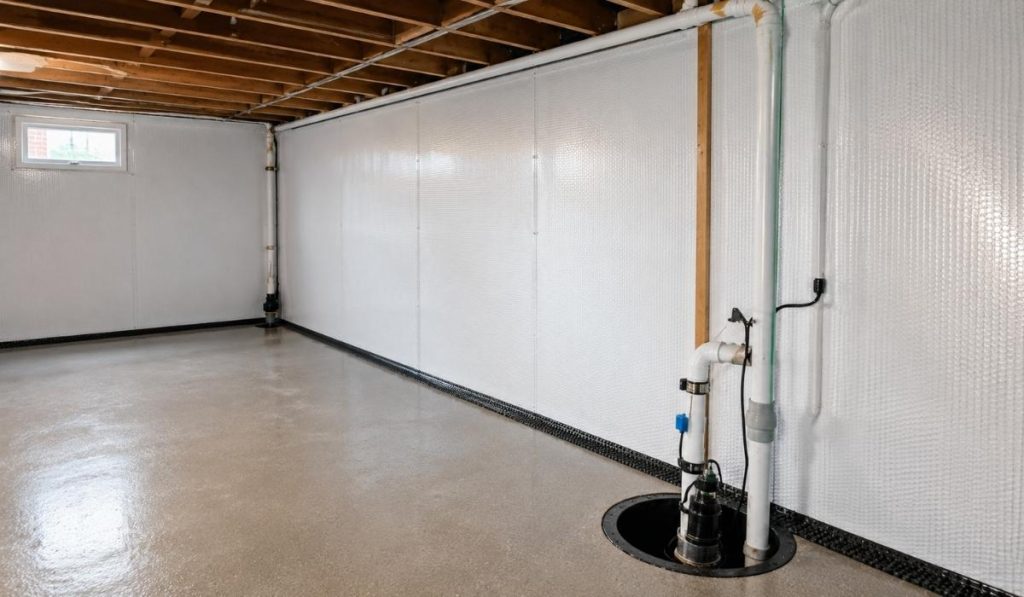
The Full Drainage Defense System
To Structural repair fixes movement or damage, but drainage problems may also need attention. Water collecting near the foundation can increase soil pressure and cause leaks.
Common improvements include proper yard grading, longer downspouts, French drains, interior drainage systems, and sump pumps. Foundation waterproofing supports the repair, but it does not replace structural stabilization.
Conclusion
Taking care of your building’s foundation can feel like a massive task, but it is the most important step you can take to protect your property. Small hairline cracks can easily be managed with simple foundation crack repair methods early on. However, ignoring major signs like bowing walls or sinking floors will only lead to more expensive structural damage down the road.
By pairing advanced structural fixes with proper foundation waterproofing, you stop the root cause of the problem for good. Working with experienced foundation repair contractors allows you to secure your home’s structure, restore your real estate value, and gain total peace of mind during any heavy seasonal storm.
Frequently Asked Questions (FAQs)
1. Does homeowner’s insurance cover basement foundation repair?
Generally, no. Insurance only covers foundation damage from sudden accidents, like a burst pipe. Damage from natural soil shifting or long-term water pressure is not covered, making proactive basement foundation repair a personal maintenance cost.
2. Can you fix a bowing basement wall without digging up the yard?
Yes. Contractors can perform an interior basement foundation repair by installing carbon fiber straps directly to the inside of the wall. This stops the bowing completely without any outdoor digging.
3. How do I know if a crack means I need basement foundation repair?
Vertical hairline cracks are usually safe settling signs. You should worry and call for professional basement foundation repair if the cracks run horizontally, look like stair-steps, are wider than a coin, or let water leak inside.
4. How long do professional foundation repairs last?
Heavy-duty basement foundation repair methods like steel piers and carbon fiber straps are permanent fixes. Most contractors provide a lifetime transferable warranty, meaning the repair lasts as long as the building stands.
5. Why do I need waterproofing along with basement foundation repair?
Fixing a structural crack strengthens the wall, but it doesn’t stop the wet dirt outside from pushing against it. True basement foundation repair requires proper drainage so that water pressure doesn’t create brand-new cracks later on.
Need Help with Your Next Project? Call Royal Empire Builder Today!
Fast responses. Expert advice. Trusted service across NYC and beyond.