A well-designed window is more than just glass and a frame. The trim surrounding it plays an important role in both appearance and protection. Two key parts of this trim are the window stool and the window apron. While many homeowners think they are simply decorative features, they actually help create a finished look, support the window trim, and reduce the risk of moisture damage around the window opening.
When these components are properly measured, installed, and sealed, they improve the overall appearance of a room while protecting nearby drywall and wood from everyday wear. On the other hand, poor installation or neglected maintenance can allow moisture to enter, leading to peeling paint, swollen wood, mold growth, or costly repairs.
Whether you’re planning a home renovation, replacing interior window trim, or simply want to understand how your windows are built, this guide explains everything you need to know. You’ll learn what a window stool is, how it differs from a window sill, the purpose of a window apron, standard sizing recommendations, and practical tips to keep your window trim looking great for years.
What Is a Window Stool?
A window stool is the horizontal interior trim board installed at the bottom of a window. It extends slightly into the room, creating a finished ledge that is often used for plants, small decorations, or picture frames.
Although many homeowners refer to it as a “window ledge,” this trim piece does much more than provide display space. It covers the gap between the window frame and the finished wall, creating a smooth transition between the opening and the surrounding window casing.
When properly measured and installed, the interior trim board adds depth and balance to the window while working with the window apron and side casing to create a complete interior window trim system. Besides improving appearance, it also helps prepare the area for proper sealing, which supports long-term moisture protection and durability.
Why Is a Window Stool Important?
The window stool performs several practical functions, including:
- Creates a clean and finished appearance.
- Covers construction gaps around the window frame.
- Supports the overall interior trim design.
- Provides a smooth surface beneath the window.
- Helps protect nearby wall finishes when properly sealed.
Without a window stool, the bottom of the window opening would often appear unfinished, exposing joints and rough edges that reduce the quality of the interior finish.
Where Is the Window Stool Located?
The window stool is installed on the inside of the home at the bottom of the window. It sits directly against the interior portion of the window frame and extends slightly past the finished wall.
A complete interior window trim assembly usually includes:
- Window frame
- Window stool
- Window apron
- Side casing
- Head casing
Each component has a specific purpose, but together they create a durable, attractive, and functional window finish.
Window Stool vs. Window Sill: What’s the Difference?
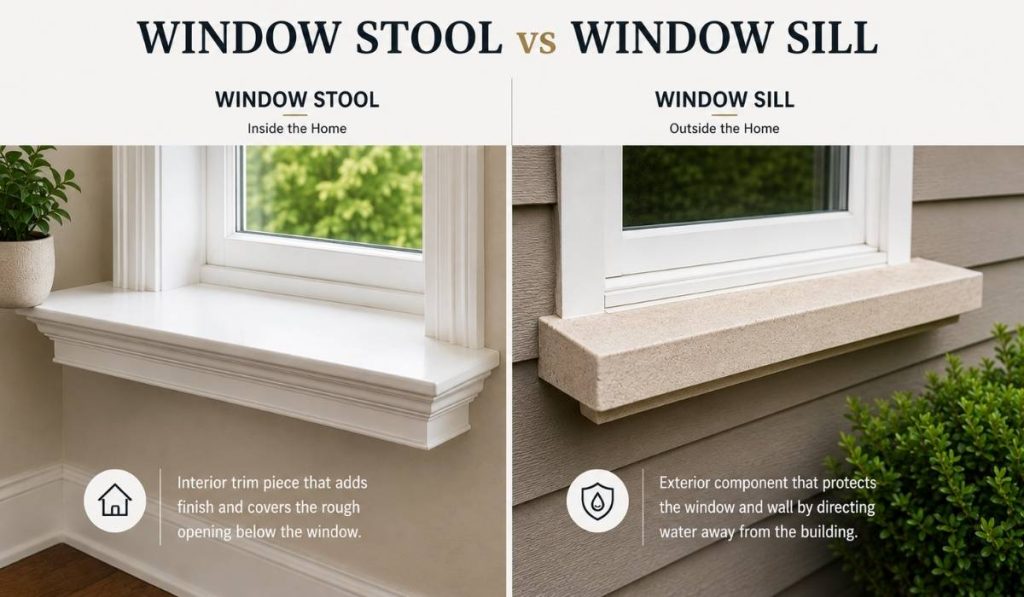
Many homeowners use these terms interchangeably, but they describe two different parts of a window with different functions.
The window sill is part of the window’s structural frame and is usually located on the exterior side. It has a slight slope that directs rainwater away from the building, helping protect the wall from water intrusion.
The window stool is the finished interior trim board installed at the base of the window. It covers the joint between the frame and the wall while creating a clean, finished appearance that blends with the window casing and other interior trim.
Although they work together, each serves a different purpose. The sill helps manage water outside the home, while the interior trim board completes the inside finish and improves the overall appearance of the window.
Window Stool vs. Window Sill
| Feature | Window Stool | Window Sill |
|---|---|---|
| Location | Inside the home | Part of the window structure, extending toward the exterior |
| Purpose | Interior trim and finishing | Structural support and water drainage |
| Exposure | Indoor environment | Outdoor weather conditions |
| Common Materials | Wood, MDF, PVC, Composite | Wood, Stone, Vinyl, Aluminum, Fiberglass |
Simply put, the sill protects the building from water, while the interior trim board creates a clean, finished look inside the home.
What Is a Window Apron?
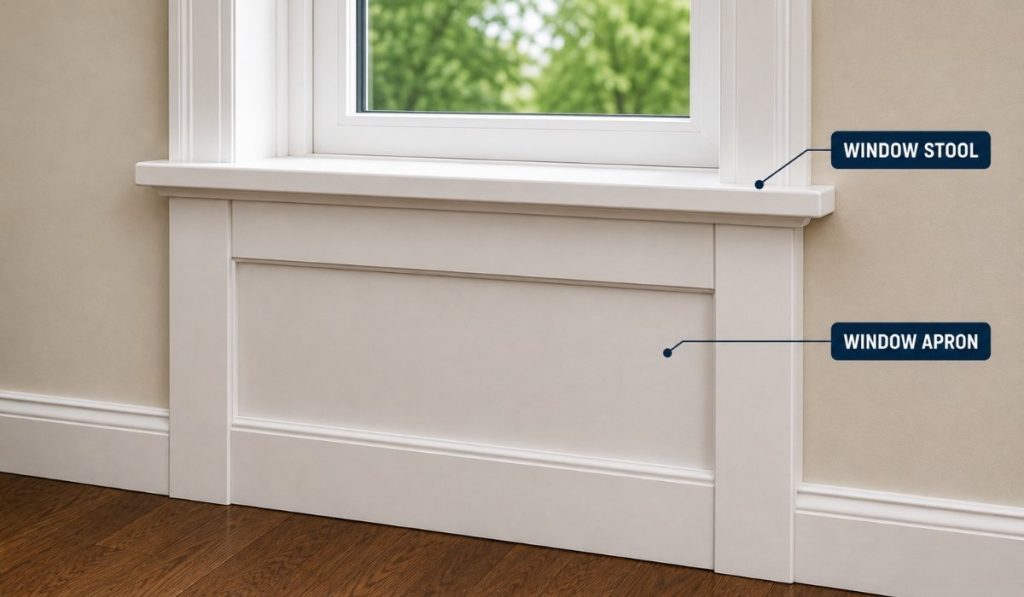
The window apron is the trim board installed directly beneath the window stool. It covers the space between the stool and the wall, giving the window a neat and balanced appearance.
Many people overlook the window apron because it is located below the stool, but it plays an important role in completing the overall trim design. Without it, the lower section of the window can look unfinished, even if the rest of the trim has been installed correctly.
What Does a Window Apron Do?
The window apron serves both decorative and practical purposes. It helps:
- Finish the area below the window stool.
- Hide gaps between the wall and window trim.
- Create a balanced appearance with the side casing.
- Improve the overall look of the interior window trim.
- Support a clean, professional finish.
The style of the apron is usually matched with the side casing and head casing so the entire window trim looks consistent throughout the room.
How the Window Stool and Apron Work Together
Although they are separate components, the window stool and apron work together as one complete trim system.
The window stool creates the horizontal surface beneath the window, while the apron finishes the wall directly below it. Together, they provide:
- A clean transition between the window and the wall.
- A balanced architectural appearance.
- Better coverage of construction joints.
- Added protection when properly sealed and maintained.
When both pieces are carefully measured, installed, and finished, they improve not only the appearance of the window but also its long-term durability.
Standard Window Stool and Apron Dimensions
Correct sizing is vital for both visual symmetry and structural longevity. An improperly proportioned trim assembly can make even premium windows look unfinished. Professional carpenters utilize these precise standard measurements to ensure a balanced fit:
ComponentStandard MeasurementTechnical & Structural Purpose
| Component | Standard Measurement | Technical & Structural Purpose |
|---|---|---|
| Window Stool Projection | 1–1½ inches past the finished wall | Creates a functional interior ledge while providing a balanced appearance. |
| Window Stool Horn Extension | 1–2 inches past each side casing | Forms the decorative “horns” that extend beyond the casing for a clean, traditional finish. |
| Window Stool Thickness | ¾–1 inch | Provides strength and durability while resisting everyday wear and minor movement. |
| Window Apron Height | 3–5 inches | Keeps the trim proportional to the window and surrounding casing. |
| Window Apron Thickness | ½–¾ inch | Aligns with or remains slightly thinner than the window casing for a seamless finish. |
These measurements create a balanced appearance while allowing the window stool and apron to blend naturally with the rest of the interior trim.
Tips for Accurate Measurements
Before installing a window stool, always:
- Measure the window opening carefully.
- Check the width of the side casing.
- Decide how far the stool should project into the room.
- Keep the horn extension equal on both sides.
- Match the trim profile with existing moldings.
Accurate measurements help prevent uneven trim lines and reduce unnecessary cutting during installation.
Advanced Moisture Protection: Protecting Your Window Stool from Water Damage
Because the interior window ledge is highly vulnerable to seasonal temperature swings, condensation naturally forms on the glass and pools at the base. If your window stool is unsealed, this moisture seeps into the wood grains, leading to hidden rot, failing drywall, and mold growth beneath the casing.
To safeguard interior trim from water damage, professional installers utilize strict moisture protection protocols during every installation. When Royal Empire Builder and Royal Builder NYC handle interior trim packages, this comprehensive moisture protection checklist is followed to ensure structural longevity:
Annual Maintenance Audits: Inspect the caulked seams around your apron and stool once a year. If you spot hairline cracks, scrape them clean and recaulk immediately before bare wood is exposed to window condensation.
Pre-Installation Priming: Always prime all six sides of a wood window stool—including the hidden bottom and cut end-grains—before nailing it into place to completely lock out ambient humidity.
High-Grade Polymer Sealants: Never rely on cheap caulk. Seal the critical junction where the window stool meets the window frame with a premium, flexible, paintable polymer caulk that won’t crack during wood expansion.
Smart Material Selection: In high-humidity areas like bathrooms, kitchens, or laundry rooms, completely avoid MDF (Medium-Density Fiberboard), which absorbs water like a sponge. Instead, opt for cellular PVC or moisture-resistant composite trim.
Common Window Stool and Apron Problems
Like any part of your home’s interior trim, a window stool and apron can wear out over time. Most problems develop slowly due to moisture, poor installation, or normal aging. Spotting these issues early can help you avoid more expensive repairs later.
Cracks
Small cracks often appear as wood naturally expands and contracts with changes in temperature and humidity. Minor cracks can usually be repaired, but larger ones may indicate movement in the trim or poor installation.
Swollen or Warped Trim
If your window stool begins to swell or lose its shape, moisture is usually the cause. Water can enter through damaged caulk, condensation, or a leaking window, causing the wood to expand.
Peeling Paint
Paint that bubbles or peels is often one of the first signs that moisture is trapped beneath the surface. Repainting without fixing the source of the moisture will only provide a temporary solution.
Rot and Mold
Wood rot develops when moisture remains trapped for a long period. Mold may also appear around the window stool and apron, especially in rooms with high humidity. These problems should be addressed quickly to prevent further damage.
Gaps Around the Trim
Visible gaps between the window casing, wall, or trim usually occur when caulk shrinks or the wood moves over time. Resealing these joints helps restore the appearance of the trim and improves moisture protection.
Installation Tips and Mistakes to Avoid
Installing a window stool and apron requires careful planning and accurate measurements. Even small mistakes can affect both appearance and performance.
Follow these simple tips for a professional-looking finish:
- Measure the window opening carefully before cutting any trim.
- Make sure both stool horns extend the same distance beyond the side casing.
- Prime all exposed wood before installation.
- Seal every joint with high-quality paintable caulk.
- Match the trim profile with the existing interior window trim.
- Use moisture-resistant materials such as PVC in damp areas.
- Paint or stain the trim after installation to protect the surface.
Common Mistakes Homeowners Make
Avoid these common installation mistakes:
- Choosing the wrong window stool dimensions.
- Leaving joints unsealed.
- Using MDF in bathrooms or other damp locations.
- Installing trim before checking for window leaks.
- Ignoring small gaps around the window frame.
Taking a little extra time during installation helps create a cleaner finish and improves the durability of the interior trim.
Frequently Asked Questions
What is a window stool?
A window stool is the horizontal interior trim board located at the bottom of a window. It creates a finished appearance while covering the gap between the window frame and the wall.
Is a window stool the same as a window sill?
No. A window stool is installed inside the home as part of the interior trim, while a window sill is part of the window structure and helps direct rainwater away from the building.
Does every window need a window apron?
Most traditional windows include a window apron because it completes the trim design and hides the gap beneath the window stool. Some modern minimalist designs may not include one.
What is the best material for a window stool?
The best material depends on the location. Solid wood offers a classic appearance, while PVC is the best choice for areas exposed to high humidity or moisture.
How far should a window stool extend?
Most window stool dimensions allow the stool to project about 1 to 1½ inches beyond the finished wall, with horn extensions of 1 to 2 inches past the side casing.
Can I replace only the window stool?
Yes. If the surrounding window apron, casing, and wall are in good condition, the window stool can usually be replaced without removing the entire trim assembly.
Conclusion
A well-designed window stool and apron are more than decorative trim. Together, they create a finished appearance, support the interior window trim, and help protect your home from moisture when properly measured, installed, and sealed. Choosing quality materials and following standard sizing guidelines can improve durability while reducing the risk of future maintenance.
Whether you’re upgrading existing trim or planning a new installation, investing in the right materials and proper workmanship will provide long-lasting results. If you’re unsure about measurements, material selection, or installation, consult an experienced professional to ensure every component is fitted correctly for lasting performance and reliable moisture protection.
Need Help with Your Next Project? Call Royal Empire Builder Today!
Fast responses. Expert advice. Trusted service across NYC and beyond.