
Stucco damage can affect the beauty and protection of a property. Cracks, holes, and leaking stucco issues often allow water to get behind exterior walls. This unseen damage can weaken surfaces over time and lead to costly structural repairs. Professional stucco repair can repair damage and add durability, which helps protect the property from moisture intrusion in the long term. Whether minor or major, timely repairs help keep the exterior strong, valuable and looking good.
Many property owners ignore minor surface cracks until the damage has progressed. Moisture can get behind the stucco and damage the wall system underneath. Bubbling paint, peeling finishes, mould growth, and deterioration of the structure may result. costs and preserve the overall condition of exterior walls.
What Causes Stucco Damage?
Stucco is a tough, durable product but a few issues can create problems with exterior surfaces over time. Some problems grow slowly while others are a result of storms, moisture, or movement of the foundation. One of the biggest causes of damaged stucco walls is water intrusion. Moisture frequently gets in through cracks, compromised sealants, damaged flashing or poorly protected exterior areas. When water gets behind the surface, it can weaken the material, and cause bubbling, peeling, staining and mould growth.
Exterior walls are exposed to rough weather all year round. Stucco surfaces are subjected to stress from heavy rain, freezing temperatures, heat and constant expansion and contraction. Over time this pressure will cause cracking, surface separation and deterioration on the outside. Properties that are exposed to strong sunlight and to freeze-thaw conditions tend to fall apart more rapidly than those that are well protected.
Bad installation can also shorten the life of exterior finishes. A lot of early cracking and moisture problems are caused by the use of inferior materials, improper curing, poor base coats or incorrect methods of mixing. Natural settling of foundations can cause buildings to shift and put extra pressure on exterior walls. Small cracks may seem harmless initially but if stucco repair is delayed, hidden moisture damage can spread behind the surface.
Common causes of stucco damage include:
- poor drainage around foundations
- damaged flashing and sealants
- freeze-thaw weather exposure
Ignoring these problems can become expensive. Regular inspections and early stucco crack repair help prevent costly structural damage later.
Common Signs You Need Stucco Repair
Warning signs of problems with exterior walls typically appear before serious structural damage occurs. Hairline cracks are one of the most common signs that repairs are needed. These cracks are often found around windows, doors, corners and large areas of a wall. Water can get behind the stucco through small openings and weaken the surface below.
Bubbling, peeling or chipping areas are often an indication of moisture trapped behind the wall system. Water stains and dark discolouration may also be warning signs of moisture intrusion behind the surface. Mould or mildew often begins to grow around the damaged areas as moisture is trapped behind the stucco for long periods of time.
Another sign of serious exterior wall damage is soft or hollow areas. If you notice the surface is soft or sounds hollow when tapped, then the material underneath may already be deteriorating. Signs that you need professional stucco repair include loose finishes, uneven textures and crumbling surfaces. Early repairs help to prevent large scale restoration work and improve the long-term durability of the exterior walls.
Warning signs may include:
- bubbling or peeling surfaces
- dark water stains
- soft or hollow wall sections
Ignoring these warning signs can lead to more expensive structural repairs over time.
How to Repair Stucco
Professional stucco repair is a step by step process that creates strong and long lasting results. First, contractors will inspect the damaged area thoroughly to identify cracks, holes, moisture intrusion and weak sections behind the wall. Hidden water damage can penetrate the structure deeper with no obvious signs on the surface, and proper inspection is important.
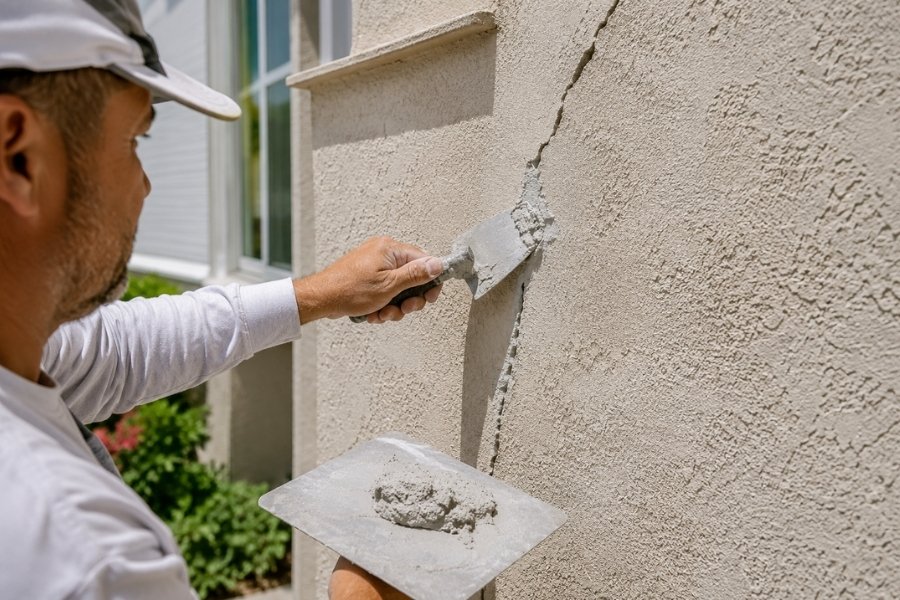
Contractors, after inspection, remove any loose or cracked material to provide a stable surface for repair. Weak areas must be entirely removed as damaged material can lessen the strength of the repair. The surface is then thoroughly cleaned to remove any dust, debris and loose particles which could impair adhesion.
Before new stucco material is applied, professional contractors often protect nearby windows, doors, landscaping and surrounding surfaces. This keeps the work area clean and prevents accidental damage to the repair. Contractors apply fresh stucco mixture in layers after preparation to improve strength and durability.
Also, texture matching is an important part of the repair process: If the blending is poor, repairs will be apparent and the appearance of the property will suffer. Skilled contractors match the existing finish carefully for a smoother, more natural look. Another important thing is the right curing time, as rushing repairs can weaken the surface and lead to a shorter lifespan for the repair.
How to Repair Holes in Stucco
Small holes in stucco may look minor, but they often allow moisture to move behind exterior walls. Water intrusion can slowly weaken the wall system and create larger structural issues over time. Professional patching helps restore durability and prevent future deterioration.
Contractors usually begin by removing damaged material around the hole. The surrounding area must be cleaned properly before patching begins because dust and loose debris can weaken the repair. Small holes often require simple patching methods, while deeper surface damage may need several repair layers for better strength.
Larger holes may affect the base layer underneath the finish coat. In these situations, contractors often repair the damaged base sections before applying fresh stucco material. This process improves long-term durability and helps prevent cracks from returning later. Proper texture blending also helps repaired areas match naturally with the surrounding surface.
Ignoring holes in exterior stucco can lead to moisture problems, mold growth, and more expensive exterior wall restoration work later.
Water Damage and Stucco Problems
Moisture is one of the most destructive problems affecting exterior stucco walls. Water can slowly spread behind cracked surfaces and weaken the structure underneath. In many cases, property owners do not notice hidden damage until stains, bubbling paint, or mold growth begin appearing on the surface.
Trapped moisture often damages wood framing, insulation, and nearby wall materials. Over time, this hidden water intrusion may create serious structural problems inside the property. Poor drainage, damaged flashing, cracked sealants, and neglected repairs often increase the risk of moisture damage.
Fast repairs are important because untreated water damage usually becomes worse over time. Waterproofing improvements and proper drainage solutions help protect exterior walls from future moisture problems. Professional repairs also help reduce the risk of mold growth and improve the overall durability of the structure.
Water damage may cause:
- mold and mildew growth
- bubbling paint and staining
- weakened exterior wall surfaces
Early repairs help prevent expensive structural restoration later.
Professional Stucco Repair Services
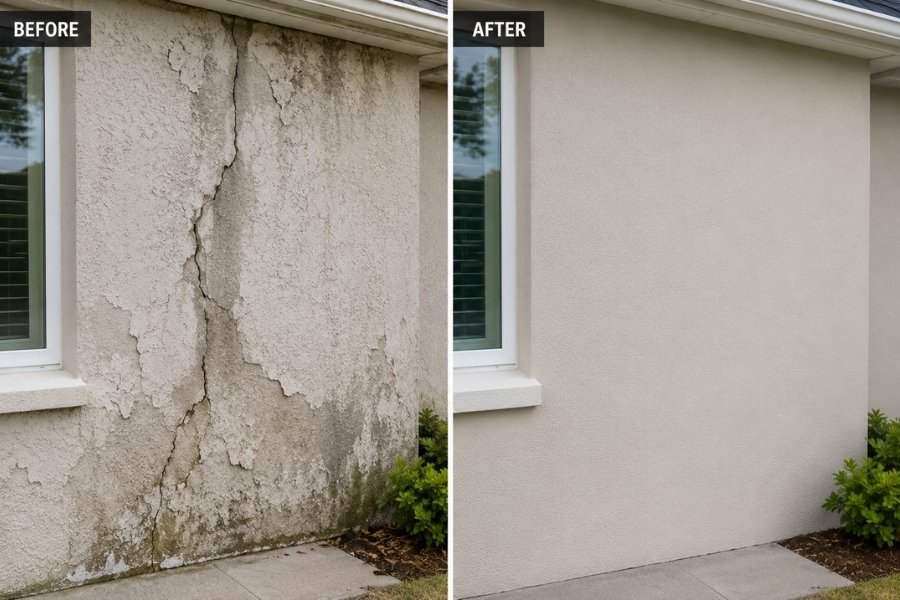
Professional contractors handle different types of exterior wall repairs based on the condition of the surface. Some properties only need small crack repairs, while others require larger restoration projects involving water damage and deteriorated finishes.
Stucco crack repair helps seal openings and prevent moisture intrusion behind exterior walls. Surface patching restores damaged sections and improves overall appearance. Professional texture matching also creates a smoother finish and helps repaired areas blend naturally with the surrounding surface.
Residential stucco repair often focuses on weather damage, surface cracks, and moisture issues caused by ageing materials. Commercial stucco repair usually involves larger surfaces exposed to long-term wear and harsh environmental conditions. Synthetic stucco and EIFS repair also require specialised repair methods to help prevent hidden moisture problems.
Professional repairs improve curb appeal, strengthen exterior walls, and provide longer-lasting protection against weather exposure.
How Much Does Stucco Repair Cost
The total stucco repair cost usually depends on moisture damage, repair depth, labor, and material requirements. Many property owners ask how much stucco repair costs before starting a project. Repair pricing usually depends on the size of the damaged area, moisture intrusion, labor requirements, and material type. Minor crack repairs are usually affordable, while larger restoration projects involving water damage often require more labor and deeper structural repairs.
Surface texture, accessibility, repair depth, and finish matching can also affect the final cost. Water damaged stucco repair may cost more because contractors often need to repair hidden layers behind the surface. Early repairs usually cost much less than full replacement projects because they help prevent larger structural problems from developing later.
Properties with severe moisture damage or widespread deterioration may require more extensive exterior wall restoration work. Professional inspections help determine the most effective repair solution and provide more accurate pricing.
Repair or Replace: Which Option Is Better?
In many cases, professional stucco repair can restore damaged areas without requiring full replacement. Some stucco surfaces only require small repairs, while others may need full replacement. Minor cracks, isolated holes, and limited surface damage can often be repaired successfully without replacing the entire wall system.
However, severe moisture intrusion, structural weakening, or widespread deterioration may require larger restoration work. Professional contractors inspect the condition of exterior walls carefully before recommending the best solution. In many cases, early stucco repair helps property owners avoid expensive replacement costs later.
Professional repairs also improve the lifespan of exterior walls and provide better long-term protection against moisture damage and weather exposure.
Benefits of Professional Exterior Repairs
Professional stucco repair helps improve durability and provides longer-lasting protection against exterior damage. Timely repairs help strengthen exterior walls and improve resistance against moisture intrusion, cracking, and weather exposure.
Restoring damaged surfaces also improves curb appeal and helps maintain property value. Sealed and properly repaired surfaces reduce the risk of mold growth, bubbling finishes, and structural deterioration. Professional repairs also help lower long-term maintenance costs by preventing larger issues from developing later.
Whether the project involves small crack repairs or larger restoration work, professional exterior repairs help improve durability and provide longer-lasting protection.

How to Prevent Future Stucco Damage
Regular maintenance and early stucco repair help reduce long-term restoration costs. Preventive maintenance is one of the best ways to protect exterior walls from future deterioration. Small cracks should always be repaired quickly before moisture spreads behind the surface. Fast repairs help reduce the risk of hidden water damage and structural weakening.
Keeping gutters, drainage systems, flashing, and sealants in good condition also helps protect stucco from moisture intrusion. Regular exterior inspections help identify surface problems before they become severe. Property owners should also check nearby windows, roof edges, and wall connections for signs of water exposure.
Professional maintenance services help extend the life of exterior finishes and reduce the risk of expensive repairs later. Proper care and regular inspections help keep exterior walls stronger and more durable for many years.
FAQ
How do professionals repair damaged stucco?
Professional contractors inspect the damaged area, remove weak material, repair the base layer if needed, and apply fresh stucco material in layers. They also match the existing texture and finish to help repaired areas blend naturally with the surrounding surface.
How much does stucco repair cost?
The cost of stucco repair depends on the size of the damage, moisture problems, labor requirements, and repair depth. Small crack repairs usually cost less than large restoration projects involving hidden water damage or structural deterioration.
Can holes in stucco be repaired permanently?
Yes. Professional patching and sealing methods can restore strength and improve durability. Proper repairs also help prevent future cracking and moisture intrusion behind exterior walls.
What causes cracks in exterior stucco?
Foundation movement, weather exposure, moisture intrusion, poor installation, and aging materials are some of the most common causes of exterior cracking.
Is repairing stucco better than replacing it?
Minor and moderate damage can usually be repaired successfully. However, severe moisture intrusion or widespread structural deterioration may require full replacement.
Can water damage spread behind stucco walls?
Yes. Moisture can spread behind the surface and damage wood framing, insulation, and nearby materials if repairs are delayed.
Can stucco repair help prevent water damage?
Yes. Professional stucco repair helps seal cracks, holes, and damaged areas that allow moisture to enter behind exterior walls. Repairing these problems early helps prevent mold growth, bubbling surfaces, structural weakening, and expensive water damage restoration later.
Conclusion
Never ignore damage to your exterior walls. Small cracks, holes and moisture problems can quickly develop into serious structural issues if left untreated. By repairing stucco professionally, you can restore damaged surfaces, improve weather protection, and help ensure your property lasts for many years to come. Whether the damage is surface cracks, holes, or hidden moisture intrusion, timely stucco repair provides lasting protection and helps preserve the appearance, strength, and value of exterior walls.
Need Help with Your Next Project? Call Royal Empire Builder Today!
Fast responses. Expert advice. Trusted service across NYC and beyond.